Whale Watching in Cabo: Worth It, If You Pick the Right Boat
By Cabo Wander
Every winter a friend texts me some version of "is the whale thing in Cabo actually worth it, or is it a tourist trap?" My answer is yes, it's worth it. Between about Christmas and mid-March, a morning on a small covered boat is the best hundred dollars you'll spend here, and it sits at the top of my list of things to do in Cabo for that whole stretch.
In season, seeing a humpback is close to a sure thing. How good your morning is comes down to three things you get to pick: the boat, the hour and the company running it. Every boat out there finds whales, because they're all on the same radio. What changes is how close you sit, how hard the ride is on your body, and what your captain does when a bunch of other boats are already parked around the same animal.
So I'd book an 8am trip on a covered boat that takes about a dozen people, with a company that puts a real guide on board. Book it on the company's own website, and put it in the first half of your trip.
Some people should skip it or book something else. If you're coming in the second half of April, save your money. If what you really want is to touch a whale or swim with one, that isn't this trip, and I'll explain where that idea comes from. And if you're pregnant, have a bad back or are bringing little kids, you want the catamaran and not the small boat everybody raves about.
How a Morning Trip Actually Goes
The whole thing takes about two and a half hours, dock to dock, and it helps to know the running order so the slow parts don't worry you.
You check in at an office on the Cabo San Lucas marina about half an hour before the boat leaves. There's a waiver and a wristband. Use the public bathrooms by the office now, because the inflatable boats don't have one. Then everybody walks to the dock together, and at the gate you pay a dock fee of a few dollars each, in cash. It often isn't mentioned when you book, so have some small bills on you.
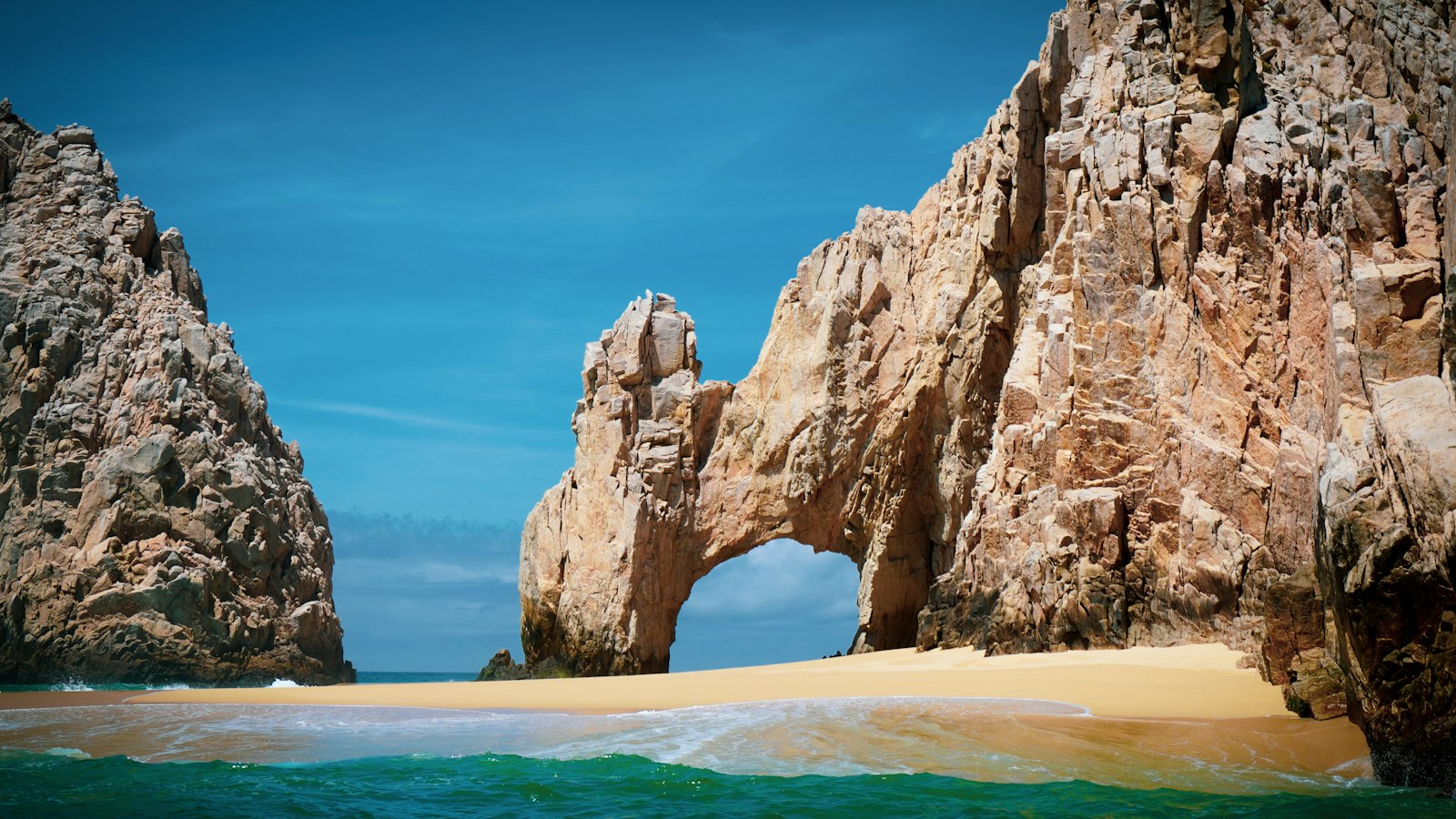
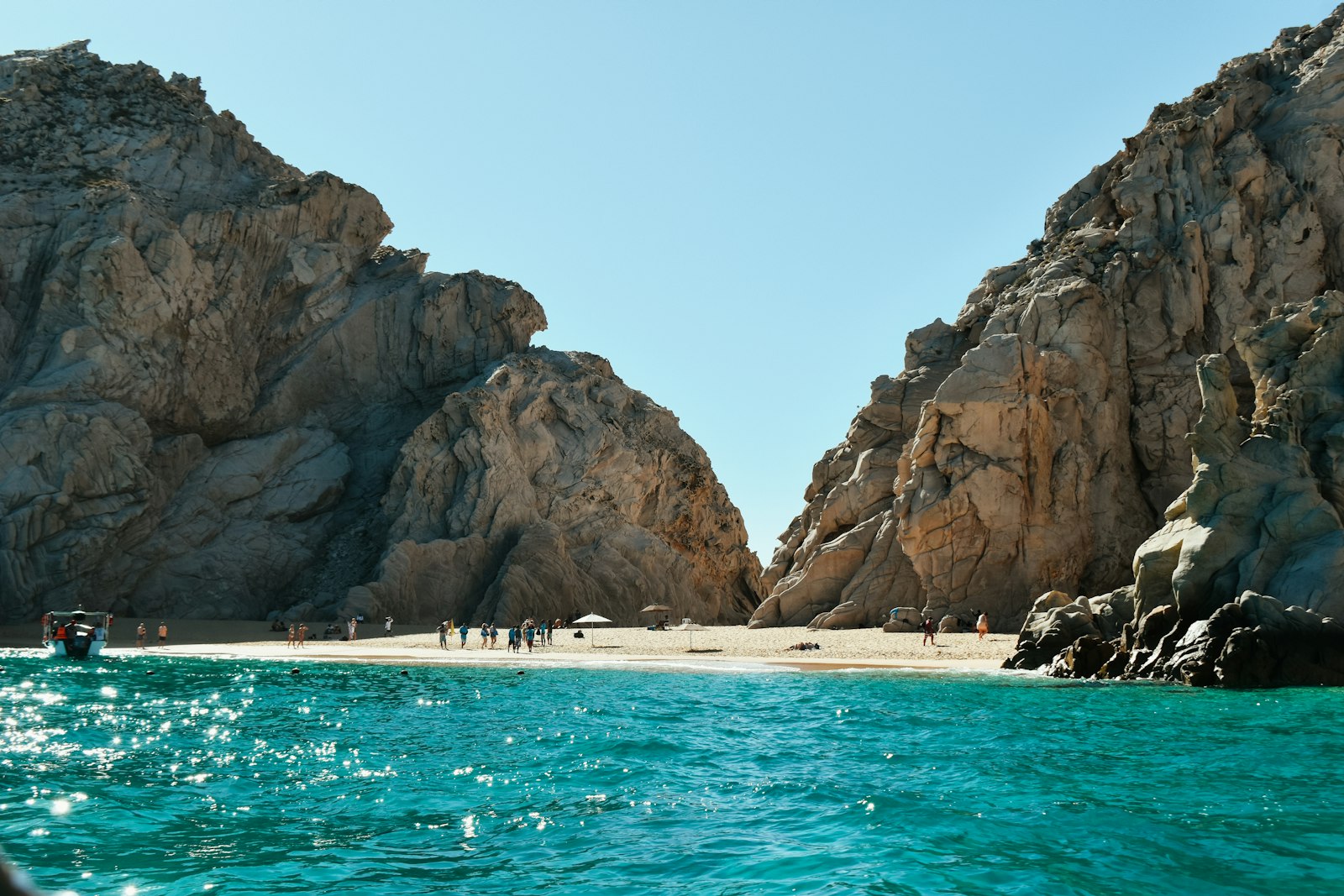
On the boat you get life jackets and a safety talk, and a good guide uses that time to explain the rules: how far back the boat has to stay, how long it can stay with one whale, and why the engine drops to neutral when you get there. Then you idle out through the marina past the fishing boats, which is slow, and stop at the sea lion rock and the Arch for photos. Every whale trip does this, so you don't need a separate boat ride for it. (If you want to get off at the beach, that's a different outing, and I cover it in my guide to El Arco and Lover's Beach.)
Under the current rules, the water right around the Arch is too busy with boat traffic for whale watching, so after the photos you head out, either around the point into the Pacific or up along the Corridor. On a small boat this is the fast, bumpy, wet part.
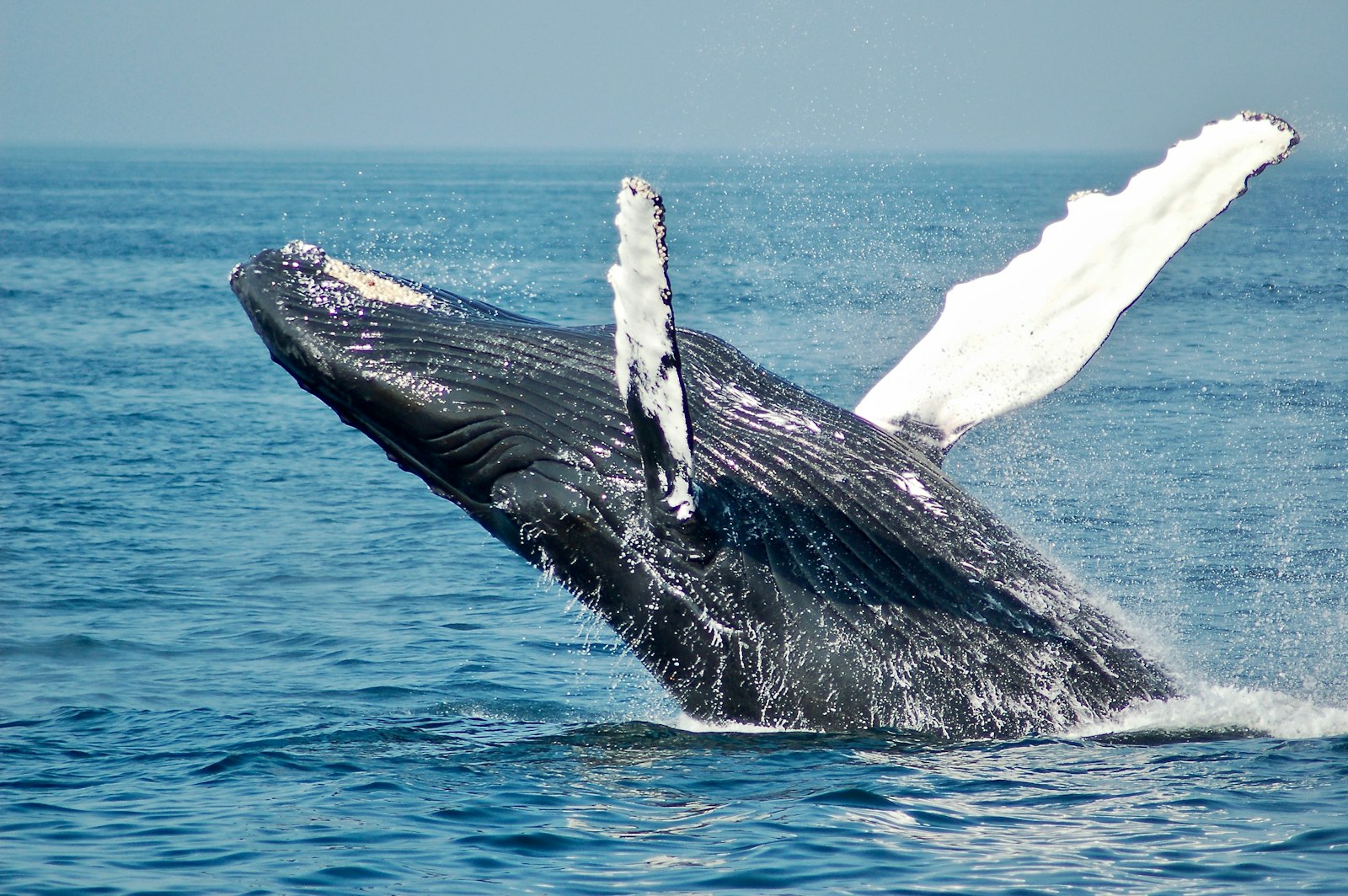
Then you look for a blow, which is a puff of mist about as tall as a one-story house. When your captain finds one, the engine goes to neutral and you sit. What you see from there is mostly backs, blows and tails, with stretches of nothing in between while the whale is down. I've had mornings with a lot of jumping and I've had mornings that were mostly tails. A breach is a bonus, and when it happens it's over before most people have their phone up. If you see a gray whale go by, that's an occasional surprise. Dolphins and sea lions turn up a lot.
If the guide has a hydrophone, this is when it goes in the water. The engine gets switched off, everybody goes quiet, and on a lucky day you hear a male singing through a little speaker. It needs a singing whale and calm water, so I wouldn't book a trip for it. When it works, it's the part people talk about at dinner.
A slow day looks like this: two whales traveling steadily, coming up every several minutes, and a line of boats following along behind. You did see whales. You just didn't see much of them.
Then the boat turns for home and you're back at the dock around 10:30. The two and a half hours includes the check-in walk and the Arch, and I timed one trip at about two hours on the water. I still think that's enough.
Which Boat
This is the choice that matters most, and my pick is the small covered boat.
The Small Covered Boat
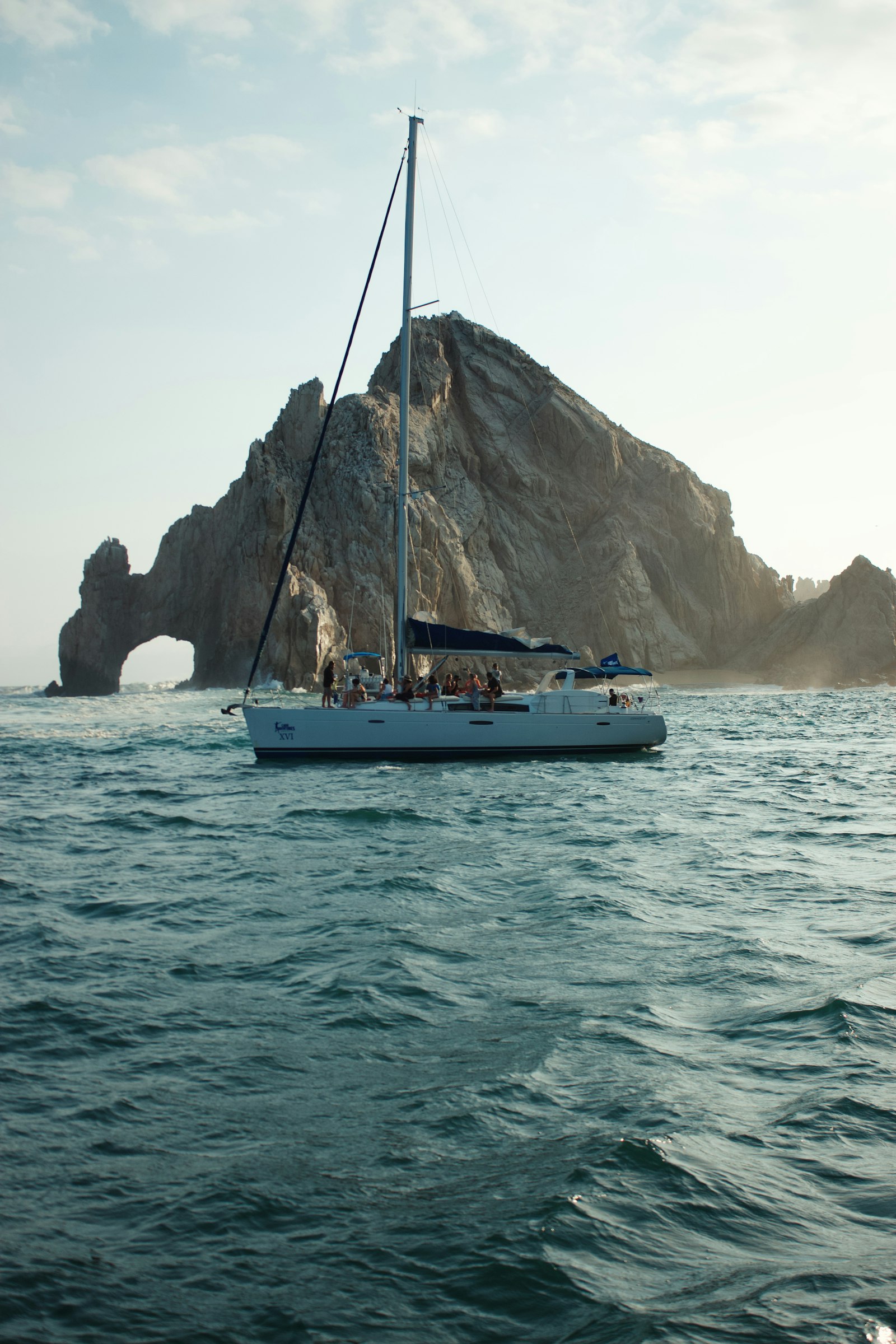
A hard-sided boat with a canopy that takes 10 to 12 people is what I book. You sit low to the water and there's room to stand up and turn around when the whale comes up on the other side. You're in the shade, the seats are often cushioned, and some of these boats have a bathroom, which is worth asking about.
It also gets the closer view the law allows. Boats under about 30 feet can sit roughly 60 meters from a whale, which is 65 yards or so. Bigger boats have to stay at about 80. That 20 meter gap is the real reason people say small boats get you closer.
It's still a small boat on the ocean, so you'll feel the swell. If your back is a little iffy, go in the morning when it's flatter, and sit in the middle.
The Zodiac
The inflatable is the fastest and the lowest to the water, and photographers love it. It's also the roughest ride. The run out to the whales pounds, and I wouldn't put anyone with back trouble on one. There's no shade and no bathroom, and the seats are fixed, so you can't move around for a better angle.
The companies that run them are upfront about who they can't take, and I appreciate that. Their own terms rule out pregnant guests, and some add back, neck and heart conditions. Minimum ages run from 5 to 8 depending on the company, and one has a weight limit of 265 pounds.
If you're fit, you don't get seasick and it's a calm morning, you'll have a great time. If any of those is a maybe, take the covered boat. You sit at the same legal distance either way.
The Catamaran
If the small boats rule you out, this is your answer, and it's a good one. A catamaran is steady, it has shade, bathrooms and a bar, and nobody is going to be bounced around. It's what I'd book for a pregnant traveler, anyone with a bad back or neck, a family with small kids, or someone who gets seasick easily. Ask about the minimum age when you book, because some catamarans don't take children under five.
What you give up is the view. You're higher up and farther back, standing at a rail with a lot of other people, and the whale looks quite a bit smaller.
Ask how many passengers the boat takes before you pay. "Catamaran" covers everything from a boat for 25 or 35 people to a triple-decker for a couple hundred. The first is a whale trip with a bar. The second is a breakfast cruise where whales get pointed out, and I'd only book it for a big multi-generation group that mostly wants to be on a boat together.
A Private Boat
For a group of five or more, or for a serious photographer, a private charter starts to make sense. It runs several hundred dollars for the boat, and split six ways that gets close to the price of a group seat. The real perk is that you set the pace. If a whale has a crowd around it, you can tell your captain you'd rather go find another one.
Listings are sloppy about whether the price shown is per person or per boat, so ask before you book.
The Ones I'd Skip
I'd skip the cheap "whale trip" that somebody offers you on the dock or the beach. Those are usually water taxis. They tend to run short, there's no guide, and they get much too close to the animals. Licensed whale boats are issued a flag for the season, so if you're tempted anyway, ask to see it before you hand over cash.
The pirate ship does a whale version too. If you have kids between about four and ten, they'll love the boat. Just know the whales are a side show on that one.
What a Cabo Whale Trip Isn't
A few things get sold alongside whale watching here that are really different trips, and I'd hate for you to find that out on the boat.
You won't touch a whale. Those photos of people petting a whale from a little boat are gray whales, and they're taken in the lagoons at Magdalena Bay, far up the Pacific coast. The whales you see from a Cabo boat are humpbacks, and they don't do that. You'll be watching from about 65 yards away.
If touching a gray whale is the dream, it's a separate trip. The closest lagoon is about five hours each way by road. Dive Cabo runs it as a day tour for about US$400 a person, with a pickup at 5am and a drop-off around 7pm, and that buys you up to three hours on the water. Even there, whether a whale comes over to the boat is up to the whale, and plenty of people come home without touching one. The lagoon season also doesn't start until January, so Christmas week is out. Honestly, I'd do it as an overnight or not at all, and I wouldn't carve it out of a five-day first trip.
You can't swim or snorkel with whales. It isn't allowed anywhere here. When a listing says "whale watching and snorkel", it means a whale trip with a separate snorkel stop afterward.
Whale sharks are a different animal. They're fish, they're up in La Paz, and you do get in the water with those. That's its own long day, and I go through it in my La Paz day trip post.
Kayaks and drones are out too. Kayaks aren't permitted for whale watching, and please don't fly a drone anywhere near a whale.
What It Costs
A seat on a small boat is about US$80 to $110, and the price barely changes from one good company to the next. Catamarans with a bar run from about US$90 to $140. What changes your total is everything that gets added, and mostly it's the ride to the marina.
Here's what lands on top:
- Dock fee: a few dollars a person, in cash, at the gate.
- Tip: I leave US$10 to $20 a person for the crew, and 10 to 15% on a private boat.
- Getting to the marina: free if you can walk. From the Corridor, a taxi is roughly US$20 to $40 each way. From San José, it's an Uber of about 600 pesos or a taxi of US$40 to $70 each way.
- Hotel pickup: the bigger companies offer it for about US$10 to $15 a person.
- Photos: some companies email you the guide's photos for free, and some sell them as a package back at the office. Ask when you book.
So all in, I'd budget about US$90 to $140 a person if you're staying in Cabo San Lucas, and US$130 to $200 a person from the Corridor or San José. For two of us walking to the marina from a San Lucas hotel, a morning on a group boat comes out a little over US$200.
It's worth that. This is one of the few things in Cabo where I don't think there's a bargain version that's just as good. The Arch is the same rock on a twenty dollar water taxi. A whale trip at a third of the price is a different, worse trip.
If you're staying in San José, do the math on your time too. A two and a half hour boat trip turns into about five hours once you add the drive both ways. There is a whale boat that leaves from the Puerto Los Cabos marina on the San José side, so it's worth a look before you commit to the commute. I compare taxis, Uber and the bus in getting around Cabo, and the whale trip is one line in the bigger budget in how much Cabo costs.
When to Go
The good weeks are about Christmas to mid-March, and the best of it is late January and February. If you can pick your dates, pick February.
The licensed season is longer than that. It runs from mid-December to the end of April, and most companies stop selling trips and stop guaranteeing sightings around mid-April. Here's how it plays out:
- Mid-December to Christmas: the whales are arriving and it gets a little better every day. The boats are quiet and it's a nice time to go, with a bit less certainty.
- Christmas to early January: dependable, and the fullest boats of the year.
- Mid-January through February: the most whales and the most action at the surface. This is when the males are competing, and that's where the jumping comes from.
- March: mothers and calves. There are calves all season, but in March they're most of what's left, and they're a lot of fun to watch. It's also windier, so the ride is rougher.
- The first half of April: thinning out. It can still be good.
- The second half of April: legal, but it's stragglers, and I wouldn't book it. Take a sunset boat and count any whale as a bonus.
- May to mid-December: there's no whale watching. If somebody sells you a whale trip in July, you're buying a boat ride.
I go through the rest of the calendar, and what you trade for coming in whale season, in the best time to visit Cabo.
Morning or Afternoon?
Morning, and I don't think it's close. The water is flatter, there are fewer boats, and it's much easier on anyone who gets queasy. The afternoon trips get more wind, more chop and more traffic, including the sunset boats setting up. You'll read all over the place that whales are more active in the afternoon. I've never seen anything to back that up, and I'd take the calm water.
Morning also beats the cruise crowd. In peak season there are ships in the bay most days, and an 8am boat is usually out before the marina fills up.
It's Cold Out There
This one surprises people. The ocean is 71 or 72°F in February, the air at 8am is in the high 50s to low 60s, and then you add spray and a boat going fast. People dress for the pool and spend two hours hugging themselves. Bring a windproof layer.
How to Book It
Book directly on the company's own website. It's the same boat you'd get through a hotel desk or a booking site, without the extra fees, and when a trip gets canceled it's a lot simpler to sort out with the people who run the boat.
Who I'd Book With
There are a lot of companies, and these are the four I'd point you to.
- Whale Watch Cabo is where I'd look first. It runs a covered group boat for up to 12 and an adults-only zodiac, with biologist guides and a hydrophone, and the photos come free. The captains hold back and give the whales room, which is what I care about most. Seats are about US$80 to $100, and kids under four ride free on the group boat.
- Cabo Trek runs a covered boat for up to a dozen and checks in at the Hotel Tesoro, right on the marina. It makes a point of describing itself as a responsible operator. About US$100.
- Cabo Expeditions is zodiacs only, about US$100 for two and a half hours, with a minimum age of 5. Its own page says the ride can be bumpy and lists who shouldn't come, and I like that they just say it.
- Cabo Adventures is the big one, and the only one of these four with a catamaran. It runs fast inflatables and a catamaran for up to 35 with a bar, and it offers hotel pickup. Expect the dock fee and the pickup charge to be added at check-in.
What the "Guarantee" Really Means
Almost every company says sightings are guaranteed. What that means is a free second trip if you see no whale at all, during the main season, if there's space on another boat. It's never a refund.
The guarantee covers the one thing that almost never happens in February, which is seeing nothing. It doesn't cover a morning of distant tails, rough water, a crowd of boats or a sore back. And on a four-day trip in peak weeks, there may not be a free seat to come back for. I'll give Cabo Adventures credit here, because it says plainly that it can't promise you a whale.
My Booking Tips
- Put it early in your trip. If the port closes for wind or you get a dud morning, you want days left to go again. I'd never book it for the last morning.
- Book a week or two ahead for the peak weeks. That's what I do for a morning seat in January and February, and I go earlier than that for Christmas week and Presidents' Day weekend. Outside those, a few days is usually fine.
- Ask what happens if the port closes. In winter, wind or swell can shut the harbor to small boats for a few hours or a day. Find out whether you get your money back or a new date.
- Ask whether your time slot can be moved. Some group trips need a minimum number of people to go.
- Ask how many passengers the boat takes, whether there's a bathroom, and whether photos are included.
- If you get seasick, take your medication before you board, sit in the middle of the boat and keep your eyes on the horizon.
- Coming off a cruise ship? Ask the company which departure works on ship days, because the tender may not get you ashore in time for 8am.
- Not sure where to find the office? The check-in spots are all along the marina, and I walk through that part of town in my Cabo San Lucas guide.
On the walk to check-in, the friendly people on the boardwalk offering a free or half-price whale tour are selling timeshares. The price of that tour is a morning of your vacation at a sales presentation, and the ticket at the end is usually for one of the big boats. I explain how it works in my post on the Cabo timeshare presentation.
The Honest Downside
You will not have a whale to yourself. In the peak weeks you share each one with a ring of other boats. The rules allow four boats around a whale at a time, with the rest waiting their turn farther back, and on a February morning there are usually a lot more than four in the area. After a while it can feel like you're part of a crowd following something that would rather be left alone.
This is where the company you picked matters. A good captain sits in neutral at the legal distance, and when a whale is mobbed, goes looking for a different one. A bad one chases. On one big-boat trip, every time a mother and calf came up the captain raced over to them, they dove, and all we saw the whole morning was three tails. That's why I choose a company by how it behaves around the whales, and I'd pay a little more for one that hangs back.
Going at 8am helps a lot, but it doesn't fix it.
Seeing Whales Without a Boat
You can see whales from dry land here from January to mid-March, and it doesn't cost anything. What you get is blows and far-off splashes, so bring binoculars, and look for the puff of mist before anything else.
The Pacific side is the place for it. I've watched from hotel balconies and pools out there, and the bar at Sandos Finisterra is actually called the Whale Watcher. The best time from that side is around 5pm, once the glare is off the water. If whales from your room sound good, I go through the hotels on that side in where to stay in Cabo. Médano Beach is the one spot where you probably won't see any, because there's too much boat traffic in the bay.
You'll also very likely see a few from any boat that goes around the point in winter, and that includes the evening boats in my Cabo sunset cruise post.
It's a lovely free extra. It doesn't replace the boat, though, and I'd still book the trip.
The Verdict
Do it. If you're in Cabo between Christmas and mid-March, this is the one paid activity I'd tell every single friend to book.
Here's who I'd send where:
- Most people: a covered boat for about a dozen, at 8am, with a biologist guide.
- Fit, not seasick, wants photos: the zodiac, on a calm morning.
- Pregnant, bad back or neck, small kids, or prone to seasickness: a catamaran for 25 to 35 people. With kids, check its minimum age first. Skip the giant ones.
- A group of five or more: price out a private boat.
- Coming in the second half of April: skip the tour and watch from a sunset boat.
- Want to touch a whale: that's Magdalena Bay, as an overnight, on a different trip.
I'd do it again every time I'm here in winter. I just go in knowing it'll be cold, I'll be about 65 yards back, and there will be other boats... and it's still the best morning I know how to buy in Cabo.
If you're working out where it fits with everything else, a whale morning near the start of the trip is how I've built my 5-day Cabo itinerary.
And this is what I text back to that friend: yes, book the whales. Small covered boat, 8am, book it on the company's own site, do it early in the trip. Bring a jacket and a few dollars cash for the dock. Skip the guy on the boardwalk.
Quick Answers
Is whale watching in Cabo worth it? Yes, from about Christmas to mid-March. You'll very likely see humpbacks, and a small-boat morning runs about US$90 to $140 a person once the dock fee and tip are in.
When is whale season in Cabo? The licensed season runs from mid-December to the end of April, and most companies stop selling and guaranteeing trips around mid-April. The best weeks are late January and February.
Zodiac or catamaran? My pick is in between: a covered boat for 10 to 12 people. Take the zodiac if you're fit and want speed, and the catamaran if you're pregnant, have a bad back, get seasick or have small kids.
Is a whale sighting guaranteed? The usual guarantee is a free second trip if you see no whale at all, when there's space. It isn't a refund, and at least one big company doesn't guarantee sightings at all.
Can you touch or swim with whales in Cabo? No. Swimming with whales isn't allowed, and the whales people touch are gray whales in the lagoons at Magdalena Bay, about five hours north by road.