La Paz Day Trip from Cabo: Give It a Night Instead
By Cabo Wander
When friends find out La Paz is just up the road from Cabo, the question comes fast. Can we drive up for the day and swim with whale sharks? Or see that lagoon with the mushroom rock? Or the sea lions?
My answer is to stay the night. La Paz is a second destination, about two and a half hours from Cabo San Lucas, and it has three big draws: Balandra beach, the whale shark swim, and the boat out to Espíritu Santo island and its sea lions. Each of the three runs on a clock you don't control. Balandra lets people in by session and stops at a head count. The whale shark boats are handed their time slot the day before. The island boat leaves the dock around 8:30 in the morning whether you've made it up from Cabo or not.
That's the big difference from everything else I recommend down here. In Cabo you pick your time, and my whole list of things to do in Cabo is built on going early. In La Paz the time gets handed to you, and somebody arriving from two and a half hours away, at an hour of their own choosing, can miss all three.
One night gets you two of the three. Two nights gets you all of them, with a spare morning in case the wind or the shark count cancels something. The only version that works in a single day is a packaged tour from Cabo with a pickup before dawn, for ONE of the three, and I'd only do that if whale sharks are the reason you came to Baja.
The Honest Hours, Door to Door
You'll read that La Paz is an hour and a half from Cabo. It isn't, and that one number is what makes the day trip look easy.
From a hotel near Médano Beach, I plan on two and a half hours to the La Paz waterfront, give or take fifteen minutes. That's about 100 miles up Highway 19 through Todos Santos, plus the slow part, which is getting across the city to the docks. The companies that drive this road every week write two and a half hours into their own schedules. A van can do it in two by going a lot faster than I would.
Balandra is another 15 miles and about half an hour past the city, out the road toward the ferry terminal. So the beach in all the photos is around three hours from your room in Cabo San Lucas.
From San José del Cabo it's a little worse. The direct road is Highway 1 through the mountains, two lanes with curves, and it takes about three hours. Going around by the toll bypass and Highway 19 usually comes in a bit under that.
Now put a day around those numbers. The tours from Cabo run ten to twelve hours with a pickup before dawn. Four and a half to five and a half of those hours are in the van, for about two hours in the water or on the sand.
Driving yourself has a different problem, and it's daylight. I don't drive these highways after dark, because livestock wanders onto them at night, and in winter it's dark before six. This is my own working for a winter day from Médano:
- Balandra, morning session. To be in the line when you need to be, you'd leave Cabo around four in the morning and do two hours or more of highway in the dark.
- Balandra, afternoon session. It runs until about five, and then you have close to three hours of road. Even if you leave after two hours on the sand, the end of the drive is at night. This one only fits in daylight from about April to September.
- The island boat. You'd leave Cabo around 5:30 in the dark and get home after six, in the dark again.
- A whale shark boat. This is the only one that fits, and only if you're given a mid-morning slot. You don't get to choose it.
Winter is when the whale sharks are around. So the months most people want to go are the same months when a self-drive day doesn't fit between sunrise and sunset. That's the real case against the day trip, and it's why the tours leave at four and five in the morning with a professional at the wheel.
Balandra
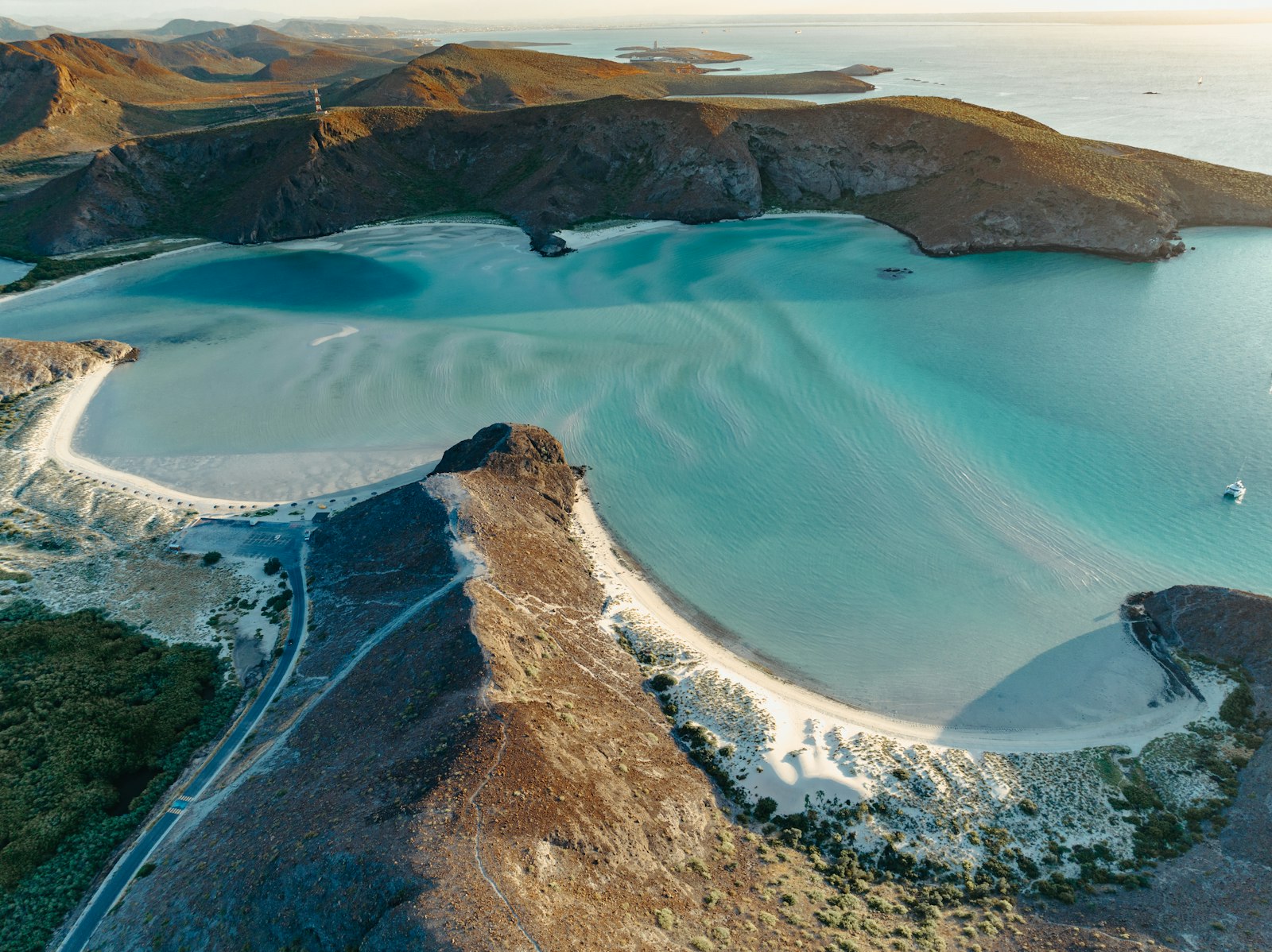
Balandra is the photo that sells La Paz, and of the three it's the one I'd rank last.
It's a shallow, sand-bottomed lagoon, and the water barely gets past your waist however far out you walk. There are no waves. For little kids and for people who don't swim, I can't think of an easier piece of ocean. And the view from the short path over the hill, with the whole lagoon below you, is the one on the posters.
What the photos leave out is that entry is rationed. The beach opens in two sessions a day, a morning one and an afternoon one of about four hours each, with a cap of roughly 450 visitors per session. Rangers clear the sand in between. When the count is reached the gate closes, and as far as I can tell, people going home early doesn't open up any spots.
You also pay a park fee of about 125 pesos a person, with kids under 12 free, and you get a bracelet for it. Paying the fee doesn't hold your place. You still have to be inside the count.
How you buy that bracelet is the part I can't pin down for you, because it keeps changing. I've seen it explained as in person at the gate, as online only, and as a mix of the two depending on the session. So check the park's official page the week you go, and buy online there if it lets you. I'd stay away from the resale sites, which charge two or three times the fee.
Then get in line early anyway. On an ordinary day, half an hour before a session opens is usually enough. Over Easter week, the summer school vacation and the holidays, the line forms an hour or more ahead. And please don't count on walking in at midday. Turn up at two on a Saturday afternoon and the beach can already be full for the day.
Once you're in, here's what to know:
- Nothing is sold inside. There's no food, no drinks, no shop and no trash cans. Bring water and lunch, and carry your trash back out.
- Shade is limited. There are a handful of free palapas, first come, and umbrellas and chairs are usually for rent on the sand for a couple hundred pesos.
- The tide decides which beach you get. At low tide it's ankle-deep sandbars you can walk across, which is the postcard. At high tide the middle is about four feet deep, which is the swim. Nobody tells you which one is coming, so look at a tide table.
- Shuffle your feet. Stingrays live in the shallows.
- Bring water shoes. There are stones underfoot in places. Some days there are biting bugs and the odd jellyfish too.
- The mushroom rock is around to the right, and you wade to it. Expect a crowd taking turns for the photo.
- Leave these at home: alcohol, glass, foam coolers, speakers and drones.
- Skip the mask. It's sand and shin-deep water, so there's nothing to snorkel over.
Kayaks and paddleboards are sometimes for rent on the sand. I wouldn't plan the morning around them being there.
Balandra splits people, and I understand both sides. At eight on a weekday morning at low tide, it's as pretty as any beach I know in Mexico. At midday with a full session and a line at the rock, it's a very nice, very crowded beach, and after three hours in a car it can feel like less than the photo.
A day-tripper is a late arrival almost by definition, and Balandra is hard on late arrivals. The coach tours from Cabo that do get in give you about two hours on the sand out of an eleven or twelve hour day. When the guide misjudges the line you can miss the beach altogether, and the tour listings themselves warn that the wait can be up to two hours with no guarantee. If what you want is a calm beach day, you have closer ones. Chileno is twenty minutes from Cabo San Lucas with no head count, and it's near the top of the best swimmable beaches in Cabo.
Whale Sharks
This is the best reason to go to La Paz, and it's also the least dependable. I'd like you to book with both of those in mind.
The name confuses people. Whale sharks are fish, the biggest in the sea, and they have nothing to do with the humpbacks in my post on whale watching in Cabo. You watch a humpback from a boat. You get in the water with a whale shark. They're in La Paz bay, never in Cabo, and they come in to feed on plankton near the surface, off a sandbar across from the city.
You check in at a marina, get a wetsuit off a rail and listen to a briefing. The boat ride is fifteen or twenty minutes across flat water. Then the boat idles while a spotter on the bow looks for a shadow. The guide says go, you slide off the side, and for a second you can't see anything. Then you see all of it at once, a spotted side as long as the boat, moving slowly and still faster than you can swim. You kick hard for a minute or two, it's gone, and you climb back up the ladder and do it again. A boat gets up to about two hours in the zone.
When the sharks are there, it's the best wildlife experience in the state, and I think it's worth a long day.
It does take effort. This is real swimming in open water, over and over, and the tour companies say so themselves. The water is cold, in the high 60s from January to March, which is colder than Cabo. And it's green. The sharks are there to eat plankton, so please don't expect clear blue water. Ask whether a wetsuit is included, because it isn't always. Most tours take kids from age 8.
The rules are strict, and I like them. A guide is in the water with you, the groups in the water are small, and you keep your distance, stay out of the shark's path and never touch. Each boat's time with any one shark is limited.
How the Season Really Works
The season is declared each year, with a window that runs from fall to the end of April. That window only says when swims are allowed. Nothing runs until official counts find enough sharks in the bay, and the number of boats allowed out goes up and down with the count. When too few are counted, the swims stop.
That has happened in the middle of recent winters, for weeks at a time, right in the months people call the peak. The start moves too. In recent years it's been closer to mid-November than to October.
So I'm not going to call any month dependable. Late fall to spring is the window, and late winter has recently been the best of it. What you can control is the booking. Go with an operator who refunds you if there are no sharks or the season is suspended, and ask that question before you pay a deposit.
Booking a Boat
You don't choose your time. The boats are assigned slots through the day, and operators confirm yours the day before. It could be seven in the morning or two in the afternoon. Check in early, because a late arrival loses the seat.
Don't drive up hoping to find a boat at the dock. The slots are allocated and people do get turned away. Book ahead with a permitted operator.
From La Paz, a seat runs about US$125 to $185 a person. Three I'd start with:
- Baja Expeditions runs a three to five hour trip with lunch for about US$125, with a minimum of four people.
- Baja Adventure Co. is about US$185 a person, with a minimum group size.
- Sea Kayak Adventures charges about US$185 a person for four or more and quite a bit more for two or three. It also puts its refund policy in writing: your money back in full if there are no sharks or the weather stops the boat.
That last one is the policy I'd hold everyone else up against.
From Cabo, with the ride and lunch included, it's about US$260 to $300 a person. I'll get to those in a minute.
For a day-tripper, it's the one draw that can fit into a single day, and it's the one where a count taken the day before can cancel your plans. On a tour from Cabo you might get an email the afternoon before offering sea lions, another date or your money back. Which of those you get depends on what you asked when you booked.
Espíritu Santo and the Sea Lions
For me this is the best full day of the three, and it's the one that can't be squeezed.
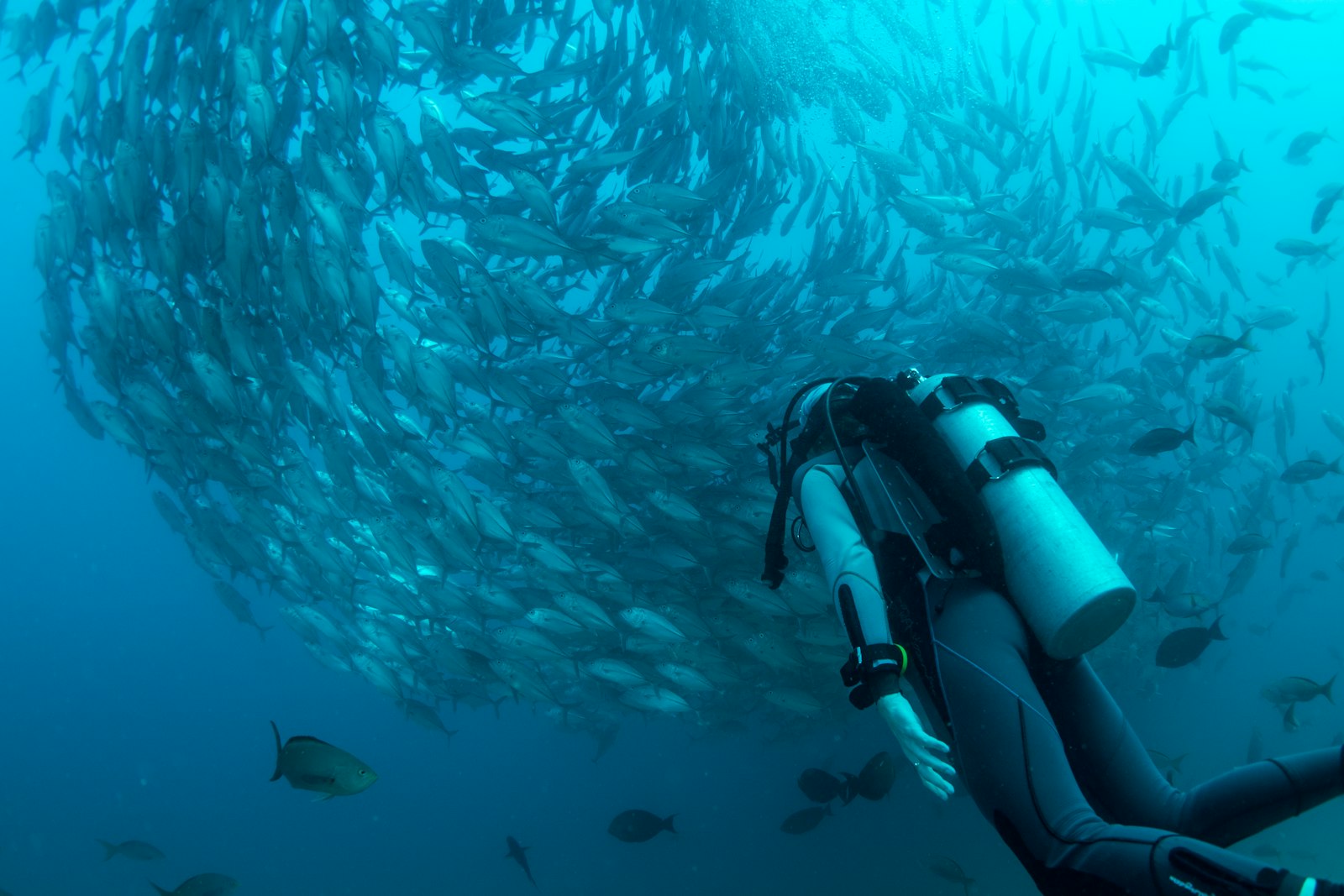
Espíritu Santo is an uninhabited island and a national park, out in the gulf north of La Paz. You go by small boat from the city, with about ten people under a canopy. It's an hour to an hour and a half up the west side of the island, past red cliffs and coves, to two big rocks off the northern tip called Los Islotes. That's where the sea lions are, hundreds of them, in the biggest colony in the southern gulf. You get about an hour in the water there. The young ones are the curious ones, and they come over to you. Then it's lunch on an island beach, usually ceviche out of a cooler, and the ride home.
The boat leaves around 8:30 in the morning and you're back on land mid-afternoon, so plan on roughly seven hours on the water.
From La Paz it's about US$100 to $170 a person on a shared boat, usually with the wetsuit, the gear, lunch and the park fee included. From Cabo, with the ride, it's about US$260 to $280 once the fees are added, and it's a ten-hour day with a stop for breakfast on the way.
There are three things to know before you book.
The first is the summer closure. Nobody swims with the sea lions at Los Islotes from June through August, because it's their breeding season. Boats can still go and look. In those months the tours swim at a small colony much closer to the city.
The second is that small colony, because it shows up in tours all year. Some of the combination trips from Cabo that say "whale sharks and sea lions" visit the little colony near the La Paz harbor and never go out to Los Islotes. It's a perfectly nice stop. It just isn't the place in the pictures, which is an hour and a half farther by boat. Ask which one you're getting.
The third is the wind. From about December to March the north wind can blow for days, and when it does the small boats stay in port. Even on a day they go, the ride back in the afternoon can be bumpy and wet. If you get seasick, know that the whale shark boats stay inside the bay and this one crosses open water.
If the sea lions are the main thing you're after and a night in La Paz doesn't fit, there's also a colony at the south end of the park in my Cabo Pulmo day trip post, and it's a shorter drive.
For a day-tripper, this is the hardest of the three. The boat is gone before a car from Cabo can get there in daylight, so it's a tour with a very early pickup or it's a night in La Paz. I'd take the night.
If You Only Have a Day
Pick the whale sharks, go on a tour from Cabo, and put it early in your trip so there's room to move it.
I'd pick the whale sharks because nothing near Cabo is like it. Balandra has closer stand-ins, and the island really needs the night. These are the ones I'd look at:
- Cabo Adventures runs a ten-hour whale shark day for about US$260 a person, with a hotel shuttle, a wetsuit and lunch. The minimum age is 8.
- Dive Cabo runs a small-group whale shark day for about US$300, leaving from its shop on the marina before dawn and getting back late in the afternoon, with about two hours in the zone. Ask about a wetsuit.
- Dive Cabo's combination day adds sea lions for about US$400 and gets back around dinner time. The sea lions on that one are the small colony near the harbor. For Los Islotes they sell a private charter, at about US$1,500 for a boat of up to five.
Whoever you book with, ask two things. What happens to my money if the swims are suspended or no sharks are found? And is the wetsuit included?
If it has to be Balandra, the tour I'd look at is the one that arrives by sea. Cabo Adventures runs a day with a catamaran that sails into Balandra bay from the port nearby, so you aren't in the line at the gate. You see the mushroom rock from the water, snorkel in the bay and look at the small sea lion colony from the boat. It's eight or nine hours all told, about four of them on the catamaran, and there's about US$20 in dock and park fees on top. Kids can go from age 5. I don't have a price for it that I trust, so check their site.
The coach tours to Balandra by road are the ones I'd skip. They're the cheapest, at about US$125 a person, and they're eleven or twelve hours for two hours at the beach if the line goes your way.
As for driving it yourself in a day, Balandra only works in late spring and summer, for the afternoon session. Leave around nine, be in the line of cars by noon, leave the beach by about four and you're home with the light going. It'll be very hot. For the whale sharks, you can book a seat in La Paz and drive up, but your slot gets assigned the day before, and an early one means a start in the dark. In winter I wouldn't.
One Night, or Two
One night changes everything about this trip, and I think it's the smallest version worth doing.
Here's how I'd lay it out:
- Day one. Leave Cabo San Lucas around eight, stop in Todos Santos for coffee or an early taco, and be in La Paz around midday. The afternoon is for whichever of the two you've got: a whale shark boat if you were given an afternoon slot, or Balandra's second session if you're up there in time for the line. Then it's sunset on the waterfront and dinner.
- Day two. Balandra's morning session, leaving the hotel before seven, or a morning whale shark slot. Have lunch and be on the road by about 2:30 so you're back in Cabo in daylight.
That gets you two of the three. It doesn't get you the island.
What you notice is how different the same places feel. You're in the Balandra line after a half-hour drive, the line is short, the water is flat and the light is low. By the time the rangers clear the beach at midday, you're ready to leave anyway. You take whatever whale shark slot you're handed without it wrecking the day. And you drive the highway in daylight both ways.
Two nights adds the Espíritu Santo day in the middle. It also gives you slack, which matters here more than anywhere else I send people. If the wind keeps the island boats in or the shark count drops, you have another morning to try.
If you're in Cabo for seven nights or more and you've got a car, a night or two up here in the middle of the trip is the best use of that car I know.
The Drive, Both Ways
The easy way up is Highway 19 from Cabo San Lucas. It's free, it's four lanes at least as far as Todos Santos, and La Paz is about an hour beyond that. The stops I'd make in town on the way are in my Todos Santos day trip post, and a coffee there breaks up the drive nicely.
Fill the tank before you leave. There's gas in Todos Santos and plenty in La Paz. All the way to Balandra and back is about 230 to 240 miles, which is roughly US$30 to $45 of gas in a small car. The road out to Balandra is paved the whole way, so there's no dirt-road question for your rental contract. If you're renting just for this, the real price and the insurance are in renting a car in Cabo.
The rule that shapes both days is the same one I use for every long drive here. Be off the highway before dark. Cows and horses wander onto these roads at night, and I go through that and the other real risks in is Cabo safe. In winter, that means leaving La Paz by about 2:30.
The Loop Through El Triunfo
There's a second road home, and it's the more interesting one. Highway 1 runs south from La Paz through the mountains, past El Triunfo and Los Barriles, and comes out in San José del Cabo.
El Triunfo is an old silver mining village, 30 to 45 minutes south of La Paz. It has two small, modern museums, one on the mining days and one on Baja's cowboys, a tall brick smokestack left over from the mine, and a café in a restored building with a wood-fired oven. I'd give it an hour to an hour and a half. The museums are about 100 pesos each, and they're closed on Tuesdays, so don't make it a Tuesday.
From El Triunfo it's roughly another two and a quarter to two and a half hours to San José, on two lanes with curves. That's why I'd only do the loop with a night in La Paz behind me, and with an early start, so the mountain road is finished well before dusk. It suits people who are staying in San José or flying home from there, since the airport is at that end of the highway, and my Cabo airport guide covers the rest. If you're still choosing a base and La Paz is high on your list, every area down here is compared in where to stay in Cabo.
As a day trip, the loop is five and a half to six hours of driving with no time left for anything. Please don't.
Without a Car
You can get to La Paz without one, and it works a lot better for an overnight than for a day.
A long-distance coach line called Águila runs between Cabo San Lucas and La Paz through the day. The ride is a little under three hours, and the fare has been somewhere around 400 to 550 pesos each way. Those are older figures and I've never found two timetables that agree, so go to the terminal the day before and get the times for both directions. The terminal in Cabo San Lucas is on the edge of town, nowhere near the marina, so take an Uber to it. In La Paz the terminal is on the waterfront, and you can walk to a hotel from there. The other long-distance options are in getting around Cabo.
That gets you to the city, and Balandra is another half hour out. There's a beach bus from the waterfront for a few dollars, but I've seen its first departure listed at times that are too late for the morning line, so ask at the terminal. A taxi out there is around 250 pesos one way, and getting one back is the unreliable part. Uber does work inside La Paz, but it isn't a way home to Cabo.
So if you don't drive, take a tour for one day. For a night or two, take the coach, stay on the waterfront, and book boats that leave from there.
A private driver for the day is possible, and nobody publishes a rate for it. Going by what drivers charge by the hour, I'd guess US$600 to $850 for a day this long, so get a firm quote before you agree to anything.
When to Go
There's no month when all three are a sure thing. The closest you get is late March or April, when the whale sharks are usually still running, the sea lions are open, the north wind is easing and the days are long enough to make the drive home comfortable. I'd avoid Easter week, when the Balandra line is at its worst. December is my second choice.
| When | Whale sharks | Sea lion swim at Los Islotes | Mobula rays | Water | Wind | Heat |
|---|---|---|---|---|---|---|
| October and November | Allowed on paper, often not running until mid-November or later | Open | Varies | Warm and cooling | Light in October, north wind starts in November | Hot, then pleasant |
| December and January | Usually running, can be suspended | Open, choppy on windy days | Varies | Low 70s dropping to the high 60s | North wind, strongest of the year | Mild days, cool mornings, short days |
| February and March | Recently the best of it, and also when it has been shut down | Open | No | High 60s, the coldest | North wind, easing in March | Mild to warm |
| April | Runs to the end of the month, thinning out | Open and calmer | Start mid-month | Around 70 | Light | Warm, longer days |
| May | None | Open, and the best conditions for it | Peak late in the month | Warming | Evening breeze begins | Hot, long days |
| June to August | None | Closed to swimmers | Peak in June, fading in July | Warm | Evening south wind, storms possible from August | Very hot |
| September | None | Reopens | No | Mid 80s, the warmest | Storm season, port closures | Very hot |
The mobula rays are a separate trip out toward La Ventana, so that column is there to help you pick dates. The summer wind in La Paz comes up in the evening and blows through the night, which cools the city down and can make an early boat ride lumpy. And storm season can close the port for days, the same as in Cabo.
If you're coming from June to September, there are no whale sharks and no swimming at Los Islotes until September, and it's very hot. That mostly leaves Balandra, by the afternoon session or by boat. The rest of the calendar is in the best time to visit Cabo.
What It Costs for Two
This is my own arithmetic for two people, in round numbers, so please don't hold me to the dollar.
- A tour from Cabo for one thing: about US$550 to $850 with tips. The whale shark day is the lower half of that, and the whale shark and sea lion combination is the top.
- A self-drive day to Balandra: about US$130 to $200, with a one-day rental, gas, the bracelets, a rented umbrella and a packed lunch.
- A self-drive day for whale sharks: about US$270 to $575, and the spread is almost all in which boat you book.
- One night, with whale sharks and Balandra: about US$600 to $1,250. That's the car for two days, gas, a hotel, two boat seats, the Balandra fee, and your meals. The hotel and dinner are what move it.
- A second night with the island day: roughly US$500 to $800 more.
Going by coach saves a little on the car and costs you Balandra on your own schedule.
A tour from Cabo for one activity costs about the same as a night in La Paz that gets you two. And the cheapest version, the self-drive day, is the one that fits the daylight worst.
The tour is worth it for the whale sharks, when they're running and it's your only way to see them. For Balandra by coach, it isn't. Where a side trip like this sits in the whole budget is in how much Cabo costs.
La Paz Itself
If you're staying over, it helps to know what kind of place you're sleeping in. La Paz is the state capital, a working city with government offices and a university, and it's calmer than Cabo and a lot less built around visitors. The center of it for you is the malecón, the promenade along the waterfront. The tour docks, the coach terminal and most of the hotels you'd want are on it or a block or two behind it.
The bay faces west, so the sun sets over the water, and a walk along the waterfront at that hour is the evening I'd plan.
What I'd want different is the swimming. There's no good beach in town, which surprises people. The beaches are a drive away, and the best known of them is the one with the head count.
Where to Stay
Baja Club Hotel is the nicest place in town, with about thirty rooms in a restored old house and a new wing right on the malecón, plus a rooftop bar and a pool. It runs about US$300 a night, closer to US$360 with tax.
Below that, there are mid-priced hotels on the waterfront or a few blocks back, at about US$150 to $200 a night with tax, some with a rooftop pool or breakfast and parking included. Rooms near the malecón go a lot lower than that, down to around US$40 to $90, though I can't point you to one of those I'd vouch for.
Ask your boat operator where the boat leaves from before you book the room. Some go from the waterfront in town and some from a marina north of the city, and for an early slot you'll want to be close.
Where to Eat
I know La Paz's restaurants less well than Cabo's, so this is a short list.
Nemi is the dressed-up dinner, with contemporary Mexican cooking in the historic center, and it's the one table I'd book ahead. I know it by its reputation more than by the plate, so I can't give you an order.
For tacos, which is what this town is known for:
- Tacos de Pescado El Estadio does battered fish and shrimp tacos with a chipotle salsa. It's a morning place and it's sold out before about one, so go for a late breakfast.
- Taco Fish La Paz is the name most tied to the city, for beer-battered fish and shrimp.
- Taquería Mi Jardín is the evening one, for al pastor.
Who Should Skip It
I'd rather talk you out of this now than have you find out at a closed gate.
- It's your first trip and you have four or five days. It takes a whole day out of three real ones, and I left it out of my 5-day Cabo itinerary for that reason.
- You want a beach day. Chileno is twenty minutes from Cabo San Lucas, it's free, and nobody counts you in. Bring a mask, too, because there are fish there, which I cover in snorkeling in Cabo.
- You're here from June to August. No whale sharks, no swimming with the sea lions at Los Islotes, and a LOT of heat.
- Your kids are under eight. Balandra is perfect for them, knee-deep with no waves, but not after a four in the morning start, and the whale shark tours won't take them. Stay over or skip it.
- You get seasick and the island is what you wanted. It's open water both ways, and in winter it can be rough.
- You can't book something refundable. If a canceled whale shark day would ruin the trip, don't hang the trip on it.
The people who should go are anyone who came to Baja for the whale sharks, keen snorkelers with two nights to give it, and anyone on a longer stay with a car who'd like to see a working city on the Sea of Cortez.
The Verdict
La Paz is worth going to, and I wouldn't do it as a day trip. What's up there is better than anything it would replace in Cabo. It just all runs on somebody else's clock, two and a half hours from your room.
What I love is that the wildlife is taken seriously. When the shark count drops, the whole fleet stays at the dock, and that costs those operators their best-selling tour. What I wish were different is how much of this is out of your hands. You can do everything right and still get a full beach, a windy morning or a bay with too few sharks in it.
Here's where I'd send you:
- Whale sharks are why you came, and you can spare a night: stay in La Paz, book a boat with a refund policy, and add Balandra the next morning.
- Whale sharks are why you came, and you can't: the tour from Cabo, early in your trip, on a booking you can get your money back from.
- Seven nights or more, with a car: one or two nights in La Paz in the middle of the trip.
- Keen snorkelers: two nights, for the sea lions at Los Islotes from September to May and the whale sharks when they're running.
- Based in San José: it's a little farther for you, so the overnight makes even more sense, and the El Triunfo loop is yours on the way home.
- You don't drive: a tour for the day, or the coach for an overnight.
- Everybody else on a first trip: leave it for a trip of its own. It deserves one.
Would I do the day tour again? Only for the whale sharks, and only if there were no other way... and I'd set the alarm knowing a fish count could cancel it.
La Paz is two and a half hours each way, whatever the internet says, and Balandra is another half hour. Don't day-trip it unless it's a whale shark tour with a refund. Stay a night and do two things, or two nights and do all three. Balandra has a cap, so check the park's page that week and be in line early. No swimming with the sea lions June to August, and ask which colony your tour goes to. Leave La Paz by 2:30 in winter. Home before dark.
Quick Answers
Can you do La Paz as a day trip from Cabo? Yes, on a tour, for one thing: the whale shark swim, Balandra or the island. It's a ten to twelve hour day with about five hours in a van, so I'd stay a night if you can.
How far is La Paz from Cabo San Lucas? About 100 miles, and two and a half hours to the waterfront. Balandra is another half hour past the city, and from San José it's about three hours by the mountain road.
Do you need a reservation for Balandra? You need to pay the park fee, about 125 pesos, and be inside a cap of roughly 450 people per session. How the bracelet is sold keeps changing, so check the park's official page the week you go and get in line early.
When is whale shark season in La Paz? The window runs from fall to the end of April, but boats only go when enough sharks have been counted, and the swims can be stopped mid-season. Late winter has recently been the best of it, and nothing is guaranteed, so book somewhere that refunds.
Can you swim with the sea lions all year? No. Swimming at Los Islotes is closed from June through August for the breeding season. Some tours use a smaller colony near La Paz, so ask which one you're booking.