Snorkeling in Cabo: The Best of It Is Free Before 10am
By Cabo Wander
Snorkeling in Cabo looks better on a tour page full of colorful coral than it does through a mask. My honest answer is that Cabo is a decent place to snorkel and not a great one. You get a LOT of fish, over granite boulders, in water that's warm and clear for about three months of the year and cold or cloudy for most of the months people visit.
The good part is that the best of it is free. Walk into the water at Chileno Bay before 10am with your own mask and you'll have a better snorkel than the people on the catamaran that anchors outside the buoys later that morning, and they paid well over a hundred dollars each. The boat tours go to the same rocks you can swim to from the sand, and they give you a lot less time in the water.
The one place within a day of Cabo that earns the words the brochures use is Cabo Pulmo, a real coral reef inside a national park. It's also more than two hours away each way, and it takes your whole day.
So I think of snorkeling here as one really good morning of the trip. It's number three on my list of things to do in Cabo, and I'd put it there for almost anyone. If you're picturing Cozumel or Hanauma Bay, though, either lower the bar a little or plan the drive to Cabo Pulmo.
The month you come matters more than which beach you pick. I've been in at Chileno in February when the water was murky and very, very cold, and in November when it was warm, clear and full of fish. Those were the same rocks.
Where to Snorkel, Ranked
I've ranked these purely as snorkeling. If you want them judged as places to swim and spend a day, that's a different order, and it's in my list of the best swimmable beaches in Cabo.
1. Chileno Bay
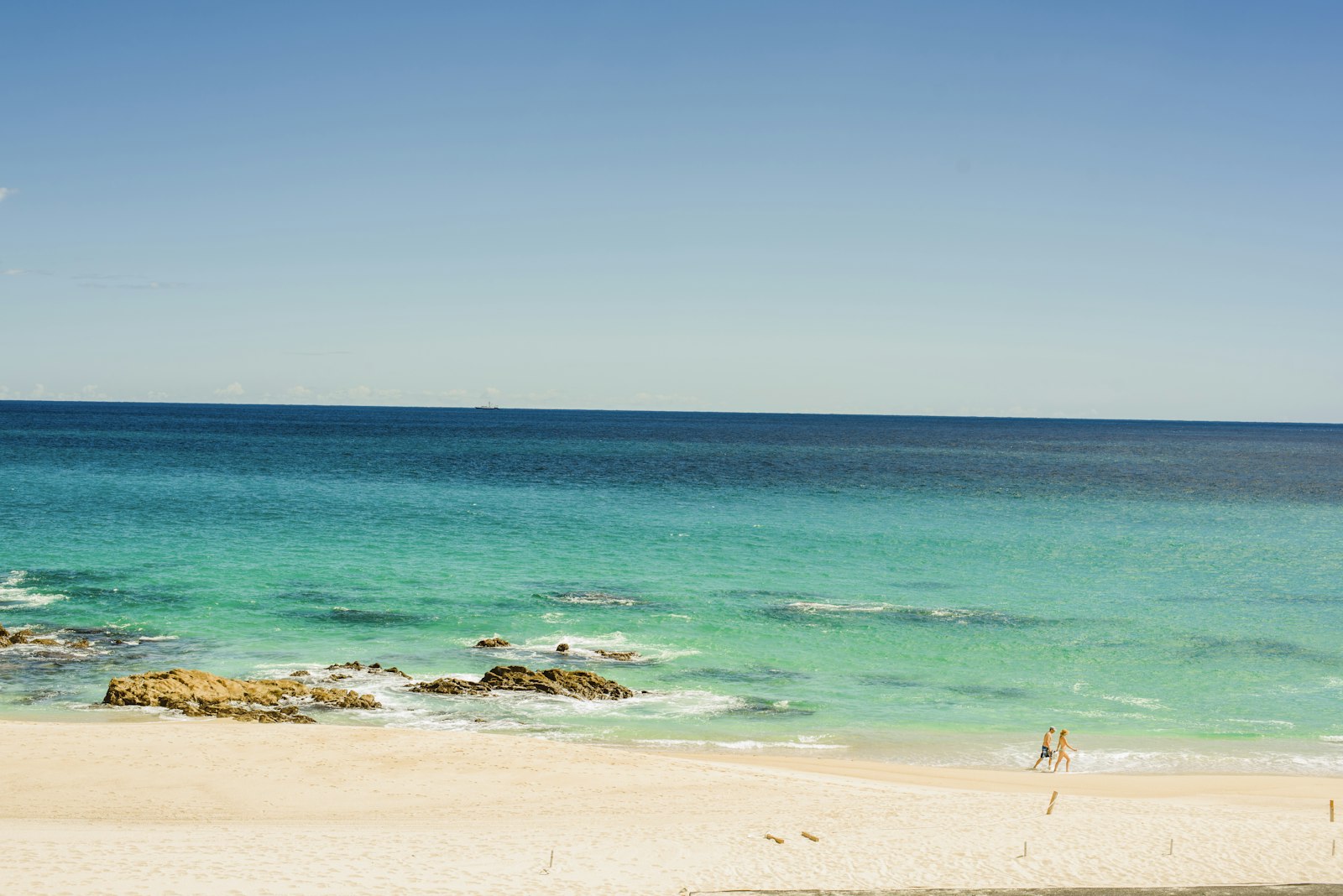
Chileno is the best snorkel you can walk into from a beach anywhere near the resorts, and it costs nothing.
Stand on the public sand facing the water and walk to the right-hand end. The middle of the bay is plain sand with nothing to look at, and I've watched people paddle around out there wondering where the fish are. They're along the rocks. A short swim out from the right end, the sand gives way to boulders and the sergeant majors turn up in a group. Keep following the rocks out and you get gullies between big boulders, parrotfish crunching away at the rock, a puffer hanging in a gap, and a king angelfish that won't hold still for a look.
The good stuff is shallow, roughly 6 to 15 feet, so you don't have to be a strong swimmer to see it. Fins are worth bringing here, because it's a swim along the rocks more than a float in one spot. It gets deeper toward the point and there can be some current out there, so I turn around before I reach it.
What I wish were different is the hour it stops being good. Around 10:30 a catamaran anchors just outside the buoys and a line of people in orange life vests kicks in toward the rocks you've been enjoying on your own. If you were there at 8, you won't mind, because you'll be drying off by then. I'd also avoid Sundays, when the lot fills early.
Parking, bathrooms and what to pack are all in my Chileno Bay guide.
2. Pelican Rock
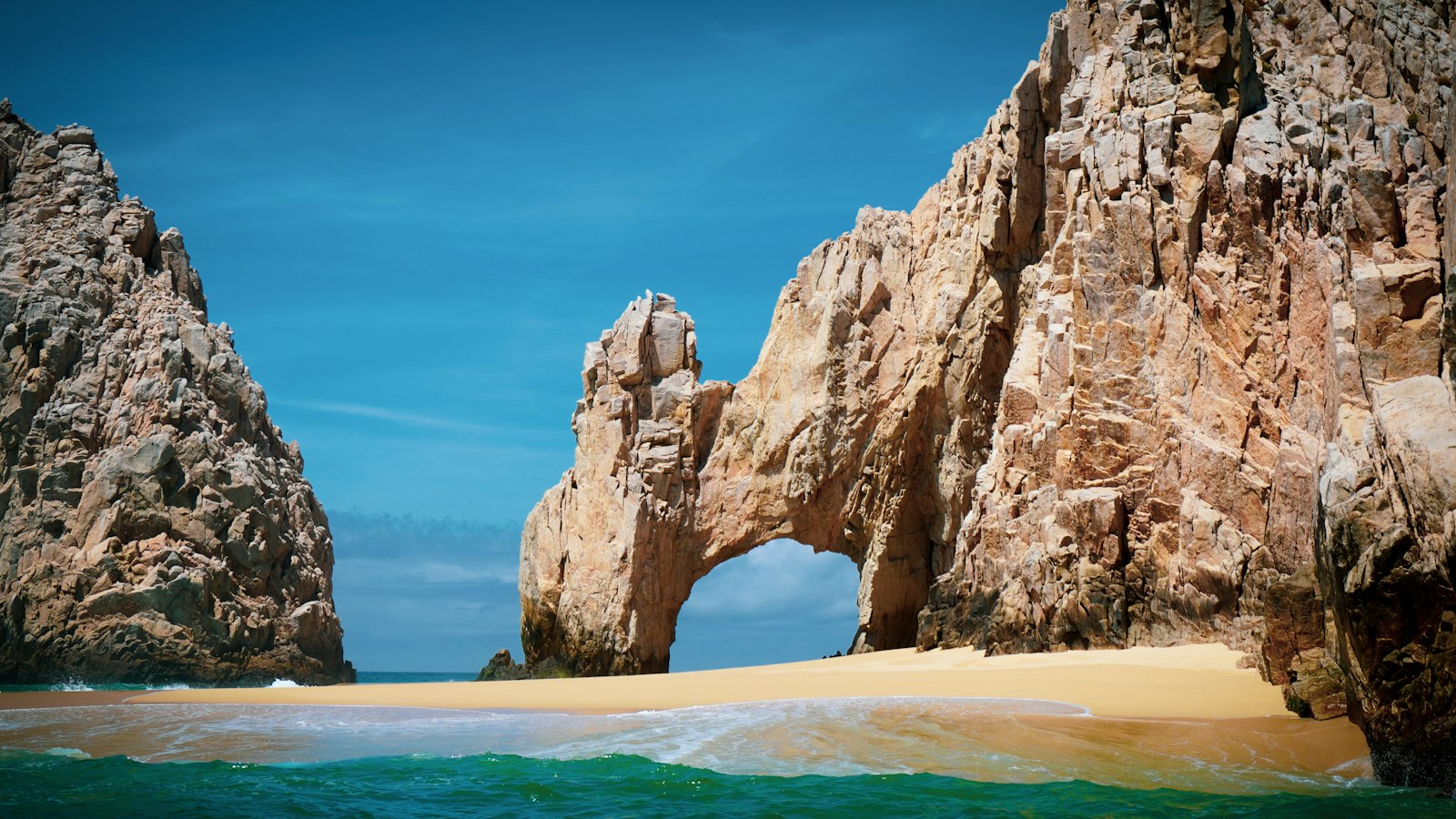
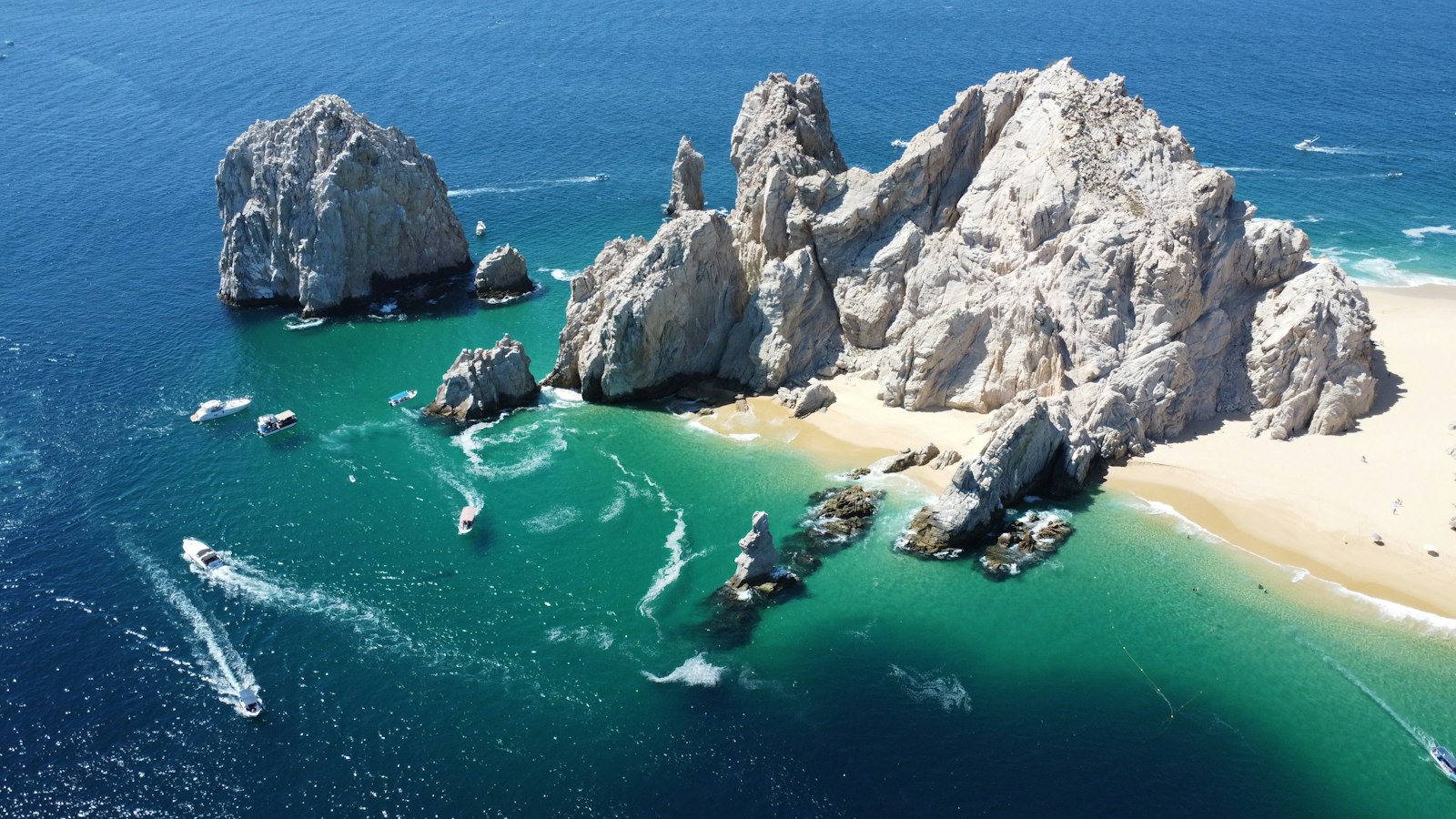
Pelican Rock has the thickest fish close to town, and it's also the busiest patch of water in Cabo. It's a rock stack with a pocket of beach on the bay side of Land's End, ten or fifteen minutes by boat from the marina.
The fish come at you in a cloud here. Part of the reason is that boats have been feeding them for years, which I'm not wild about, but it does explain why they're so thick. Around the rock there are shallow ledges, and then the bottom falls away down a wall into very deep water. You'll see snorkel tours mention the famous sand falls at this spot. As far as I can tell those are a diver's sight, well below where you'll be, so don't expect to see them from the surface.
You need a boat to get here. The cheap way is a water taxi from the marina for about US$20 a person round trip, with your own mask and a pickup time agreed before you step off. I explain how to deal with the boatmen in my guide to El Arco and Lover's Beach. The other way is a small-boat tour, which I'll get to below.
Every Arch boat stops at this rock, though, and by mid-morning there are dive boats, snorkel boats, water taxis and kayaks all sitting over it. There's a roped-off area, and I stay inside it. There's no lifeguard, the water is colder than at the Corridor coves, and the current can carry you toward the rocks faster than you'd think. On a day with swell, getting in and out at the little beach is rough. I've watched people get knocked into the rocks there.
Bottom line: at 8am on a flat day it's very good. At 11am on a cruise ship day I'd skip it.
3. Santa María Bay
This one could be number two. If you have a rental car, I'd go here before Pelican Rock, because there's a lifeguard, free parking, no boat fare and no boat lane beside your head. I only rank Pelican Rock higher because it has more fish.
On some mornings the water at Santa María is clearer than at Chileno, a few minutes up the highway. Fish swim up to you almost as soon as you're in, and on one clear summer morning I could see the schools from the surface before I'd put my mask on.
Go to the right as you face the sea, to the rocks at the far end. The left side is rougher and deeper and has current, and the middle is sand, which is where the tour boats park. By 11 there can be five to ten of them in the bay.
It's a smaller cove than Chileno with a steeper way in, and the sand is really tiny pebbles, so bring water shoes. Nobody rents gear here. And it faces south, so it takes more swell in summer than its sheltered shape suggests. Both coves are covered in my Tourist Corridor guide.
4. Playa Empacadora
This is the surprise on the list. It's a free snorkel you can walk to, about ten minutes on foot from where the cruise ship tenders drop people off.
At the south end of the beach there's a patch of reef right off the sand with a lot of fish on it. The water is calm, there's a lifeguard tower, and nobody is selling anything. If you're in town without a car, or you're off a ship with a few hours and a mask in your bag, this is where I'd send you.
The catch is that it's harbor water, so I can't promise you how clear it will be on a given day. There's no gear to rent and no shade.
At low tide you can walk around the rocks from that south end to the little beach at Pelican Rock. Please walk it and don't swim it. Swimming across means crossing the water that every boat leaving the harbor uses.
5. Lover's Beach, Bay Side
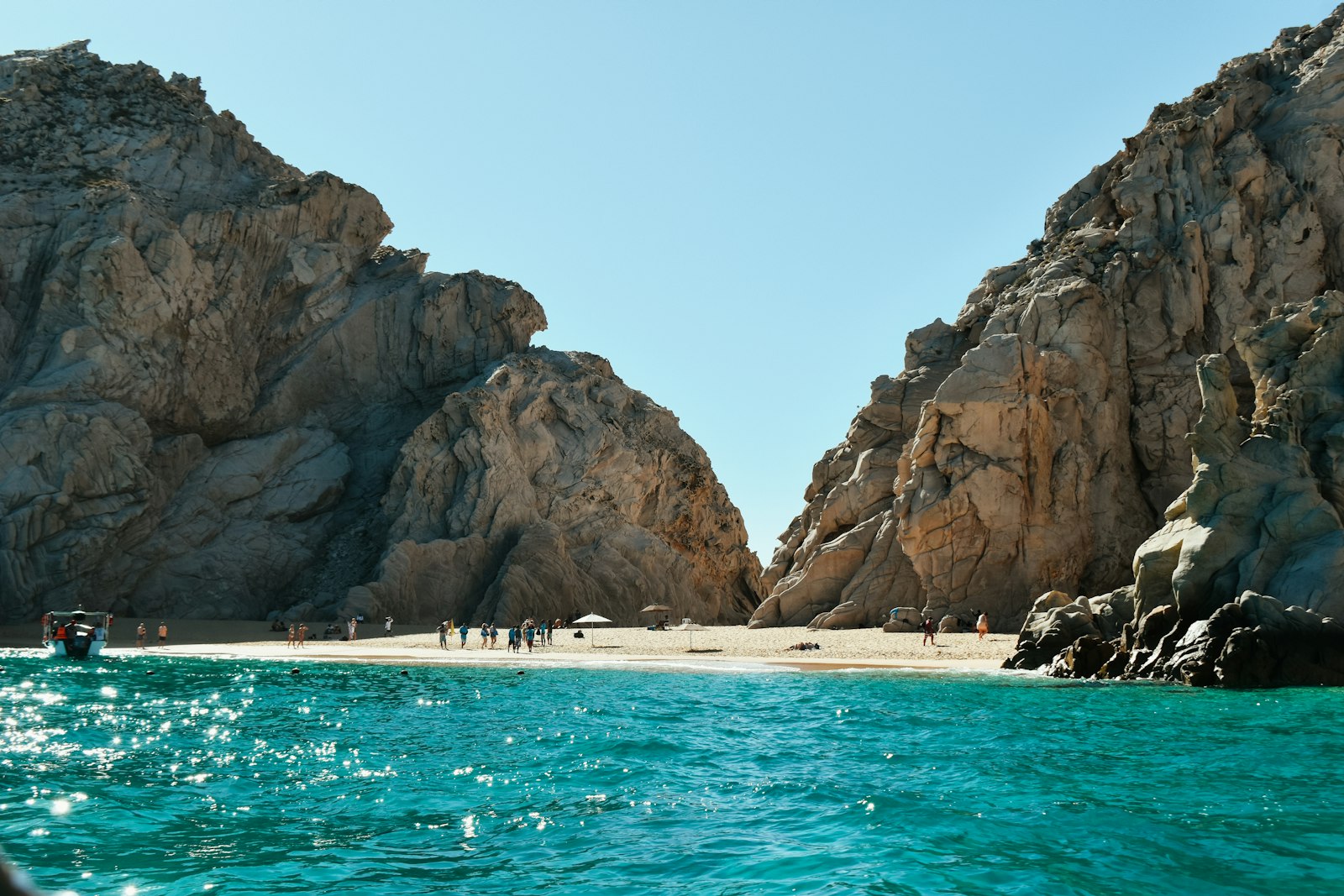
Lover's Beach is a place to stand between two seas, and the mask is an afterthought. There are fish along the granite on the bay side, in shallow water, heading toward Pelican Rock. There's also no lifeguard, a quick drop-off, current toward the point and cold water, and some days the boats can't land there at all.
If you're taking a water taxi out there with snorkel gear, ask to be dropped at Pelican Rock.
The Ones That Aren't Really for Snorkeling
Three more names come up a lot, so here's the quick word on each.
- Las Viudas has beautiful tide pools, and waves that break right onto sharp rock with no lifeguard. Strong swimmers get in on dead-flat mornings. I look in the pools and stay dry.
- Palmilla is a lovely swimming beach with a little reef in one corner, and you can rent gear near the parking lot. It's a nice place for a kid's first try with a mask. I wouldn't drive there for the fish.
- Médano Beach has nothing to see with a mask on. Enjoy it for the swim.
Cabo Pulmo Is a Different League
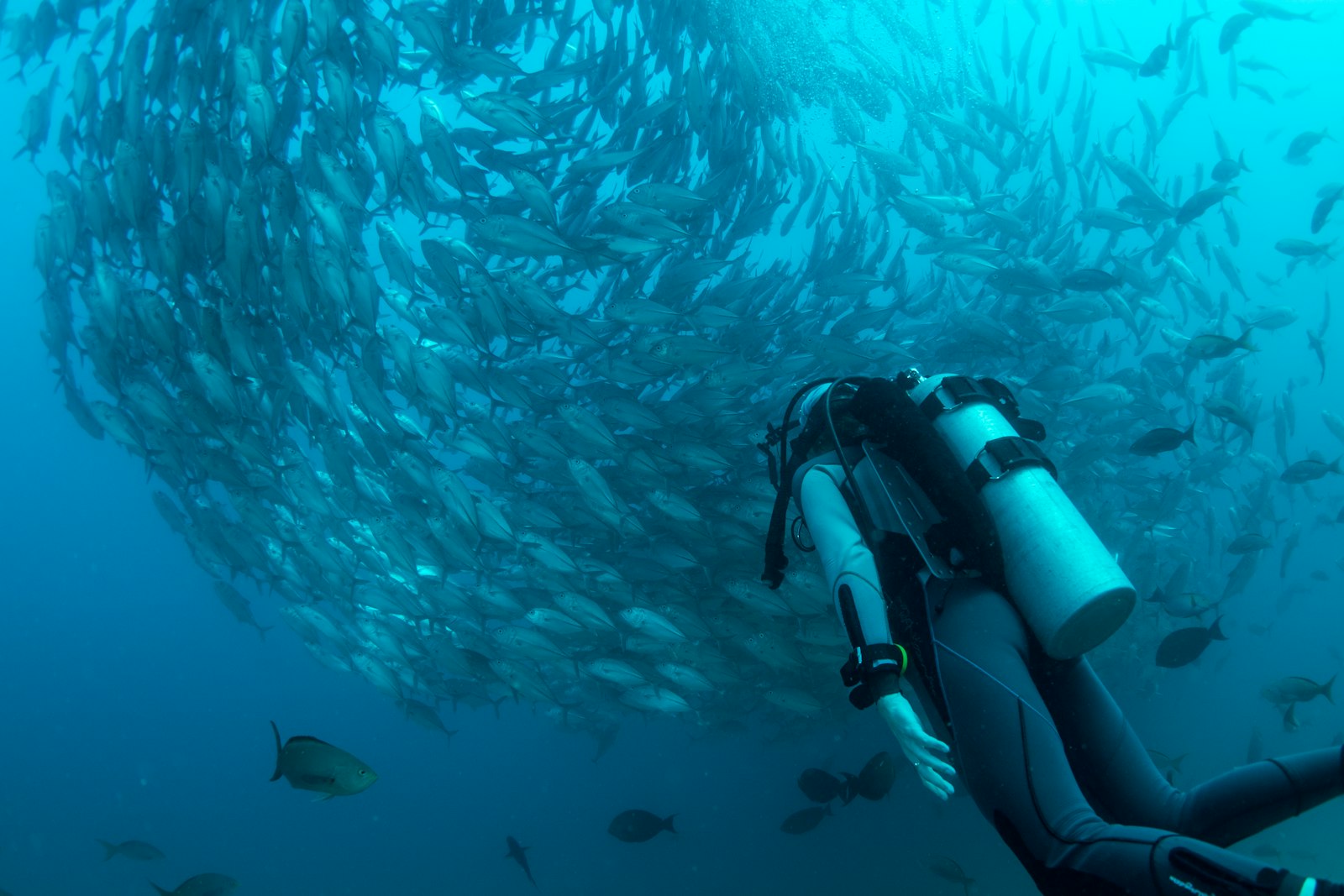
If snorkeling is one of the reasons you travel, this is the day to plan around. Cabo Pulmo is a national park on the East Cape where fishing has been stopped since the 1990s. The people who lived there asked for it, which I love. It's a true reef of hard coral, and the fish are there in numbers the cape doesn't have: big wheeling schools of jacks, snapper, grouper, turtles, and sea lions on the rocks and in the water.
You can't just swim out to it. The reef is by guided boat only, with a local guide, on a small open boat that leaves from the village beach and makes three or four stops in two to two and a half hours. A life jacket is required the whole time you're in the water, which means you can't dive down. I thought that would bother me, and by the second stop I'd stopped thinking about it.
What it costs and what to know:
- Drive yourself and book a village boat: about US$80 to $100 a person, with gear, the guide and a park fee of a few dollars included.
- A tour from Cabo: roughly US$200 to $300 a person. Some don't take kids under ten.
- The drive: 2 to 2.5 hours each way from Cabo San Lucas, and the last stretch is washboard dirt. Check what your contract says about dirt roads, which I cover in renting a car in Cabo.
- The village: cash only, with no ATM and no gas station. Bring pesos and a full tank.
- The clock: take a morning boat, because afternoons are windier, and be off the rural roads before dark.
October and November are the months for it. From January to March the water is cold and the north wind can cancel the boats after you've already made the drive, so check the wind before you leave. Coming back in through surf can be a bumpy landing too.
If you'd rather stay on the sand, Los Arbolitos is a small beach inside the park, about ten minutes past the village, where you can snorkel from shore without a boat. It has a reputation for turtles that I can't personally vouch for.
It's easily worth a whole day for a keen snorkeler in the fall. For someone who'd be just as happy with an hour at Chileno, it isn't. The full plan is in my Cabo Pulmo day trip post.
What You'll Actually See
Fish, and plenty of them. On a clear day nobody comes out of the water at Chileno, Santa María or Pelican Rock complaining about the fish.
The ones I see every time are sergeant majors, the little yellow and black striped fish that travel in schools, plus parrotfish, king angelfish and Cortez angelfish, pufferfish and their spiky cousins the porcupinefish, and Moorish idols. Look into the cracks in the rock and there's often a moray eel looking back. At Pelican Rock there are starfish, urchins and crabs on the ledges.
Sometimes there's a ray on the sand. A turtle is pure luck at the Corridor coves, whatever the tour page says, and I wouldn't count on one. At Land's End you'll see the sea lion colony from the boat, and once in a while one of them is in the water near Pelican Rock.
What you won't see is a coral garden. This is the part the tour pages get wrong. The bottom at all three spots is granite boulders and sand, with some low patches of coral that are mostly brown and green. The fish are the show and the bottom is brown and gray. There are no clownfish and none of the Caribbean color. And if a listing mentions dolphins or whale sharks at Santa María, somebody got carried away.
Compared with the rest of Pacific Mexico, this is good snorkeling, and it's modest next to Hawaii or the Caribbean. I've met people who liked Chileno better than Maui, and I've met people who shrugged. Most of the difference between them was the month they came.
When the Water Is Clear and Warm
Late October and November are the months to come for. Everything else is a trade-off.
Here's how the year goes:
- Late October and November: about 80 to 84°F, and the clearest, most dependable water of the year.
- December: about 75°F and still clear and calm. I think it's underrated.
- January: about 72°F. Calm and cold, and fine for half an hour.
- February to April: about 71°F, the coldest of the year. The coves are at their flattest, and the water gets greener and cloudier as spring goes on.
- May and June: about 74°F, and the murkiest water of the year. The weather is perfect and the snorkeling is at its worst, which catches a lot of people out.
- July and August: 78 to 83°F and clearing up fast. Swells from the south and the odd jellyfish day mean you check the flag every morning.
- September to mid-October: 84 to 85°F. It can be the best water of the year, and it can also be closed for days at a time when a storm passes offshore. After heavy rain the water runs brown for a few days.
I can't give you a visibility number for any of that, and I'd be suspicious of anyone who does, because it changes by the day. You'll see tour pages promise excellent clarity in spring. That has not been my experience.
Time of day matters in every month. Before about 10am the water is flat and at its clearest. By afternoon the breeze has chopped up the surface and the boats have stirred up the sand.
As for the cold, in November I stay in for an hour. In March I'm in for twenty minutes, out and shivering, warm up on the sand, and go back for ten more. A neoprene top or a shorty wetsuit changes that completely, and from December to June I'd pack one if you have it. The water at Land's End also runs a touch colder than at the Corridor coves. I joke that in February the dive shop boats hand you a wetsuit and the party boats hand you a margarita, and both tell you something about the water.
The rest of the calendar, storms included, is in the best time to visit Cabo.
Doing It Yourself from the Beach
This is the way I'd do it.
Getting There
From Cabo San Lucas, an Uber to Chileno or Santa María is about US$15 to $20 each way, and it's worked in both directions for me. A taxi asks US$20 to $30. From a hotel in the middle of the Corridor it's a ride of five to fifteen minutes.
The bus is the bargain for Chileno. The purple and orange coach that runs between the towns costs under 45 pesos a person and lets you off at a stop with a shelter and an underpass, and from there it's about ten minutes downhill to the sand. Tell the driver where you're getting off, because nobody announces the stops. For Santa María I take an Uber, since I can't promise you a safe way across the highway there.
If you're driving, parking is free at both. Chileno's lot is usually full by 10, and Santa María's rarely fills. At Santa María, follow the sign on the highway and ignore your map app.
There's no water taxi to either cove, whatever you read. And phone signal is weak down on the sand, so I walk back up to the parking lot at Chileno before I request a car, and I screenshot the pickup pin before I walk down at Santa María. Fares for everywhere else are in getting around Cabo.
What to Bring
Bring your own mask and snorkel if you care about fit, and you should, because a mask that leaks ruins the whole thing. Gear is rented near the parking lot at Chileno, though I can't tell you what shape it's in and I wouldn't plan the morning around it being there. Nothing is rented at Santa María, Playa Empacadora or Pelican Rock.
The rest of my bag:
- Fins for Chileno. At Santa María they're optional.
- A rash guard or neoprene top. It keeps the sun off without sunscreen, and from December to June it keeps you in the water longer.
- A snorkel vest for kids and anyone who isn't a confident swimmer.
- Water shoes for Santa María's pebbles.
- Water and food. Nothing dependable is sold at either cove. No glass, because the guard checks coolers for it.
The Best Hours
Be in the water between 7:30 and 9:30. It's flat, clear and close to empty. The one thing to know is that the lifeguard may not be on duty before about 9.
The first boats show up between 9:30 and 10:30. From 11 to 1 it's peak boats and peak beach. Late afternoon is quiet again, just breezier. Cruise ship days add boats at all three spots from about 10 to 3.
Staying Inside the Buoys
Chileno has a buoyed swim area, with a separate roped lane for kayaks and paddleboards. The reef along the right-hand rocks is inside the buoys and just beyond them, and the tour boats anchor outside. At Santa María the boats sit in the middle, so you keep to the rocks at the edges. I stay on my side of the line at both.
Don't touch anything, don't stand on the rocks and don't feed the fish. I once watched a guide at Santa María pass a pufferfish around for guests to hold, and I wish he hadn't.
Bring reef-safe sunscreen, even though nobody checks it. The guard at Chileno looks in your cooler for glass, and I've never seen anyone look at a bottle of sunscreen. Wear a rash guard and it mostly stops mattering.
The Boat Tours, Compared
A snorkel tour is mostly a boat ride. On a trip of three or four hours you spend most of it getting there, anchoring, eating and getting back, and the snorkeling is the short part in the middle.
Every group boat I've been on also required a life jacket in the water. That's the company's rule, and it's the same at all of them.
The Big Catamaran
This is the one with the open bar, the lunch and the music, and Cabo Adventures and Pez Gato are the big names. You pass the Arch, ride up the coast for the better part of an hour with a drink in your hand, and anchor in one of the Corridor bays.
It's a fun boat day. As snorkeling, it gives you the least time in the water of anything here, and the least freedom. You get a mask out of a bin, and on one boat they came in one size and there were no fins. You're told to stay between the boat and a rope. On one trip I was kept in a small patch of water right behind the boat while the reef was over by the rocks, where the people who'd come by Uber were.
As a cruise it was good, and if you call it a cruise you'll be happy. If the sail and the drinks are what you're really after, I'd take the boat at sunset, and I compare those in my Cabo sunset cruise post.
The Two-Bay Trip
Cabo Expeditions runs one of these on a fast inflatable boat for about US$100 a person. It's three and a half hours, with Santa María, Chileno and a pass of the Arch. The company says itself that you get thirty minutes of snorkeling at each beach. I appreciate the honesty, and it also means an hour in the water on a three-and-a-half-hour trip.
The ride is bumpy, you have to know how to swim, and they don't take anyone who's pregnant or has back, neck or heart trouble.
On any two-bay trip, the second bay depends on the sea that day, and nobody refunds you if it gets dropped.
The Small Boat
This is the fair middle, and it's what I'd book if I had no car and wanted a guide in the water with me. The three I'd look at run about US$95 to $120 a person.
- Dive Cabo runs a four-hour snorkel trip in small groups, with a wetsuit, mask and fins included all year. They pick the spot by the conditions, so it could be Pelican Rock, Chileno, Santa María or Lover's Beach. You don't get to choose. If you're certified and wondering whether to go down with a tank, that's my scuba diving in Cabo post.
- Cabo Sailing takes up to fourteen people on a sailboat to Pelican Rock for three hours, with an open bar and a light lunch, and hands out wetsuits in the cooler months.
- Cabo Expeditions is the two-bay trip above.
There are also short two-hour trips on small boats that loop the Arch and then stop at Pelican Rock, for a bit less money. Those give you the most time in the water of any tour, because the rock is so close to the marina. The gear on them is basic and first-timers don't get much coaching, so they suit people who already know how to use a snorkel. Guided kayak trips paddle out to the same rock, and they're a good pick if you'd rather not hear an engine.
The Private Boat
A private boat is the only tour where you decide how long you stay in and where you go. Dive Cabo's is about US$475 for one or two people, and US$75 for each extra person. Cabo Sailing's private sailboat starts around US$700 for the boat.
Listings get loose about whether a price is per person or per boat, so ask before you pay.
Why Your Tour Might Not Go Where the Listing Says
The sea decides. In summer and fall, swell from the south makes the Corridor coves rough, and the boats fall back to Pelican Rock inside the bay. In winter, wind at Land's End can send them the other way. On a cold, windy day I've had the snorkel stop cut short.
And the price you see is rarely the price. There's a dock fee of a few dollars in cash, hotel transportation at US$15 to $20 if you need it, photos for sale at US$30 and up, and the tip.
What It Costs for Two
This is my own arithmetic for two people, from Cabo San Lucas.
- Chileno by bus, with your own masks: under US$10 in fares, so call it US$20 with water and snacks.
- Chileno or Santa María by Uber: about US$30 to $40 in rides. Add US$15 to $20 if you rent an umbrella.
- Water taxi to Pelican Rock, with your own masks: about US$50 to $60 with the dock fee and a tip.
- A small-boat tour: about US$200 to $250 before tips.
- A big catamaran with bar and lunch: about US$250 to $350 once the dock fee, the hotel ride and the tip are in.
- A private small boat: around US$500, plus a tip.
- Cabo Pulmo with a rental car and a village boat: about US$300 to $400, with the car, gas, the boat and lunch.
- Cabo Pulmo on a tour from Cabo: about US$550 to $700.
The catamaran costs five times or more what the Uber morning does, for less time in the water. And a day at Cabo Pulmo by rental car costs about the same as one catamaran outing, for the best snorkeling in the region.
The small boat tour is worth it if you don't have a car or you want a wetsuit and a guide. The big catamaran is worth it as a party on the water. As a way to snorkel, I wouldn't pay for it, and in winter and spring I'd skip it altogether. The rest of the trip budget is in how much Cabo costs.
Kids and Nervous Swimmers
Start them at Chileno, from the sand, inside the ropes, before 10am. The way in is shallow and sandy, and there are fish within a few kicks of the beach, so a kid sees something before they get bored or scared.
Nobody requires a life jacket when you snorkel from shore. I'd put a snorkel vest on kids and non-swimmers anyway, and I'd bring it from home, because I can't promise you'll find one to rent. I don't know of a boat that guarantees kid sizes, either.
I'd skip the boats for a first snorkel, and that goes for a nervous adult as much as a five-year-old. On a tour you get into water that's 20 to 40 feet deep, in a life jacket, with a crowd, and often it's cold. Some crews tow a float or a rope to hold. It's a hard place to learn to breathe through a tube.
If you do book a boat with kids, check the minimum age. The big two-bay trips take kids from five, and Cabo Expeditions says everyone has to know how to swim. Most Cabo Pulmo tours from Cabo start at ten.
Kids get cold before adults do. From December to June a little shorty wetsuit is the difference between ten minutes and forty.
For a very first time with a face in the water, Palmilla's flat cove or Playa Empacadora are gentle places to practice, even though there's less to see. I'd save Santa María for kids who already swim well, because of the pebbles and the steeper way in.
Staying Safe in the Water
Snorkeling is harder work than it looks. You're breathing through a tube, often in cold water, and then you swim back against a breeze. The people who get into trouble doing it here are often older, in cold water, working harder than they expected, and sometimes they've had a couple of drinks on the boat first.
So this is what I do:
- I drink after, never before. On some boats the bar opens when you board and the snorkel stop comes later. I wait.
- I get out when I'm cold. At 71°F you tire faster than you think. I don't push through it.
- I stay a body length off the rocks. From May to October a flat-looking morning can still have surge right where the fish are.
- I stay inside the ropes at Pelican Rock, and I don't swim from one spot to the next out there. A snorkeler's head is hard to see from a boat, so I wear a bright rash guard.
- I don't stand on anything. There are urchins in the rocks everywhere. On sand, I shuffle my feet for stingrays.
- I check for the jellyfish flag in summer and early fall.
- I treat the flag as an instruction. Under red or black there's no snorkeling, however clear the water looks from the sand.
Remember that there's no lifeguard at Pelican Rock, Lover's Beach, Las Viudas or anywhere at Cabo Pulmo. And if you have a heart condition, talk to your doctor before you book. A couple of the operators rule it out in writing.
I go through the ocean more broadly in is Cabo safe, and it's the section of that post I'd most like you to read.
Mobula Rays, Sea Lions, Whale Sharks and Whales
People ask me about these four all the time, and every one of them is a separate trip from a morning of snorkeling.
Mobula rays. They gather in huge numbers from about mid-April to July, with the peak in late May and June, and the big show is northeast of Cabo around La Ventana. Two very different trips get sold under the same name. One is a short search out of the Cabo San Lucas marina. Dive Cabo runs it for about US$175, it's around two and a half hours, and there's no guarantee you'll find them. The other is a very early, very long day, with a pickup around 5:30am and a two-and-a-half-hour drive each way, for roughly US$300 a person. Either way it's open-water snorkeling over deep blue with no reef, and it happens in the cloudiest months of the year. In season you may also see them jumping from any boat, for free.
Sea lions. You'll pass the colony at Land's End on every boat. A real swim with a colony is at Cabo Pulmo, or off La Paz at Espíritu Santo, where swimming with them is closed from June to August.
Whale sharks. Those are in La Paz, never in Cabo. It's a ten-hour day or longer at roughly US$260 to $300 a person. The season runs from late fall to spring, and swims get paused when too few sharks are around, so book with an operator who refunds if there are none. Both La Paz trips are in my La Paz day trip post.
Whales. You can't swim with them. It isn't allowed in Mexico, and a good operator won't offer it. What you can get is better than it sounds, though. In whale season you can sometimes hear humpbacks singing through the water while you snorkel at Land's End. Nobody sells that, because nobody can promise it. Seeing them from a boat is its own trip, and I cover it in whale watching in Cabo.
How to Book It
For Chileno, Santa María and Playa Empacadora there's nothing to book. You just go, early. I put the Chileno morning in the middle of my 5-day Cabo itinerary.
For a boat, book directly with the operator, and ask four things first:
- How long are we actually in the water?
- Which spot is it, and what happens if the sea moves us?
- Is a wetsuit included? From December to June this matters more than the lunch.
- How many people are on the boat?
For a private boat, add a fifth: is that price per person or for the boat?
I wouldn't buy a snorkel trip from someone on the marina boardwalk offering it at half price. And if you're coming in September or October, don't leave your snorkel day for the end of the trip. When the port and the beaches close for swell, they can stay closed for days, and you'll want a second chance.
For Cabo Pulmo, book a village boat directly, a few days ahead, longer around the holidays, and ask for a morning slot.
The Verdict
Snorkeling in Cabo is worth a morning, and the best morning is the free one. Go to Chileno by 8 with your own mask, swim to the right, and be out before the boats arrive. In late October or November that's one of my favorite things in Los Cabos. In March it's a cold twenty minutes with a lot of fish, and I'd still do it once, from the beach, in a neoprene top. I just wouldn't pay tour prices for it.
Here's who I'd send where:
- Staying on the Corridor or in Cabo San Lucas, casual snorkeler: Chileno at 8am with your own mask. An hour is plenty.
- You have a rental car: Santa María before 9, right-hand rocks, then Chileno another day.
- No car, one free morning in town: a small boat to Pelican Rock, or a water taxi drop there with your own gear, early. Playa Empacadora if you'd rather walk.
- Kids from about five to ten, and nervous swimmers: Chileno inside the ropes, from the sand, in a vest.
- Keen snorkelers: Cabo Pulmo on a village boat in October or November, with Chileno and Pelican Rock as warm-ups.
- You're traveling with a diver: go out with a dive shop boat and take the wetsuit.
- You want a boat day with drinks: the catamaran, and enjoy it for what it is.
- You're here from January to April: once, from the beach, expecting cold water.
- You're here in September: it could be the best water of the year or a closed beach... keep the plan loose.
What I wish were different is the calendar. The months with the best weather and the most visitors have the coldest, cloudiest water, and the months with the best water come with storm season right before them. If snorkeling matters to you, come in November.
If I were texting it to a friend: Chileno by 8, your own mask, swim right along the rocks, out by 10:30. Bring water, snacks and a rash guard. Skip the big catamaran unless you want the party. If you love snorkeling and it's fall, give Cabo Pulmo a whole day. And if the flag is red, it's a pool day.
Quick Answers
Is snorkeling in Cabo good? It's decent, with lots of fish over rocky reef and very little coral. It's good for Pacific Mexico and modest next to Hawaii or the Caribbean. Cabo Pulmo, a full day away, is the exception and is first-rate.
Where is the best snorkeling in Cabo? Chileno Bay, from the beach, along the right-hand rocks. After that it's Pelican Rock by boat and Santa María by car. In the wider region, Cabo Pulmo wins by a wide margin.
Can you snorkel from the beach without a tour? Yes, at Chileno and Santa María, which are both free with parking, bathrooms and a lifeguard, and at Playa Empacadora in town. Pelican Rock needs a water taxi, and the Cabo Pulmo reef needs a guided boat.
When is the best time to snorkel in Cabo? Late October and November, when the water is 80 to 84°F and at its clearest. February to April is the coldest stretch at about 71°F, and May and June are the cloudiest. In any month, go before 10am.
Do I need a wetsuit? From about January to June, most people get cold after ten minutes without one. A neoprene top or a shorty is enough from the beach, and the dive shop boats include a wetsuit.