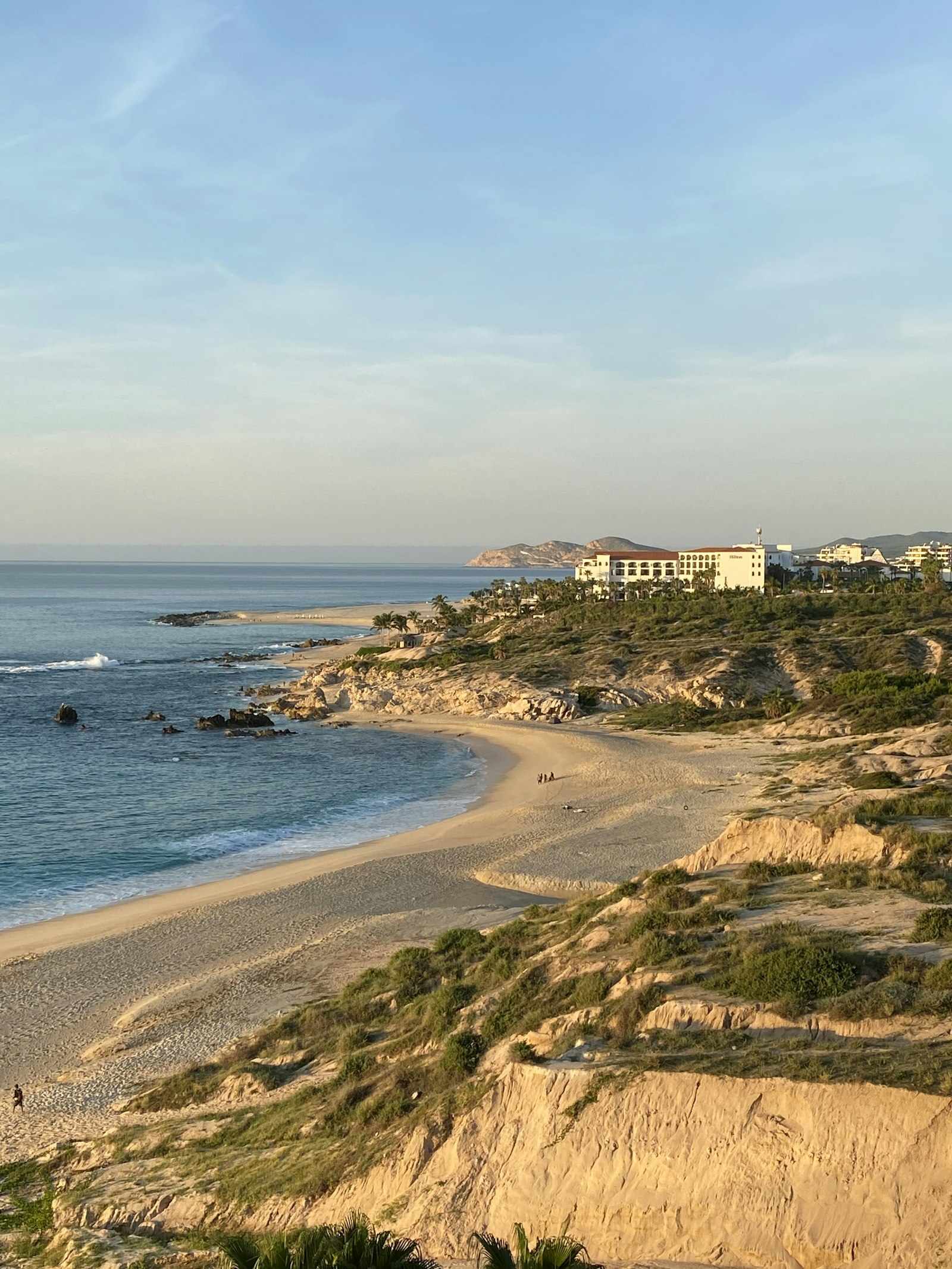
Chileno Bay: I'd Go for a Morning and Be Gone by 11
By Cabo Wander
Chileno Bay is a 20 to 25 minute ride from Cabo San Lucas, and people want to know if a beach is really worth that. Yes. Go for a morning. Be in the water by about 9 and dry and walking back up the path before 11, and it's the best free hour in Los Cabos.
It took me a few visits to work out that every complaint I have about this beach belongs to the afternoon: the full parking lot, the sun with nowhere to hide from it, the tour boats over the reef, and no lunch. Everything I love about it happens before 10. So I treat Chileno as two or three hours with everything I need in one bag, and then I leave while it's still good.
If you turn up at noon expecting a beach club, you'll be let down. This is a public beach next to a very expensive hotel, and what the public side is missing is what the room rate next door pays for, which is shade, lunch and somebody to bring it to you. Carry those in yourself and you get the same bay for the price of a ride.
It's number one on my list of the best swimmable beaches in Cabo, and this post is the close-up.
How I'd Do the Morning
Here's the running order I use. The times are rough, and the only one that matters is the last.
- A little before 8: leave Cabo San Lucas. From a hotel on Médano it's 20 to 25 minutes.
- On arrival: use the restroom at the top of the path, with the toilet paper you brought. Your cooler gets a quick look for glass. Then walk down.
- By about 8:30: walk to the right-hand end of the sand, put your bag where you can see it from the water, and get your mask on. This is the hour you came for.
- Around 9:30: the umbrella renters are setting up and the first families are arriving. I move to the middle and float.
- Around 10: the first tour boat anchors outside the buoys, and its snorkelers swim in to the rocks you just left.
- Before 11: dry off, walk up, and call your ride from the parking lot.
Then have lunch back in town, because Chileno doesn't have one. My picks for that are in the best tacos in Cabo.
In the hot months, from July to October, I shift all of it earlier and aim to be gone by 10:30. There's no shade down there and the path back up is in full sun.
If you're fitting this around everything else, it's the morning of Day 3 in my 5-day Cabo itinerary.
Getting There and Back
An Uber is how I do it. From Cabo San Lucas I'd budget roughly US$15 to $20 each way, and I'd treat that as a ballpark more than a promise. From San José it has been around 280 pesos. From a hotel in the middle of the Corridor it's a ride of five to fifteen minutes. A taxi from Cabo San Lucas asks US$20 to $30. There's no water taxi to Chileno, whatever you've read. The boats that come here are snorkel tours, and they don't land.
The ride home is the part to think about before you walk down, because nothing waits at the lot. If you came by taxi, agree on a pickup time before the driver leaves. If you came by Uber, walk back up to the parking lot and request the car from there. I wouldn't count on a signal down on the sand, so screenshot the pickup spot while you still have one. The app has gotten me home from here without any trouble. How the taxis and Uber compare everywhere else is in getting around Cabo.
The bus is the bargain. The purple and orange coach that runs between the two towns costs under 45 pesos a person, paid to the driver in cash, and takes about 25 minutes from the stop just past the Puerto Paraíso mall in Cabo San Lucas. Tell the driver "Chileno" when you pay and sit near the front, because nobody announces the stops. You get off at a shelter on the highway with an underpass, and from there it's about ten minutes on foot down to the beach. Coming back up takes longer, in the sun, with wet gear. Buses toward Cabo San Lucas run on the sea side of the highway and buses toward San José on the land side, so for San José you go through the underpass. Please use it. I wouldn't cross that highway on foot.
If you're driving, parking is free in a paved lot. The public beach has its own signed turn off the highway, separate from the resort's entrance. Before you set off, put "Playa Chileno" in your map and check that the pin is the public beach, because "Chileno Bay" on its own gets you the hotel. The sign is small and the road is fast. If you miss it you can't turn left across the median, so keep going to the next U-turn lane and come back. Whether a car is worth having for the rest of your trip is in renting a car in Cabo.
The lot fills around 10 on weekends and in high season, and a bit later midweek. I can't tell you what happens to the cars that arrive after that. I can tell you I wouldn't park on the highway. The shoulder is narrow and the traffic is fast. The only fix I know is to arrive early, or to be dropped off.
For Grand Velas guests, Chileno is the nearest swim and the map makes it look like a stroll. There's no walking route I'd send you on along that highway, so take the ride. The rest of that stretch of coast is in my Tourist Corridor guide.
For two people from Cabo San Lucas, the morning costs:
- Bus both ways, your own gear: under US$10
- Uber both ways: about US$30 to $40
- Add an umbrella and two chairs: around US$30 more
A snorkel catamaran to this same bay runs about US$100 to $170 a person once everything is added, for a short swim near the boat. I think the do-it-yourself version is the better snorkel by a wide margin, and it isn't close on price.
What's There and What Isn't
Chileno is the best-equipped public beach on the Corridor. The lot is paved, the path down is paved, and there's a built restroom and changing block at the top. There's a lifeguard tower and a roped swim area. It's paved from the car to the sand, which makes it the easiest beach on this coast for a stroller or a wheelchair, and a beach wheelchair that can go into the water is stationed here. There's only the one, so ask the staff at the entrance.
Each of those has a catch. I've found the restrooms clean and I've found them not, and I have never once found toilet paper in them. There are outdoor showers, and one morning I went to rinse off and nothing came out. The lifeguard is a daytime thing. If you're in the water as early as I am, don't assume anyone is on the tower yet.
There's no free shade. There used to be, and it's gone. What you'll find now is a group on the sand renting umbrellas and chairs, at about 300 pesos an umbrella and 100 a chair when I've paid, in pesos or dollars. There's no posted price list, so ask before you sit down. For a two-hour morning I skip it and wear a hat. If you're staying past 10, pay it, because by then you'll want it badly.
Snorkel gear is rented near the entrance, along with kayaks and paddleboards. I can't give you a price for any of it, and I wouldn't plan the morning around a mask that fits being there. Bring your own.
And there's nothing to eat, with no restaurant, no bar and no stand. Later in the day a fruit and soda seller sometimes comes through, and some days nobody does. At 8am there's nothing at all. I haven't found drinking water anywhere on site either, so carry all of yours.
The hotel at the other end of the bay is the Chileno Bay Resort, where rooms run into four figures a night. Its guests have their own loungers and their own gear. The sand is public and you can put a towel down on it. The loungers belong to the hotel, and its restaurants are reached through the front gate with a reservation, so don't plan on walking up from the beach for lunch. If that side of the bay sounds more like your trip, I rank the hotel in the best luxury resorts in Cabo.
Where to Swim and Where to Snorkel
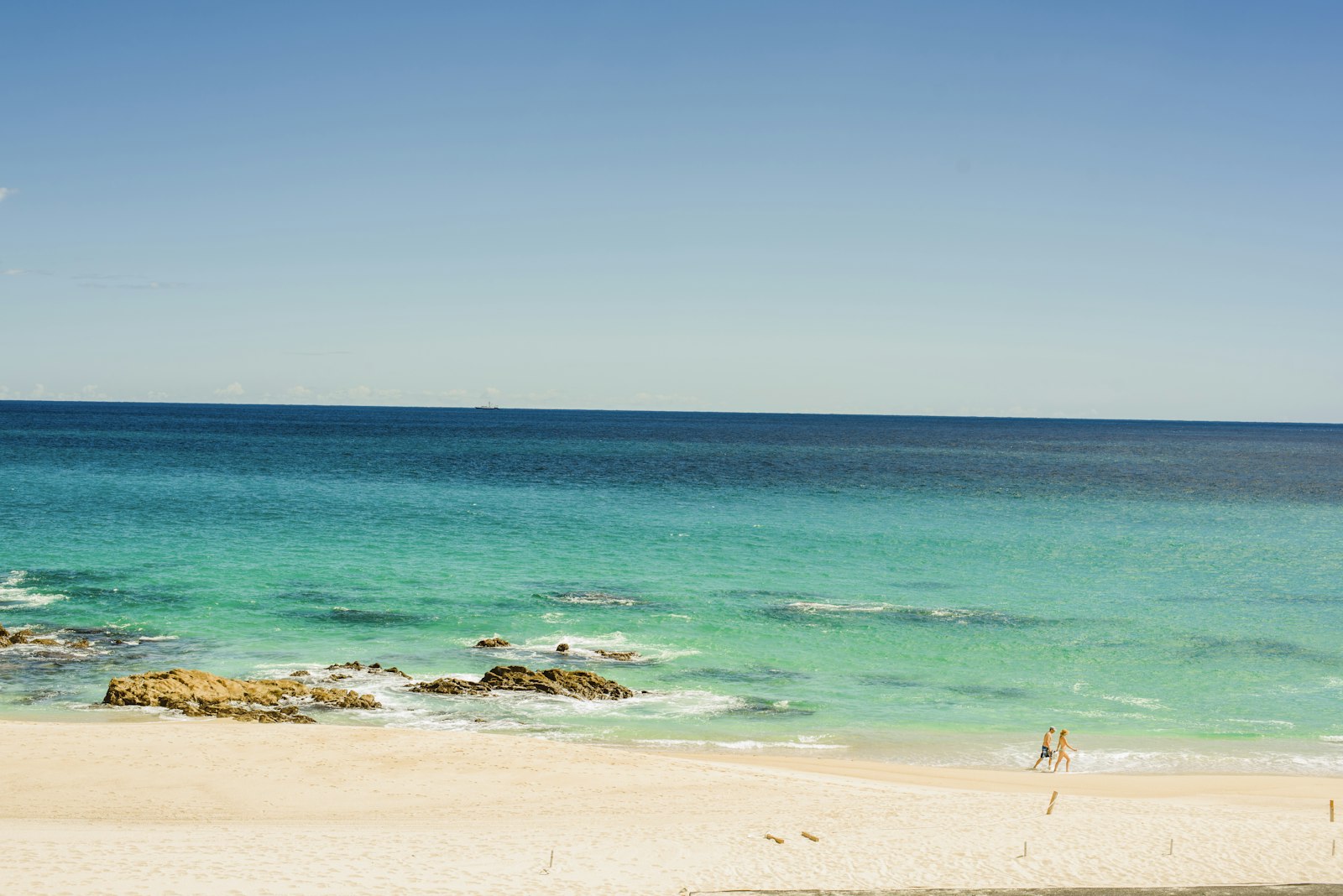
Swim in the middle. The sand slopes in gently there, the water is usually calm, and the swim area is roped off, with a separate lane for the kayaks and paddleboards. Nothing with a motor comes into it. On a good morning it's the easiest ocean swim on the Corridor.
That describes a calm day. On some days there's a pull even in the middle, and I've also turned up on an April morning to surf that was too rough to get into at all. Look at the flag before you unpack.
For the fish, stand on the sand facing the water and walk to the right-hand end. The middle of the bay is sand, with nothing to look at through a mask. The reef runs along the rocks. Get in off the sand right beside them and follow them out. It's shallow, and the fish start close to shore. On a clear morning you can see them from waist-deep water with no mask at all.
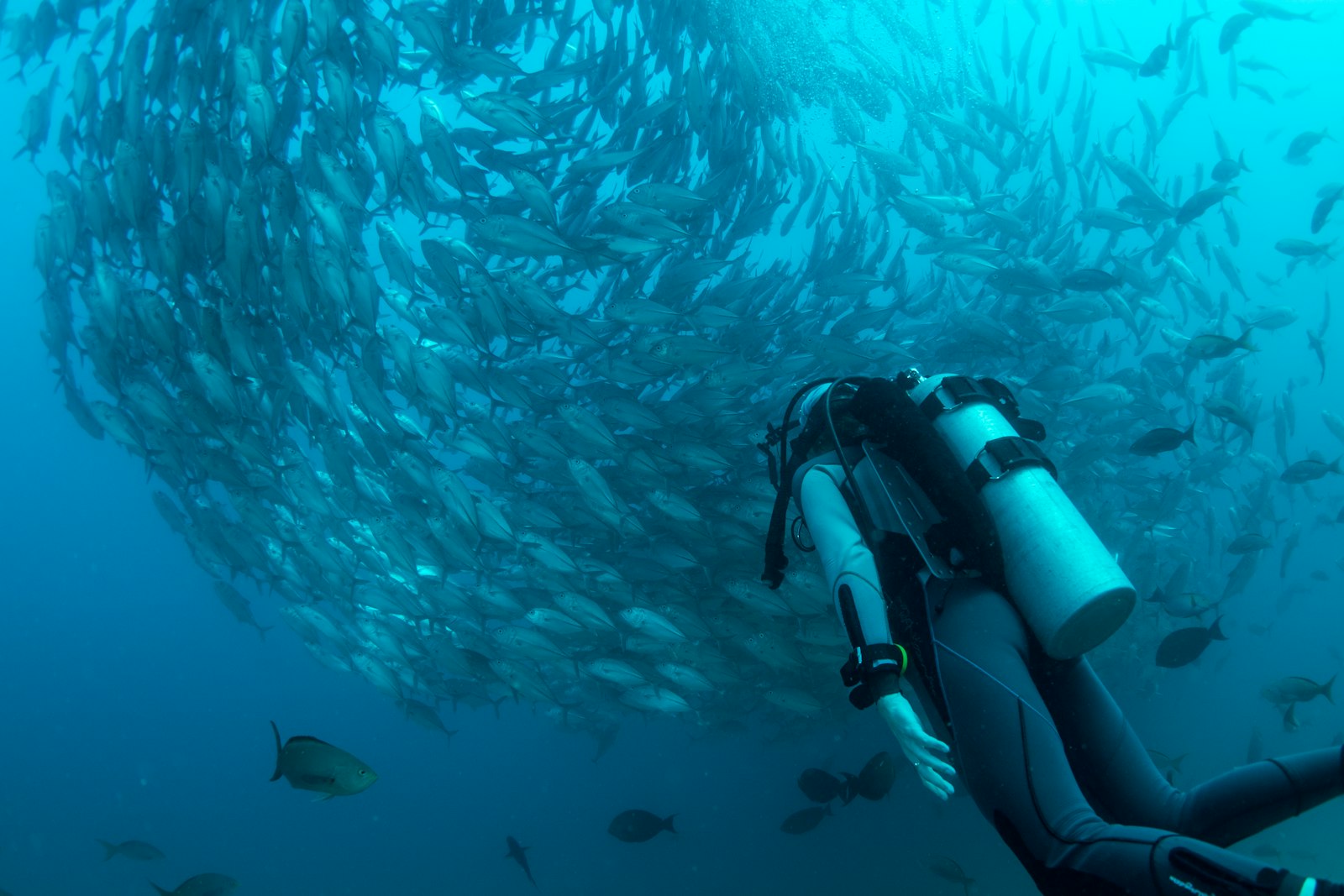
What you'll see is a LOT of fish over boulders. Sergeant majors in a group, parrotfish, a puffer or an angelfish if you're lucky. Part of the reason they're so thick is that people feed them at the rocks. I don't, and I'd ask you not to. The bottom is brown rock with patches of low coral, so don't expect a coral garden. I go through the fish, the gear and the other spots in snorkeling in Cabo.
A few things I do every time:
- I stay off the rocks themselves. There's rock at both ends of the beach, and it's sharp and slippery. People climb it for a photo or to reach the tide pools, and I wouldn't.
- I don't stand on anything out there. There are sea urchins near one of the rocky ends. The sand is fine barefoot, but if you plan to poke around the edges, water shoes help.
- I keep a body length off the rocks when there's any swell, and I turn around before the point, where it gets deeper and there can be current.
The month matters more than anything else for the water. I've been in on a cold, cloudy morning when I could barely see my own fins, and on a warm, clear one at the very same rocks. From February to April the water is around 71°F and I last about twenty minutes. Late October and November are the weeks to come for, warm and at their clearest. The whole calendar is in the best time to visit Cabo.
What to Bring
Everything, basically. This is my bag:
- Your own mask and snorkel. Fins too if you have them, since it's a swim along the rocks more than a float.
- A rash guard. From December to June I'd make it a neoprene top.
- Water and food. More water than you think.
- Shade. A beach umbrella if your hotel will lend you one. Otherwise a hat and the rental budget.
- Toilet paper. Every time.
- Small peso bills, for the umbrella or the fruit seller.
- A snorkel vest for kids. I can't promise you one to rent.
- Water shoes, if you'll be near the rocks.
And nothing in glass.
The Rules as You'll Meet Them
There are only a few, and you'll run into them in this order.
Your cooler gets checked on the way in, and anything in glass is taken. That's the one rule I've seen enforced every time. Your own umbrella, chairs, cooler and food are all fine.
No pets on the beach. And no motorized craft in the swim area, which is a big part of why the swimming is so pleasant.
On alcohol, drinking on a public beach is technically against the rules everywhere here. In practice, cans in a cooler are quietly tolerated as long as nobody is rowdy, and I've never seen anyone at Chileno told to pour one out. I can't promise you it stays that way on your visit.
The signs ask you to keep your hands off the reef and carry your trash out. A rash guard covers the sunscreen question better than any bottle does.
The flag is the rule that matters most. Red means don't go in. Black means the beach is closed, and you stay off the wet sand too.
One thing I can't tell you is what time it opens or closes, or whether the gate gets locked at night. I've only ever known it as a daytime beach, and I've never arrived at 8 to find it shut. I wouldn't plan a sunset here.
When It Gets Crowded
The clock matters more here than the calendar does.
Before about 9:30 the bay is close to empty. Around 10 the tour boats start arriving. They anchor outside the buoys and don't put anyone ashore, but their snorkelers swim in to the same rocks you'd be at. Around the same time the lot is filling. By midday the beach is full, and it stays that way through the afternoon, when the hotel guests and the tours are all there together and a breeze has roughed up the water.
By the day of the week, Sunday is the busiest. It's the local family day, and it's the nicest atmosphere of the week and the worst parking. Saturday at midday is crowded too. Weekdays are easier, though the boats come every day. On cruise ship days there are more boats in the bay and about the same number of people on the sand.
The busiest days of the whole year are Easter week and Christmas week. I'd either be there very early or skip it.
Even at its fullest, I've walked a little way down the bay and found room for a towel. Nobody is working the sand selling you things, there are no loudspeakers and there are no jet skis. The sand holds up fine at noon. What you lose is the parking, the shade and the reef.
Chileno With Kids
It works from about four and up, inside the ropes and before 10. The way in is sandy and gradual in the middle, the lifeguard tower is right there once the day gets going, and there are fish close enough to shore that a kid sees something before getting bored.
Bring a snorkel vest and your own shade, keep them off the rocks, and plan on a short swim if it's winter or spring. Kids get cold before you do.
For under-fives I'd go to Palmilla. It's gentler, and the sand is softer. In summer and early fall, check for the jellyfish flag before anyone gets in.
Chileno or Santa María?
Santa María is the next cove toward Cabo San Lucas, a few minutes down the highway, and people always ask which one.
I'd send you to Chileno for a first visit, for kids, and for anyone who isn't a strong swimmer. It's bigger, the way in is gentler, the sand is kind to bare feet and the bathroom is easy to find.
Santa María is the prettier of the two, a small horseshoe, and on some mornings the water is clearer. Its sand is really tiny pebbles, the bottom drops off quickly, and it takes more swell than its shape suggests. Parking there is free as well and the lot rarely fills, so it's also my answer when Chileno's is full.
I wouldn't do both in one morning. By the time you've moved, the boats are in at the second one. Do Chileno first, and save Santa María for another day if you want more.
The Catch
The good version of this beach lasts about two hours a day, and you have to set an alarm for it.
Past that window, Chileno is a hot public beach with no lunch, no free shade and a lot that's full. You'd work all of that out within five minutes of arriving. I'd just rather you knew before you paid for the ride.
The other catch is the sea. Chileno closes to swimming when the flag is black, like every beach here, and that happens most often in the swell months of summer and early fall. September and early October are the worst for it. You can drive out on a sunny, windless morning and find the beach shut, and nothing else on the Corridor is a backup. If you're coming in those months, don't leave Chileno for your last day. I cover the flags and the ocean more broadly in is Cabo safe.
And in spring it's cold. I still go... I just don't stay in long.
The Verdict
Chileno is worth the ride, for a morning. In the water by 9, out and dry before 11, with your own mask, water, shade and toilet paper. Done that way it's one of my favorite things in Los Cabos, and it costs about what lunch does.
Here's who I'd send:
- You're staying in the middle of the Corridor on a beach you can't swim at: this is your ocean. Go on your second morning.
- You're staying on Médano with no car: one morning of the trip, by Uber, leaving a little before 8.
- Casual snorkelers: yes. It's the best value snorkel in Cabo.
- Families with kids about four and up: yes, inside the ropes, early.
- Anyone who needs a paved way down or the beach wheelchair: this is the one I'd try first. Ask at the entrance.
- Off a cruise ship: only if you leave the pier right away. It's 20 to 25 minutes each way, and the bay is at its busiest when the ships are in.
And who I'd send somewhere else:
- You want a drink brought to your chair: Médano Beach, which you can walk to from town.
- You want a quiet midday: this isn't it. Come before 9.
- Keen snorkelers: enjoy it as a warm-up. The real thing is a Cabo Pulmo day trip.
- Under-fives: Palmilla.
I go back every trip. I just wouldn't go at noon.
If you'd like to stay on this bay, or you're bringing children, see Montage vs Chileno Bay, the Cabo resorts with swimmable beaches and Cabo with kids.
Here's how I'd text it to a friend: Chileno, leave before 8, map "Playa Chileno" and check it's the public beach. Bring a mask, water, snacks, shade, toilet paper, no glass. Walk to the right end and snorkel along the rocks, don't climb them. Ask the umbrella price first. Out by 11, call the Uber from the parking lot. Skip Sunday. And if the flag is black, it's a pool day.
Quick Answers
Is Chileno Beach free and public? Yes to both. There's no entry fee and parking is free, and the public beach has its own turn, lot and path, separate from the resort's entrance.
Can you swim at Chileno Bay? Yes, on most days, in a roped swim area with a gentle sandy way in and no motorized craft. It closes when the flag is black, which happens most often in summer and early fall.
How do I get to Chileno without a car? By Uber, roughly US$15 to $20 each way from Cabo San Lucas or around 280 pesos from San José, or on the bus between the towns for under 45 pesos plus a ten-minute walk down. There's no water taxi.
What time should I get there? Early enough to be in the water by 9. Parking fills around 10 on weekends and in high season, the tour boats start arriving around 10, and by noon the beach is full.
Are there bathrooms, food and shade? There's a restroom and changing block at the top of the path, so bring toilet paper. There's no restaurant or bar and no free shade. Umbrellas rent for about 300 pesos, and you should ask the price first.