Getting Around Cabo Without a Car: Every Ride Has Two Prices
By Cabo Wander
"Do I need to rent a car?" is the second thing friends ask me about Cabo, right after where to stay. If you're staying on Médano Beach, around the Cabo San Lucas marina or in San José's historic center, the answer is no. I get through whole trips on my own two feet, Uber at roughly half the taxi fare, and an airport ride I booked before I left home.
What nobody explains when you land is that the two cheap ways to get around, Uber and the purple bus, both stop working at the edges. Uber won't pick you up at airport arrivals, and a lot of resorts keep it out at the gate. The bus is done around 10pm. Those edges are where a taxi with no meter is waiting with a price in dollars, usually about double.
So every ride here has two prices, and the cheaper one comes with a catch. The taxi is at the door and costs twice as much. The Uber is half the price and might only be allowed to meet you at the gate. The bus costs a couple of dollars and drops you on a highway. The airport is its own story, and I've told it door by door in my Cabo airport guide. This post picks up once you're at your hotel. And if you finish it thinking you'd rather have your own wheels, start with renting a car in Cabo.
What a Ride Costs
This is the table I wish somebody had handed me on my first trip. Everything is one way. Taxi and Uber prices are for the whole car, and the bus is per person.
There are no meters and there's no published fare list anywhere that I've been able to find, so the numbers in the taxi column are what you'll be asked, in ranges. Where I don't have a number I trust, I've written "ask" and left it at that.
| Trip | Taxi (what you'll be asked) | Uber | Bus |
|---|---|---|---|
| Short hop inside Cabo San Lucas (marina, Médano, downtown) | US$10 to $15 | about US$4 to $7 (75 to 115 pesos) | no bus |
| Short hop inside San José | ask | about US$3 to $6 (60 to 110 pesos) | no bus |
| Cabo San Lucas to Chileno or Santa María | US$20 to $30 | US$15 to $20 | under 45 pesos |
| Either end of the Corridor to its own town | US$20 to $40 | check the app | under 45 pesos |
| Middle of the Corridor to either town | US$25 to $50 | US$15 to $30 | under 45 pesos |
| Cabo San Lucas to San José | US$50 to $70 | about US$30 to $37 (550 to 650 pesos) | about 45 to 50 pesos |
| Sunset Beach or Pacifica to the marina | US$20 to $35 | check the app | no bus |
| Diamante to the marina | US$50 or more | check the app | no bus |
| San José to the farm restaurants | ask | check the app | no bus |
| Airport to San José / the Corridor / Cabo San Lucas | US$65 to $85 / $75 to $95 / $90 to $115 | no pickup at arrivals | about 110 pesos |
| San José to the airport | ask | about US$14 (250 pesos) | about 110 pesos |
| Cabo San Lucas to the airport | about US$80 | US$35 to $55 | about 110 pesos |
Between the towns, US$50 to $70 is the opening number. I've gotten that down to US$40 or $50 at a quiet time of day by asking politely before I got in.
The US$10 to $15 short hop is for the middle of Cabo San Lucas. From a taxi line at a resort on the edge of town, like the big ones at the far east end of Médano, you can be asked more like US$20.
The two Pacific-side rows are different prices because they're different places. Sunset Beach and Pacifica are 15 or 20 minutes over the hill, and Diamante is a good deal farther up the coast. I don't fully trust either number, so ask at check-in before you plan a night around it.
Bottom line: Uber is roughly half the taxi fare on the long runs and less than half on the short ones, and the bus is a small fraction of either.
Where You Can Walk
Walking is free, and in three places here it really is all you need.
In Cabo San Lucas, the marina, downtown, the bar streets and the west and middle of Médano are all within ten or fifteen minutes of each other on flat ground. From the mall side of the marina, Médano is under ten minutes. The far east end of the beach is a long walk from town, on soft sand, and it's dark at night, so I take a ride home from dinner when I stay out there. Which stretch of sand suits you is in my Médano Beach guide, and the rest of the layout is in my Cabo San Lucas guide.
One thing about the marina trips people up. The boardwalk is a horseshoe, about half an hour all the way around, and you can't cross the harbor mouth on foot. Two spots that look close together across the water can be a hot half hour apart by sidewalk. That's where the water taxi comes in.
In San José, the whole old town is a few blocks and you won't need anything but flat shoes for the cobbles. The hotel zone is a separate matter. From the nearest hotels the plaza is about half an hour on foot, and from the far end it's 45 minutes to an hour, so I take the US$5 Uber, always at night. The four places that share the town's name are sorted out in my San José del Cabo guide.
And these are the places I don't walk, ever:
- Along the highway, or across it. There's no sidewalk, the shoulder is narrow, and it's four lanes of fast traffic. Cross only at an underpass or an overpass.
- Out of a Corridor resort. The lobby to the gate is sometimes a walk. The gate to anywhere else never is.
- Up into Pedregal, or out to El Tezal.
- Anywhere from the Pacific-side resorts.
- The dirt roads around the farm restaurants after dark.
The heat redraws the map too. A ten-minute walk in January is lovely. From July to October it's a ride, and I budget for a few more short Ubers in those months.
Uber
Uber is the first thing I reach for, and it's the one ride app that works here, so don't bother downloading anything else. It runs in both towns, along the Corridor and between the towns, around the clock.
In Cabo San Lucas a car usually reaches me in a few minutes. San José is slower, sometimes a good fifteen minutes, so I request the car before I ask for the check. I've even gotten one at 4:30 in the morning in town.
The price difference is real. One night a short ride from a restaurant door cost me about 85 pesos, and the taxi line on the corner had quoted ten dollars for the same trip. Between the towns it's about 550 to 650 pesos, a little over thirty dollars, when a taxi opens at fifty to seventy.
The catch is all about where the car is allowed to meet you. The app is perfectly normal in town. It's unwelcome at certain curbs, and that's been true for as long as it's been here.
The airport. Uber won't collect you at arrivals, and there's no workaround I'd send you to. Book a private car for the way in. Going home is fine, because it drops off at departures like any other car.
Resort gates. This one changes from hotel to hotel. Getting dropped off at the lobby is normal almost everywhere, since you're a guest sitting in the car. Getting picked up is the question. Hotels with a taxi line at the front door, and anything with a guardhouse a long way from the lobby, tend to keep Uber outside. Sometimes outside means a two-minute stroll. At one Pacific-side resort the gate is about a mile away and mostly uphill, and from the condos deeper inside that development it's an hour on foot. I cover which areas have this problem in where to stay in Cabo.
Before you book a hotel, email and ask: "Can an Uber pick me up at the lobby, and if not, how far is the gate?" If you plan to go out a lot, that answer matters as much as the room.
A few habits that make it go smoothly:
- Request from the street. A restaurant door or a storefront works. A taxi line, a hotel driveway where cabs are waiting and the cruise tender pier don't. Walk a short way first.
- Check the plate and the driver's photo before you get in.
- If a driver asks you to cancel and pay cash, say no and request another car.
- The cars are small. Four adults with beach bags is the limit. For five or six, order an XL. Between the towns that's somewhere around US$55, which is still under a taxi.
- On a long ride, check that the trip has ended when you get out.
- Cell signal is patchy down at the coves. At Chileno I walk back up to the parking lot before I request.
Uber isn't a realistic way home from Todos Santos, the East Cape, Cabo Pulmo or La Paz. And late in the evening there are three spots where I don't count on it, which get their own section below.
Taxis, and How to Deal With Them
The taxis have never once let me down. They're everywhere, day and night, and at a Corridor hotel the bell desk has had one at the door in a few minutes every time I've asked. They're also the most expensive taxis I've ridden in Mexico. There are no meters. The fares are set by zone, nobody publishes the zones, and the only person who knows the number is the one about to charge it.
So the whole skill is asking. Here's how I do it:
- Agree on the price before you get in. Every time, even for three blocks. Otherwise the fare is whatever gets said at the other end.
- Ask if it's for everybody. The price is for the car, and it usually covers up to four people. With five or six, ask "¿Cuánto por todos?" before the door closes.
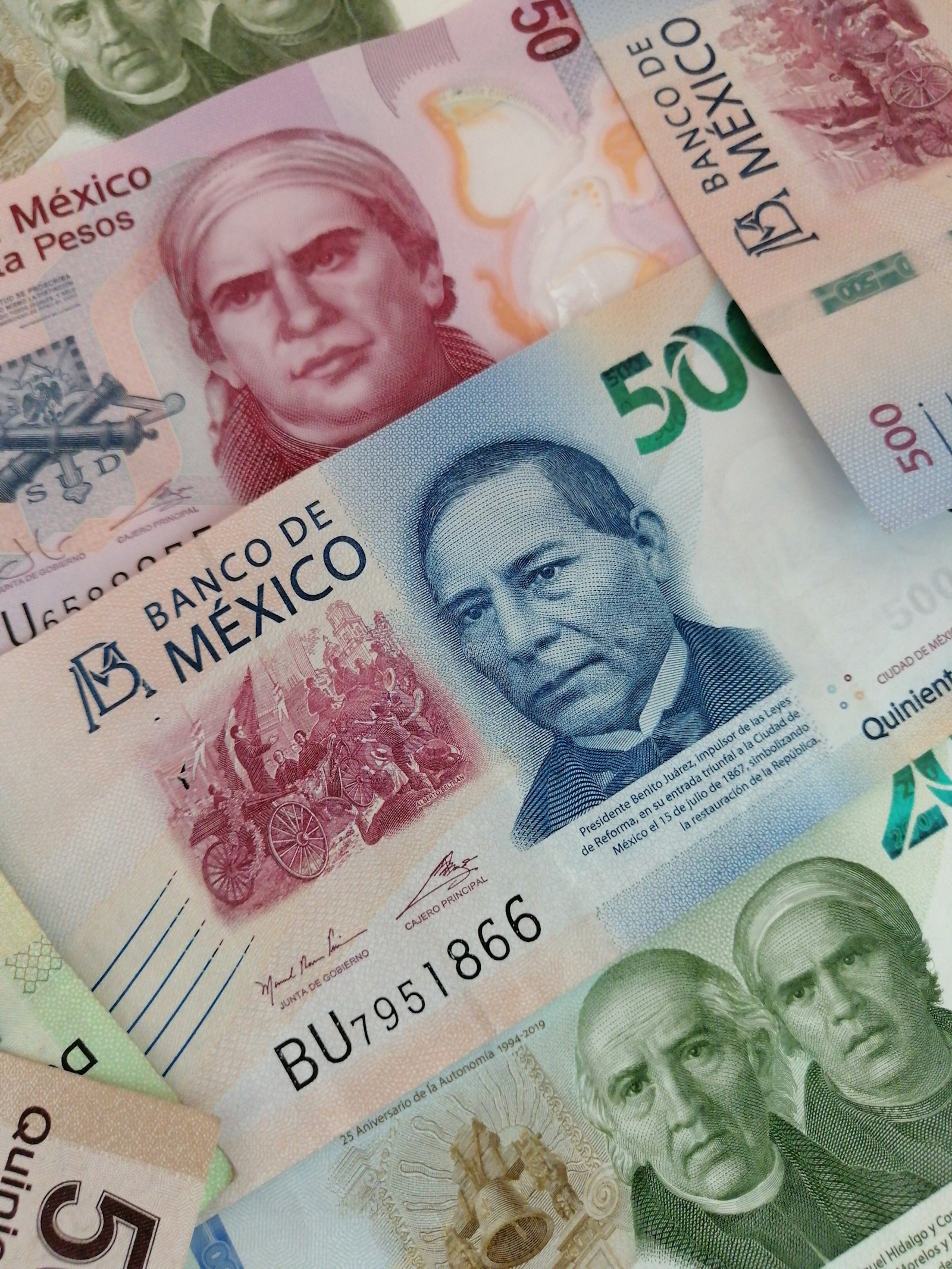
- Ask in dollars and in pesos. Drivers quote in dollars and take either. Pesos usually work out better, but check, because I've been given a peso price that was just the dollar price times twenty, and that was the worse deal.
- Carry small bills. Drivers often don't have change for a 500-peso note or a twenty. I keep 20s, 50s and 100s in pesos, or ones and fives in dollars.
- Assume it's cash.
- Tip lightly. For a short hop at the quoted price, nobody expects one. I round up or add about 10% for luggage, waiting or a long ride.
It also helps to know there are three kinds of taxi. The airport taxis are their own system, with a ticket booth and the highest prices. The vans at hotels, the mall, the cruise pier and outside the clubs work from a set price for each destination, and there isn't much room to bargain. Taxis you flag on the street in town are the ones where a friendly "¿un poco menos?" before you get in sometimes works. Quotes run higher late at night.
The taxi is the right call more often than you'd think. That's when you land with nothing booked, when your resort keeps Uber at a faraway gate, after dark at a farm restaurant, when there are five or six of you and a van is easier than two cars, and at 2am when everybody's tired and the van is right there. I pay it and don't feel bad about it.
If you're staying on the Corridor, the taxi is going to be a regular part of your week, and I've done the math on that in my Tourist Corridor guide.
The Bus, and Exactly How to Ride It
I really like this bus. It's a purple and orange coach called the Ruta del Desierto, it runs the highway between the two towns, and it costs about 45 to 50 pesos for the whole ride. That's under three dollars for a trip a taxi wants fifty for.
It's also less useful than a lot of blogs make it sound, because it stays on the highway. It doesn't pull up at your resort and it doesn't come into San José's old town. So here's how to ride it, step by step.
Find the stop. In Cabo San Lucas it's on the main road just past the Puerto Paraíso mall. Ask anyone for the Ruta del Desierto stop and look for the group of people in hotel uniforms. Out on the highway, you stand at a marked stop or a wide spot on the shoulder and wave. The destination is on the front window.
Know when it runs. One comes by every ten minutes or so during the day. The last ones are around 10pm, and after about 9:30 I assume I've missed it.
Pay the driver. Cash, in pesos, as you get on. You don't need exact change, but a small bill is kind. Shorter hops along the Corridor cost less than the full ride.
Tell the driver where you're getting off. This is the step people skip. Nobody announces the stops, and I've ridden straight past mine and taken an Uber back to it. Say your stop when you pay, sit near the front, and follow along on your phone's map.
Mind which side of the highway you're on. Buses heading to San José run on the land side of the median, and buses heading to Cabo San Lucas run on the sea side. Every beach and resort is on the sea side, so one of your two rides starts or ends across four lanes. Only use a stop that has an underpass or an overpass.
That last rule is why Chileno is the best bus trip there is. The stop has a little shelter and an underpass, and from there it's about ten minutes downhill to the sand, and uphill coming back. The whole morning is in my Chileno Bay guide. For Santa María I take an Uber, because I can't promise you a safe way across.
For San José, the bus leaves you on the highway, and the stop I use is by a big supermarket with an overpass. From there the plaza is about a 15 to 25 minute walk, or a short Uber for 60 to 110 pesos. Town to town, plan on 30 to 45 minutes on the bus plus the walk at each end.
Most of the coaches are cold inside, and the one I got on a hot day stayed that way until somebody in the back opened the windows. They fill up at shift change, when the resort staff are heading to and from work. There's no luggage hold, so a bag rides on the seat next to you, which is fine on a quiet bus and awkward on a full one.
From the airport, the bus is about 110 pesos to either town, and fewer of them come through there, so allow up to half an hour. Ask at the terminal for the Ruta del Desierto stop, because it has moved around. I'd only do it traveling light and in no hurry.
Each town also has local buses for the people who live there. I've never found a route I'd send a visitor on when a short Uber costs a few dollars and goes to the door.
Bottom line: the bus is great between the two town centers and out to Chileno, in daylight. I wouldn't build a Corridor resort stay around it.
The Water Taxi
Whether the little boat across the harbor is worth it depends completely on which side of the marina you're standing on.
From the cruise tender pier and the Land's End side, yes. Médano looks like it's right there, and on foot it's a good half hour around the whole horseshoe in the sun. The boat takes about five minutes and lands you on the sand in front of the beach clubs, with a wet step off the bow.
From the mall side, just walk. It's under ten minutes, and I've watched people pay fifteen dollars each to skip it.
You'll be asked US$10 to $15 a head. I aim for about US$5 to $7, and I settle it before I step in. Offering seven and starting to walk away has worked for me more than once. Prices go up on cruise ship days. If you board at a marina dock and not from the beach, there can be a few dollars of dock fee in cash on top.
It's a daytime thing. I've never seen an evening service I'd rely on, so don't plan to cross back after dinner. And when a storm closes the port, the water taxis stop along with every other boat.
The boats out to the Arch are a different trip with a different price, and that one's in my guide to El Arco and Lover's Beach.
Late Nights
After 10pm you're down to two options, Uber and taxis, and how well Uber works depends on where you're standing.
In Cabo San Lucas, I don't worry about it. Uber works late in town, and there are taxi vans outside the clubs until closing. If you take a van, agree on the fare through the window first, and expect a higher number than you'd hear at noon. Or walk to the corner and open the app.
There are three places where I always have a sure ride lined up before I sit down to dinner:
- Between the towns. I've ridden an Uber home from San José at ten at night with no trouble at all. Later than that, I can't promise how fast a car turns up for a 40-minute ride to the other town. So I open the app first, and I also know where the taxi is or have a driver arranged.
- A gate in the middle of the Corridor. If you're leaving a resort restaurant you aren't staying at, ask the host to call a taxi and treat an Uber as a bonus.
- The farm restaurants. Uber gets you out there easily in daylight. After dessert it's dark, the road is dirt, and the app can take its time. There's a taxi stand right next to Flora Farms, and I set up the ride back before I order. There's more on those dinners in Flora Farms vs Acre vs Los Tamarindos.
Thursday nights from November through June need a little extra planning. When the San José Art Walk wraps up around nine, a lot of people want a ride back toward Cabo San Lucas at the same moment, right as the bus is finishing for the night. Request your car before you ask for the check.
Wherever you are on the Corridor, please don't wait on the highway shoulder after dark, for a bus or for anything else. Wait at the restaurant door or the hotel gate. The wider safety picture, including which streets I walk at night, is in is Cabo safe.
A Driver Who Waits
This is the option almost nobody thinks of, and for a group it's the one I like best. The same companies that do airport transfers will rent you a Suburban and a driver by the block of hours. He takes you to dinner, parks, waits, and is standing where he said he'd be when you come out.
Going by what the companies publish, it's about US$275 to $300 for four hours in a Suburban, and a full day runs roughly US$450 to $600. Add a tip of 10 to 15%. Some charge extra per hour late at night, so ask when you book.
For two people it isn't worth it. It's about three times what taxis would cost you for the same dinner. For six, it's around US$50 a head for the round trip, door to door, with no walk to a gate and no 10pm deadline, and that beats two taxis each way. A San José dinner from a Corridor resort is the evening it's made for.
Book directly with a transfer company, a day or more ahead, because a car arranged through the hotel can cost double. And don't buy two one-way private rides between hotels. Those can each cost close to what the four-hour block does, and the block comes with a driver who stays.
Todos Santos and La Paz Without a Car
You can do both by coach, which surprises people. The long-distance line is called Águila, and the coaches are comfortable, with reclining seats and air conditioning.
- Todos Santos: about an hour and a quarter from Cabo San Lucas, and roughly 150 to 275 pesos each way
- La Paz: a little under three hours, and roughly 400 to 550 pesos
Treat those as ballparks. I'm not going to give you a timetable either, because I've never seen two that agree. Go to the terminal the day before, or have your hotel call, and get the times for both directions before you commit to anything.
The terminal in Cabo San Lucas isn't near the marina, so ask your hotel which one you want and take an Uber there. That's also your reminder that Uber is a one-way tool on these trips. It'll get you to the bus. It won't bring you home from Todos Santos.
Honestly, for Todos Santos I'd still rather have a one-day rental or a seat on a small-group tour, which runs around US$100 to $150 a person, because the coach doesn't stop at the beach at Cerritos. A taxi that waits for you can be had too, somewhere in the US$150 to $200 range for the round trip as far as I can tell, so agree on every detail first. The route is in my Todos Santos day trip post. La Paz by coach makes the most sense as an overnight, and I explain why in my La Paz day trip post.
With Kids, or With a Wheelchair
Both of these come down to the same advice, which is to arrange it before you fly.
Taxis and Ubers here don't carry car seats, and there's no car-seat option in the app. The private transfer companies do, free, if you ask when you book. Give them your child's age and weight, and book the ride home at the same time. Shared shuttles sell every seat, so there's no room for one. In practice that means the airport run and anything on the highway is a pre-booked private car, and taxis and Uber are for short hops only if you've brought your own seat.
For wheelchair users, there's no accessible taxi to flag down. A regular taxi or van can take a folding chair in the back. Anything more than that has to be booked ahead with a transfer company, and I'd ask them in writing exactly what the vehicle has, a lift, a ramp, or just space for a folded chair, because I can't tell you from experience. The bus isn't something I'd plan on, since the stops are highway shoulders. Water taxis board from the sand or a low dock into an open boat.
On foot, the marina boardwalk is the easy part, with curb cuts at most of the corners. The sidewalks downtown are narrow and broken in places, and San José's gallery streets are cobbled.
What a Whole Trip Costs in Rides
Where you sleep sets this number, and the room rate never shows it. This is my own rough arithmetic for two adults on three typical trips, airport rides included, tips and tours left out.
Five days at mid-Médano. Airport both ways, a Chileno morning, a San José evening and a couple of dinners a short ride away. Everything else is on foot.
- Taxis for everything: about US$350 to $450
- A private car in from the airport, then Uber: about US$230 to $300
- Leaning on the bus where it works: as low as US$115 to $160
Seven days in the middle of the Corridor. Airport both ways, two dinners in town, one boat morning in Cabo San Lucas and one swim at Chileno.
- Taxis for everything: about US$360 to $540
- Uber wherever it's allowed: about US$200 to $340
- Bus out and Uber back for the dinners: about US$175 to $275
Four days in San José's old town. Airport both ways, one Cabo San Lucas boat day, a swim at Palmilla, a swim at La Playita and a farm dinner. Every other dinner is on foot.
- Taxis for everything: about US$285 to $435
- Uber where possible: about US$190 to $270
- With the bus for the San Lucas day: about US$145 to $210
Uber takes roughly a third or more off every one of those. San José is the cheapest base for rides, mostly because the airport is so close, and it stops being cheap if you add a second and third boat day in the other town. And look at the Corridor line again. That's for only four outings in a week. If your hotel keeps Uber at a distant gate, the Uber number quietly turns into the taxi number.
On Médano, the whole trip's rides cost less than one night in the room, which is a big part of why it's the base in my 5-day Cabo itinerary. The rest of the budget, room and flights included, is in how much Cabo costs.
The Traps
Most of these I've mentioned already. Here they are together so you can skim them on the plane.
- Getting into a taxi without a price. Ask first, every time.
- Not asking if the price is for everyone. Say "¿Cuánto por todos?" when there are more than four of you.
- Paying the peso price without checking it. Ask in both currencies and pay the cheaper one.
- Paying with a big bill. Bring small ones.
- Planning on an Uber from airport arrivals. Pre-book the ride in and use Uber for the ride home.
- Requesting an Uber from a taxi line or the cruise pier. Walk to the street first.
- Assuming Uber picks up at your lobby. Email the hotel before you book.
- Assuming it never does. Plenty of hotels let it in, and I've watched people pay double for a taxi out of habit.
- Booking the Corridor without pricing the rides. From the middle, every outing is US$60 to $100 by taxi, round trip.
- Counting on the app at a farm restaurant at ten at night. Use the taxi stand, and set it up before dinner.
- Counting on a bus after 10pm.
- Crossing the highway on foot, or waiting on the shoulder in the dark.
- Looking for the bus in San José's old town or at your resort's front door. It's out on the highway.
- Not telling the bus driver your stop.
- Taking a water taxi from the mall side of the marina. It's a ten-minute walk.
- Walking from the cruise pier to Médano at noon in August to save the boat fare. That one I'd pay for.
- Letting the hotel book your car. It can be twice the independent price.
- Assuming a taxi or an Uber will have a car seat. Neither one does.
- Staying in San José and booking three separate boat mornings. Each one is about 1,200 pesos in Ubers and an hour and a half in the car, so put them all in one day.
- Tipping 20% on a fare that was already double.
The Verdict
You don't need a car in Cabo if you pick a base you can walk from. Médano, the marina and San José's old town all work on feet and Uber, and the whole trip's rides will cost you less than a night in your room.
The middle of the Corridor and the Pacific side are different. If you're staying there and you want to go out more than two or three times, you need either a car or a real ride budget, and you need to ask your hotel the Uber question before you book. If you're a group of five or six, look at a driver by the block before you look at two taxis. If you're traveling with a car seat or a wheelchair, book private transfers ahead and don't leave it to the curb.
I wish the taxis had meters, or at least a price list on the wall. They don't, and asking is the whole fix. I'd still take this over driving myself to dinner any night of the week.
If you remember nothing else, stay somewhere you can walk. Book the airport car before you fly, Uber won't get you at arrivals. Uber for everything else, it's about half a taxi, and ask from the street, not the taxi line. Any taxi, agree the price first and carry small bills. Purple bus is great by day, pesos to the driver, tell him your stop, done by 10. After dinner in San José or at the farms, line up the ride home before you order. Water taxi only from the cruise pier side... otherwise just walk.
Quick Answers
Is there Uber in Cabo? Yes, in both towns, along the Corridor and between the towns. It won't pick you up at airport arrivals, and at many resorts it meets you at the gate and not the lobby.
Is Uber cheaper than a taxi in Cabo? Roughly half on the long runs and less than half on short hops. Between the towns it's about 550 to 650 pesos, when a taxi asks US$50 to $70.
How much is a taxi in Cabo? There are no meters, so ask first. Expect about US$10 to $15 inside Cabo San Lucas, US$25 to $50 from the middle of the Corridor to either town, and US$50 to $70 between the towns, for the car.
Is there a bus between Cabo San Lucas and San José del Cabo? Yes, the purple and orange Ruta del Desierto coach. It comes by every ten minutes or so during the day, costs about 45 to 50 pesos in cash to the driver, and the last ones are around 10pm. It stays on the highway, so there's a walk or a short ride at each end.
Is the water taxi to Médano worth it? From the cruise pier side of the marina, yes, for about US$5 to $7 a head once you've bargained. From the mall side it's a ten-minute walk, so skip it.