Cabo Tourist Corridor Guide: Check the Kilometer Marker
By Cabo Wander
When a friend tells me they've booked a hotel "on the Corridor", I always ask the same thing back: which kilometer? Most of the time they have no idea, and I get it. The booking site said Tourist Corridor, showed a pool with the ocean behind it, and that was that.
The short answer is that the Corridor is the best place in Los Cabos to stay at a resort, and it's a poor base for going out. The nicest hotels on this coast are here, and so are three of the four beaches I'd count on for a swim. You also can't walk to anything. There's no store, no restaurant that isn't your hotel's, and in most cases you can't even walk to the resort next door. So I'd book it if you've honestly decided to spend most of the week inside the gate. If you're telling yourself you'll pop into town for dinner most nights, I'd stay in a town.
The Corridor is twenty miles of highway between Cabo San Lucas and San José del Cabo, and every hotel's address on it is a kilometer marker, counted up from the San Lucas end. That number decides your vacation. A hotel around km 5 is ten minutes from the San Lucas marina. A hotel around km 27 is ten minutes from San José's plaza. A hotel in the high teens is 20 to 30 minutes from both, and that's where most of the big resorts are. Two hotels with the same "Tourist Corridor" label can be half an hour apart.
So this guide walks the highway from west to east, and then spends a good long while on getting around, because that's the question people really have. If you're still choosing between areas, where to stay in Cabo is the place to start, and if you've been looking at the Corridor because it sits halfway between the towns, read Cabo San Lucas vs San José del Cabo first. Halfway means a fare to each.
What It's Actually Like
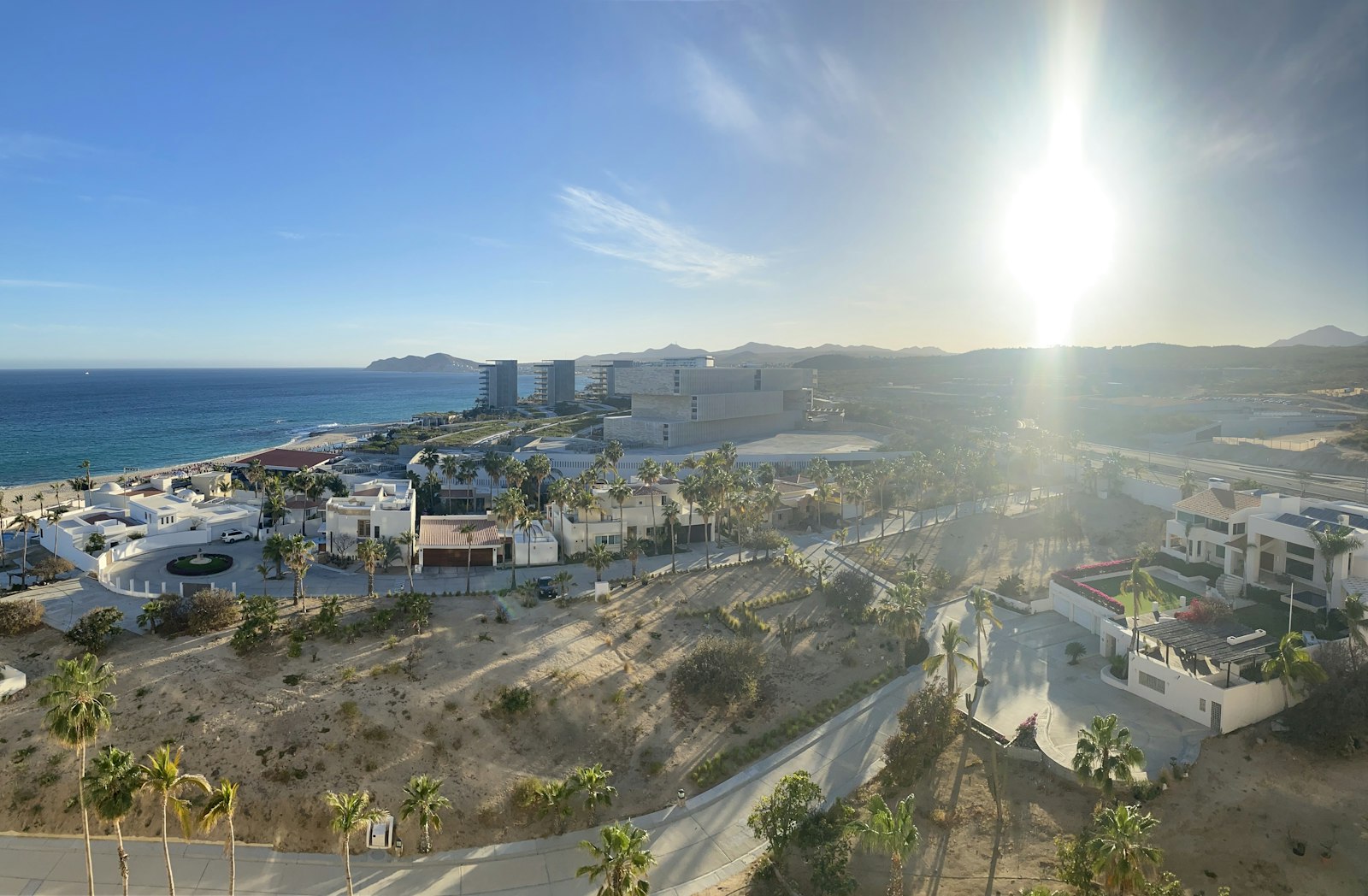
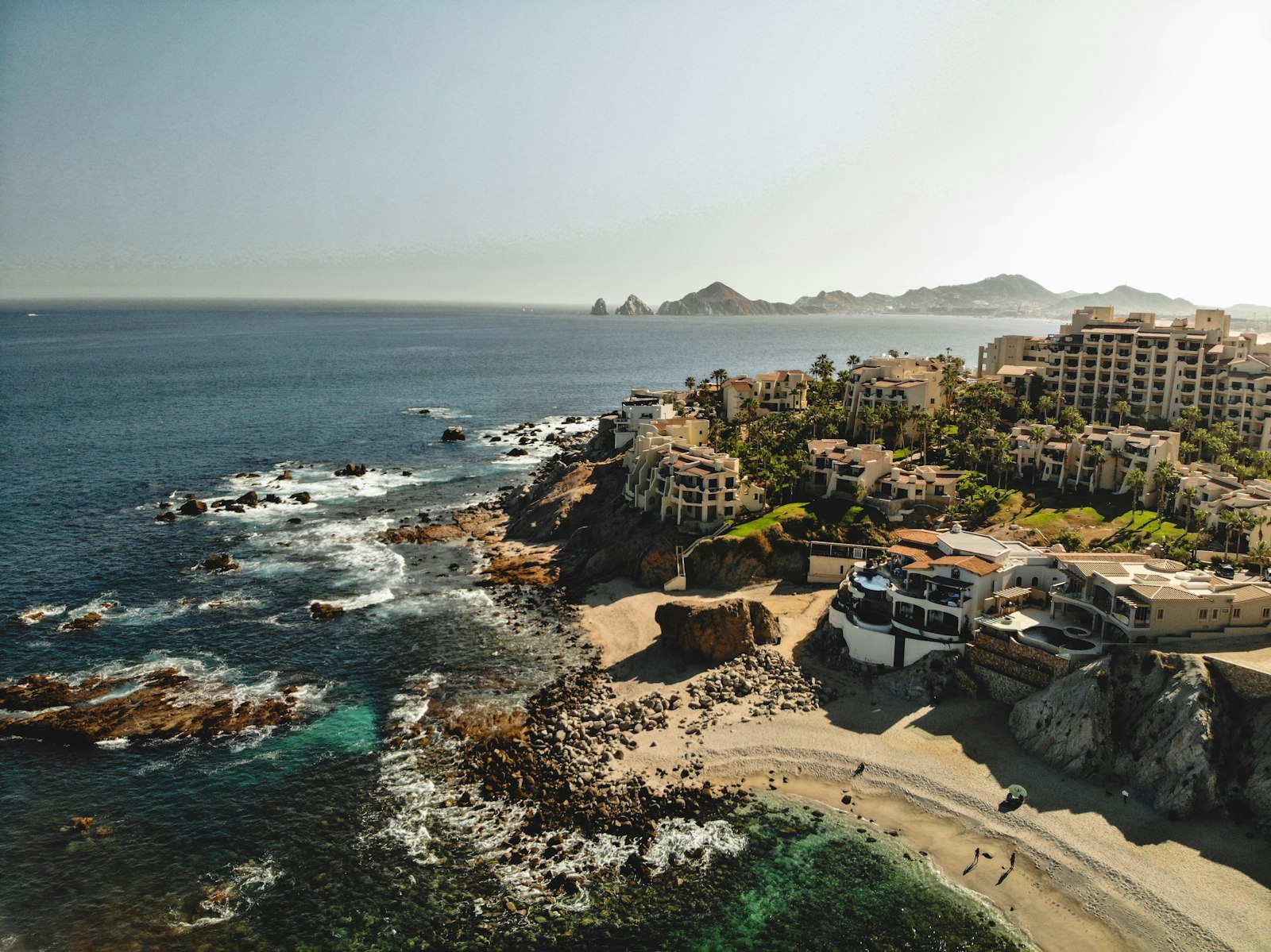
There's no town on the Corridor. It's a four-lane highway with the sea on one side and desert and golf courses on the other, and every so often a guardhouse with a hotel's name on the wall. The sea side is resorts. The land side is where the staff's bus stops.
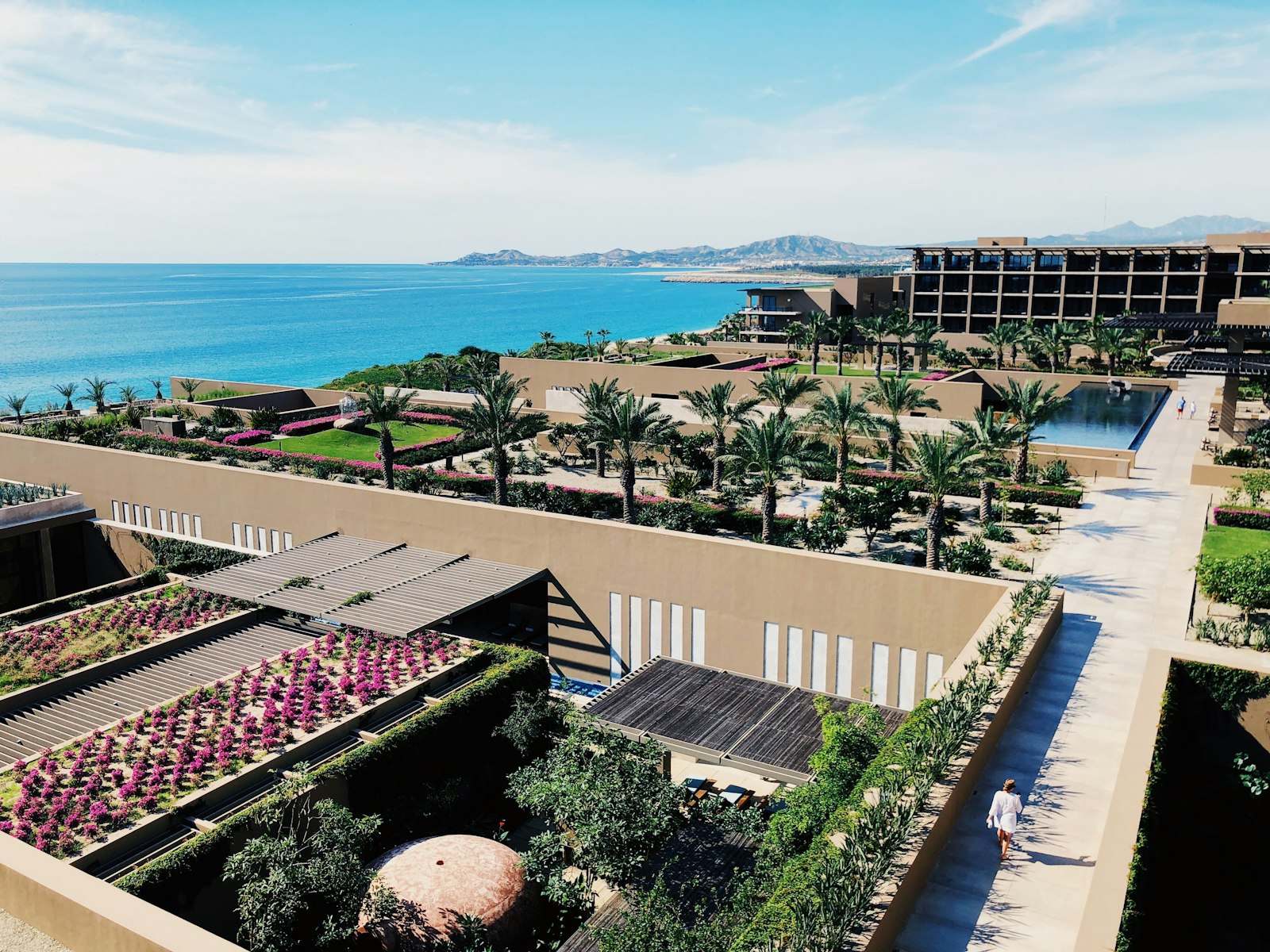
Your arrival tells you most of what you need to know. The driver passes your hotel's sign, keeps going for a minute, swings around through a gap in the median and comes back, because you can't turn left across this road. A guard checks your name on a list. Then there's a drive through the landscaping, sometimes a long one, and you're in the lobby with a cold towel in your hand. You won't see the highway again unless you choose to.
The days depend on whether your hotel sits on a cove. At the ones that do, I swim before breakfast, when the bay is flat and it's just hotel guests and a lifeguard dragging his chair into place. By mid-morning the snorkel boats from Cabo San Lucas are anchored off the reef. After lunch the breeze picks up and I move to the pool. At the hotels that don't sit on a cove, it's the same day without the ocean. There are loungers on the sand and a flag on a pole, and it really is beautiful to sit there... you just usually can't go in.
Evenings belong to the resort. The all-inclusives plan your night for you, and at Dreams there was a show every evening that was better than I expected, with the exception of the pirate one. The room-only luxury hotels are quiet on purpose. At the Hilton there was no music at the pool at all, which I loved and which a twenty-five-year-old would not. If you want a night out, you tend to head to the lobby bar, find some other people who are going into Cabo, and split the taxi.
When I stay out here, days one and two are the pool, the beach and the hotel's best restaurant. Day three is a morning at a public cove or a boat trip from Cabo San Lucas. Day four is the dinner in town. After that it's the hotel again, with a second dinner out if the first one went well. That's two or three outings in a week, which is what this stretch of coast is built for. The people I know who love the Corridor all picked the hotel first and never thought of it as a base.
How to Read a Corridor Address
Ignore the town in the address and read the number. "Carretera Transpeninsular Km 19.5" means the hotel is 19.5 kilometers from Cabo San Lucas along the highway. That's the whole system, and it's more useful than anything else on the listing.
The town name is the part that fools people. The Hilton and Dreams both carry a San José del Cabo address and they're 20 to 25 minutes from San José. Grand Velas manages to fit "San José del Cabo" and "Cabo San Lucas" into the same address line, and it isn't in either one.
Here are the three bands I use:
- Under about km 8: the Cabo San Lucas end. Ten to fifteen minutes from the marina.
- About km 10 to km 21: the middle. Twenty to thirty minutes from either town, and it's neither one's neighborhood.
- Over about km 22: the San José end. About ten minutes from the plaza.
The one trap is One&Only Palmilla, whose address is often printed as km 7.5, which is an old count from the San José end. By the numbers everyone else uses, it's up around km 27. Same hotel, same spot.
And while we're on names, there are two Four Seasons in Los Cabos. The one at Cabo del Sol is on the Corridor, minutes from San Lucas. The other is on the East Cape, well over an hour away, so double check which one is in your cart.
The Corridor, West to East
I've split the highway into four stretches. If I were ranking them as places to base a resort week, I'd put the Santa María and Chileno stretch first for its coves, the San José end second because it's the easiest to live in, the Cabo San Lucas end third, and the run of big hotels in the middle last unless you're going all-inclusive.
The Cabo San Lucas End
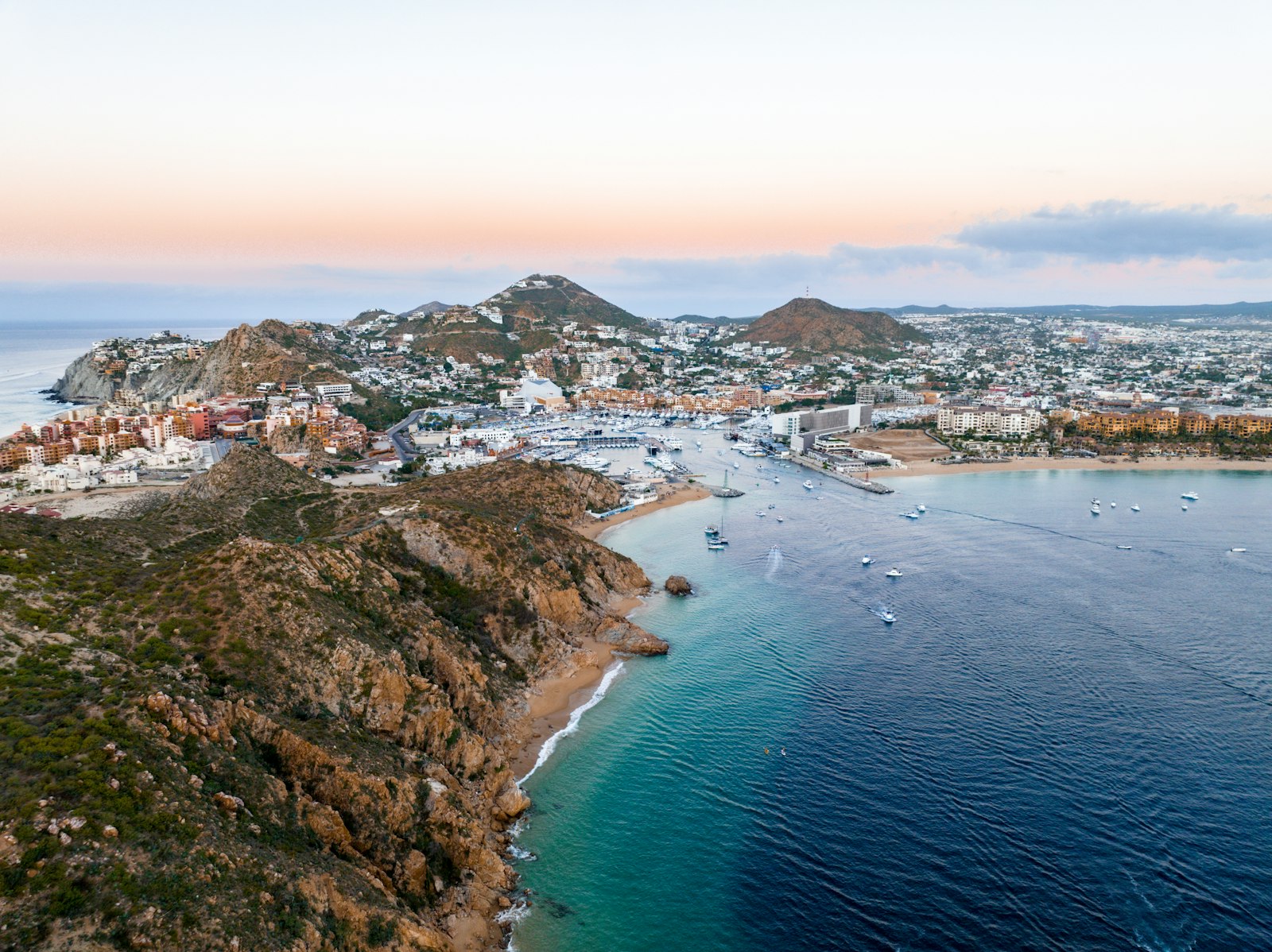
This is the stretch for people who want Cabo San Lucas close and a resort to come back to. It's the edge of town thinning out into the first hotels and condo developments, and the marina is ten to fifteen minutes away. San José is 30 to 40.
The Cape is the one I'd point to here, at about km 5, sitting above a surf break with Land's End in the window. Hacienda Encantada is a little farther along. It's also the best-supplied part of the Corridor, because the big stores on the edge of Cabo San Lucas are five or ten minutes back toward town.
What it doesn't have is a swim. The beach below The Cape is surf over rock, and the small beaches along this end aren't swimming beaches either. So you're choosing this stretch for the short ride to the boats, the bars and dinner, and I think that's a perfectly good reason. If that's your plan, my Cabo San Lucas guide covers what's at the other end of that ride.
A couple of restaurants are out here too, and I get to those below. I wouldn't count on walking to any of them from a resort gate.
Cabo del Sol, Santa María and Chileno
This is my favorite stretch, and it's the one I'd pay up for. It runs from about km 10 to km 15 and it has the two best resort coves on the Corridor and the two best public ones, a few minutes apart.
Coming from San Lucas, you reach Cabo del Sol first. It's a big planned development with golf courses, several hotels (Hacienda del Mar and the Four Seasons among them) and an open-air luxury mall called Ánima Village that anyone can visit. Hacienda del Mar's beach is mostly not for swimming. I can't tell you yet about the water in front of the Four Seasons, so ask them the flag question before you book.
Then come the coves. Montage sits right on Santa María Bay, and Chileno Bay Resort sits on Chileno, at about km 15. Guests at those two walk out of their rooms and get in the ocean, which almost nobody else on this highway can say. Between Cabo del Sol and Montage there's also Las Viudas, a small beach with tide pools that I'd go and sit at and wouldn't swim at.
The public beaches at Santa María and Chileno are free, with parking, bathrooms and a lifeguard, and they sit directly beside two of the most expensive hotels on the Corridor. I love that. For Santa María, follow the highway sign and ignore your phone, because my map app sent me to a residents' gate. For Chileno, the public beach has its own signed turn next to the resort, and I've driven by it. Both are ranked, with everything to pack, in the best swimmable beaches in Cabo.
The trade-off is supplies. There's nowhere on this stretch that I'd send you for groceries or a pharmacy, and I wouldn't plan on a luxury mall for sunscreen and a case of water. Cabo San Lucas is 15 to 25 minutes away and San José is 25 to 35.
The Big Resorts in the Middle
From about km 16 to km 22 you're in the true middle, and I think of it as all-inclusive country. This is the densest run of large hotels on the Corridor. Grand Velas is at km 17, then come Garza Blanca, Solaz, Dreams and Zoëtry, the Hilton at km 19.5, and Marquis a little farther on, with more big names in between.
This stretch has the most hotels and the fewest places to swim. There's exactly one, the calm patch of water behind a man-made breakwater that the Hilton shares with Paradisus. It was built by engineers and I'm happy to swim in it. I've watched guests from a far pricier hotel next door walk down the sand to use it. Everywhere else here, including Grand Velas, Garza Blanca, Dreams, Zoëtry and Marquis, the beach is for looking at. I've heard it both ways on Solaz, so ask.
There's a golf course on both sides of the highway here, and that's about it for what's outside the gates. No independent restaurants, no store. The Hilton's own website says it's 20 minutes from either town. I plan on 20 to 30, and more at 8am and 6pm.
It's for someone who picked the hotel for the hotel, plans to leave twice in a week, and has the meal plan. If that's you, some of the best resorts in Los Cabos are right here, and I rank them in the best luxury resorts in Cabo.
The San José End
Past about km 22, the Corridor starts turning back into a town, and this is the stretch I find easiest to live in. There's a resort or two, then shops and restaurants along the land side of the highway, then the Palmilla headland, then the surf beaches where San José's hotel zone begins.
One&Only Palmilla is on the point, with two sandy coves you can swim at. Right beside it is the public beach at Palmilla, which has the calmest sandy swim in Los Cabos and is where I'd take a small child. Take the Palmilla exit, cross the overpass, and turn left before the hotel's guardhouse.
Everything you'd want from a store is within about five minutes by car at this end, including a supermarket and a gas station. San José's plaza is about ten minutes away, and the airport is only 25 to 30, which makes this the end I'd pick for a three-night trip. Carbón Cabrón, my favorite dinner on the whole highway, is right here too.
What you give up is Cabo San Lucas. It's 30 to 40 minutes on a good run and can be a lot longer in the evening traffic, so the boats and the bars become a real outing. If the restaurants in town are why you're looking at this end, I'd think about staying in the historic center, which I cover in my San José del Cabo guide.
Getting Around
You have four ways off a Corridor resort, and all of them work. What matters is how many times you plan to use them.
How Far You Really Are
- West end to the Cabo San Lucas marina: 10 to 15 minutes
- West end to San José: 30 to 40 minutes
- The middle to either town: 20 to 30 minutes
- East end to San José's plaza: about 10 minutes
- East end to Cabo San Lucas: 30 to 40 minutes, and more in traffic
- Either town to the other: 35 to 45 minutes
The road is slowest around 8am and 6pm, and it backs up where it runs into each town. From the airport, plan on 25 to 30 minutes to the Palmilla end and 30 to 45 to the middle. The inland toll road skips the Corridor completely, so your driver comes down the coast highway through San José. A private car to a Corridor hotel is about US$75 to $95, and the rest of that arrival is in my Cabo airport guide.
The Highway, and Why You Can't Turn Left
The highway has four lanes and a median down the middle, so most of the time you can't make a left turn across it. To get to something on the other side, you drive past it, loop around at a U-turn spot called a retorno, and come back. The bigger entrances have their own overpass or slip road. A lot of places don't.
In practice that means every outing in a car starts with working out which direction you need to go first to turn around. Look at the map before you set off, and expect to drive past your turn at least once. I have, more than once.
It's a fast road, so if you're driving to dinner, one of you isn't drinking. And don't pull over on the shoulder for a photo. I haven't found a real public pull-off or lookout anywhere along it, and the shoulder is no place to stop.
Taxis
A taxi is the easy answer and the expensive one. There are no meters, and from the middle of the Corridor it's about US$25 to $50 each way to either town, for the car. From either end to its own town it's less. Nobody will tell you the number until you ask, so ask at the bell desk before you make a dinner reservation, and agree on it again with the driver.
The taxis have never let me down. The bell desk has had one at the door within a few minutes, and I've never had trouble getting one back to the hotel late at night.
Uber
Uber works the whole length of the Corridor and costs roughly half what a taxi does. From Cabo San Lucas out to Chileno, it's been about US$15 to $20 for me.
The catch is the pickup, and it's different at every hotel. I've stayed where it was no trouble at all, and where I walked out past the gate to meet the car, which was easy. And after one dinner at a resort restaurant, getting a car to collect me at the gate was a real hassle. Getting dropped off is never the problem, because you're in the car and you're a guest, so the driver takes you to the door.
Before you book, email the hotel and ask exactly how Uber pickups work there. Does the car come to the lobby or wait at the gate, and how far is the gate from the lobby? If you plan to go out much, the answer matters more than the thread count.
The Bus
There's a bus, and it's the cheapest thing on the Corridor. It's the purple and orange Ruta del Desierto coach that runs the highway between the two towns every ten minutes or so until around 10pm. It's about 45 pesos, paid to the driver in cash. You wave it down and tell the driver where you're going.
I like it. This is the bus the people who work in the resorts ride to and from their shifts, and you're welcome on it. It stops on the highway, though, and your hotel's lobby may be a hot walk from there, down a long private road. Depending on which way you're headed, you may also need to be on the far side of four lanes, and I wouldn't cross this highway on foot. Chileno is the exception I know of, with an underpass, so you can get to the beach side without running for it.
So I'd use the bus in daylight, for a beach or a ride into town, from a hotel that sits close to the road. After dark I wouldn't stand on the shoulder waiting for one, and it has stopped running by the time dinner is over anyway.
Resort Shuttles
Some resorts run a shuttle into town, and plenty don't. Ask your hotel where it goes, how often, and when the last one comes back. I wouldn't book assuming there is one.
When I'd Rent a Car
The Corridor is the one part of Los Cabos where a car for the whole stay can make sense. I'd rent if I were staying in the middle, planning to leave four or more times, and traveling with someone who's happy on mineral water at dinner.
A car runs about US$50 to $90 a day once the insurance is in, which is the number that matters, and I explain it in renting a car in Cabo. Parking is free at the Hilton and at Grand Velas, and I'd ask anywhere else. The best thing a car does is make the public coves easy. Chileno at 8am, Palmilla on a Tuesday, Carbón Cabrón for dinner.
I wouldn't rent for one dinner out, or if fast traffic and U-turn lanes make you nervous, or if the plan involves wine.
What a Week of Dinners in Town Costs
This is my own rough arithmetic, for five evenings out from a hotel in the middle of the Corridor:
- Taxi both ways: US$50 to $100 an evening, so US$250 to $500 for the week
- Uber both ways: somewhere around US$150 to $300 for the week
- A rental car for five days, plus gas: about US$325 to $550, and one of you drinks water
From the west end into Cabo San Lucas, or the east end into San José, you can roughly halve the taxi and Uber numbers.
Add a few hundred dollars in rides to a room-only rate and you can see why I usually go out for one dinner midweek and then don't bother with a second. If you're doing three boat mornings from the middle, each one is a 6:30 start from the lobby and another fare. Fares for the whole area are compared in getting around Cabo, and I've built a Corridor version of the week into my 5-day Cabo itinerary.
Bottom line: plan on two or three outings, ask the hotel the Uber question, and decide about a car before you land.
Stock Up on the Way In
Between the two ends of the Corridor there's very little outside the resort gates. Groceries, gas and pharmacies are at the Cabo San Lucas end and near Palmilla, and in the middle there's nothing I'd plan on.
So if you're staying anywhere in the middle on a room-only rate, ask your airport driver to stop at a supermarket on the way. Most private transfer companies do it for an extra US$30 to $40, and you get about half an hour to shop. Get water, snacks, sunscreen and whatever you like to drink on the balcony. A bottle of water at dinner has cost me US$8 at one hotel here and US$10 at another, so the stop pays for itself pretty quickly.
Where to Eat and Drink
You'll eat most of your meals at your hotel, so the first thing to settle is what that costs.
Eating at the Resort
The food at the good Corridor hotels is good. It's also priced like a resort back home. At the Hilton, which is my value pick out here, cocktails were about US$16, lunch was US$20 to $25, dinner mains were US$50 to $70, and the breakfast buffet was around US$40 a person, with a 20% service charge on top of all of it.
To put that next to town, a good independent dinner in either town is about US$50 to $90 a head with a drink, tax and tip, and a local seafood lunch is US$25 to $40. So an ordinary hotel dinner on the Corridor costs about what the best restaurants in town do, and that's before the ride. Honestly, between resort prices and the fares into town, a room-only stay in the middle doesn't save you anything.
Is All-Inclusive Worth It Here?
In the middle of the Corridor, usually yes. My rule is that a meal plan is worth more the harder a hotel is to leave, and the middle of this highway is the hardest place in Los Cabos to leave. It's also where some of the best all-inclusives on this coast are, Grand Velas among them.
At the two ends it's a closer call, because a great dinner is ten minutes away. Metate is that close to The Cape, and Carbón Cabrón is that close to Palmilla.
Where a hotel sells both ways, do the breakfast math first. The Hilton sells a package with breakfast and a stocked minibar, and at about US$40 a head a day for breakfast alone, I thought it was worth it. The longer version is in whether a Cabo all-inclusive is worth it.
Restaurants Outside the Gate
There aren't many, and they're all at the two ends. All of them need a ride.
Carbón Cabrón, near Palmilla, is the one I'd make the trip for if you eat meat. Everything comes off a wood fire. Get the short ribs and the fire-roasted onion, and skip the steak. It's priced like a serious dinner, around US$300 for two with wine when I went, and you'll smell like smoke afterward.
Metate is in El Tezal, on the land side of the highway at the Cabo San Lucas end. It's the best cooking for the money in Los Cabos, at about US$50 to $75 a head. Order the bone marrow. From a west-end hotel it's a short ride. El Huerto, a farm restaurant in the same neighborhood, has a breakfast people rave about, and I don't know it well enough yet to tell you what to order.
Manta, at The Cape, is the hotel restaurant I'd book if I were staying at the west end. I've had one dinner there I really liked and one that fell flat for the money, which is US$170 to $230 a head with drinks. Go before sunset for the view of Land's End.
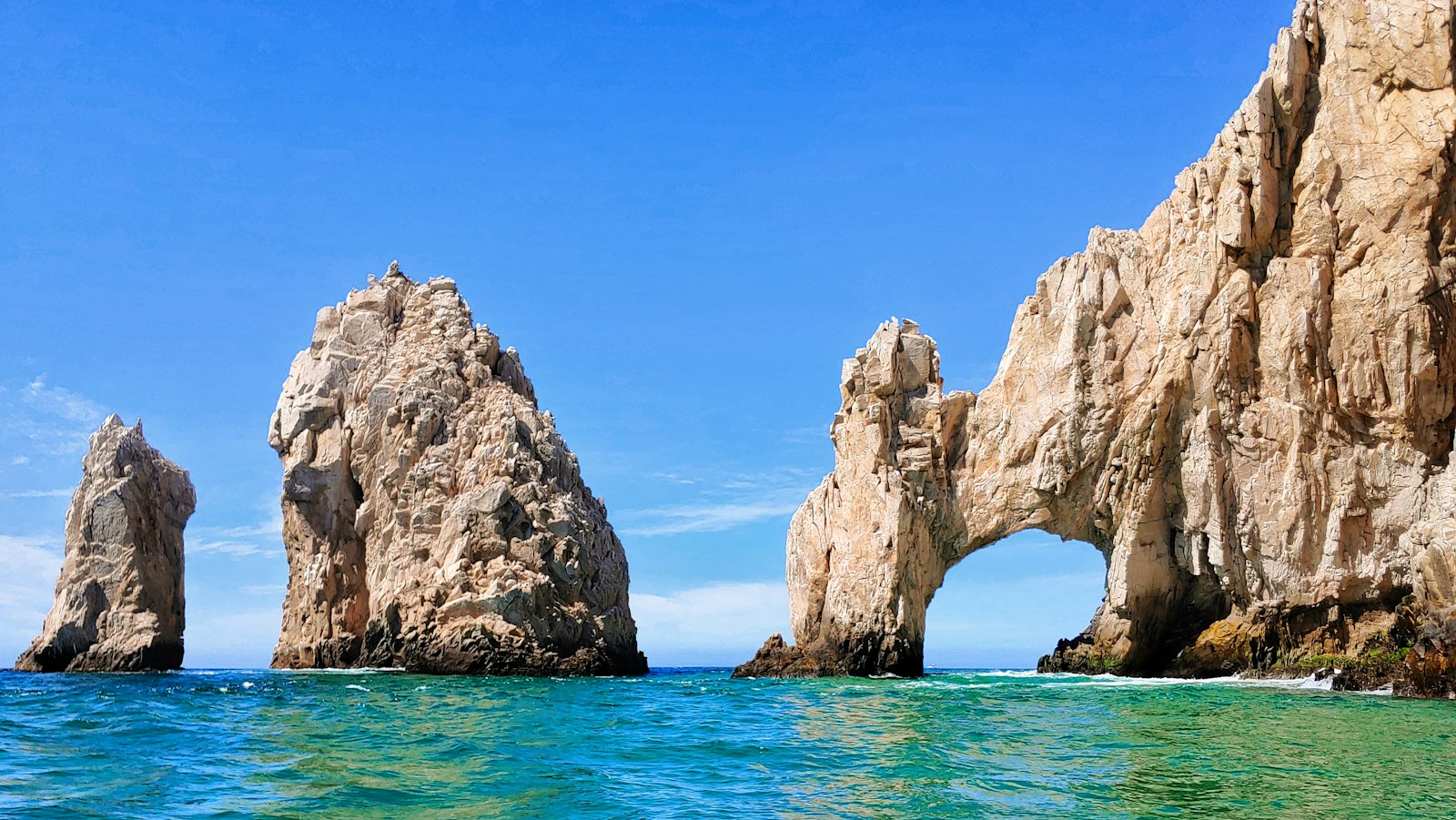
Sunset Monalisa is at the west end too, with the famous view across the bay to the Arch. Book the lounge for a drink, and eat somewhere else. Which seat to book and what it costs is in is Sunset Monalisa worth it.
Toro is the glossy, expensive one near the west end. I'm split on it. Some nights it's a big, glamorous evening, and some nights it's like eating dinner at a concert. It is LOUD, and a cocktail runs over US$25. Go if a scene is what you're after. I wouldn't book it for a quiet dinner or for a conversation.
Comal, at Chileno Bay Resort, has a lovely terrace. I've had one great dinner there and one with small portions and slow service. If you're staying on that stretch, go. I wouldn't ride out from town for it.
Cocina de Autor, at Grand Velas, is the tasting-menu restaurant with a Michelin star. Outside guests pay a per-person deposit, there's a real dress code, and the hotel doesn't publish what dinner costs if you aren't staying there, so ask when you call.
7 Seas is on the sand at the surf beach at Costa Azul, right at the San José end. I'd go for breakfast or lunch over the surf more than for dinner. The sea bass cooked tikin-xic style and the seafood chiles rellenos are the things to order, and it's the view you'll remember. I've had fish arrive cold there once.
There's also a second Nicksan at the shopping center by the Palmilla junction. I know the one on the San Lucas marina much better, so all I'll tell you is that it's there.
In the middle of the Corridor there are no independent restaurants at all. What to order at each of these, and what the check looks like, is in the best restaurants in Cabo.
What to Do
The best thing to do on the Corridor is the same thing I'd tell someone staying in town: go swimming at a public cove early in the morning. Beyond that it's a short list, and I think that's fine.
Swim at Chileno, Santa María or Palmilla. This is the Corridor's real advantage over both towns. From most resorts here, one of the three is a five to fifteen minute ride, and all three are free. Go before 9. The snorkel boats from Cabo San Lucas show up at Chileno and Santa María mid-morning, and by late morning there can be a line of them. They don't land, so they add people to the water more than to the sand. On a Sunday all three beaches belong to local families, and at Easter they're packed. My Chileno Bay guide has the whole morning laid out.
Buy the Hilton's day pass. Several Corridor resorts sell day passes, and they run higher than the beach clubs on Médano, roughly US$135 to $200, with some of them all-inclusive. A pass doesn't make a beach swimmable, though. The Hilton's has been around US$135, and it's the only one I know of that gets you a swim in the ocean, in that calm cove behind the breakwater. I haven't found a public way onto that cove that I'd send you down, so the pass is the practical route. Check the price and what's included before you go, because these change. The ones on the sand in town are in the best beach clubs in Cabo.
Play golf, after you've checked you can. Cabo Real, in the middle of the Corridor, is the course here that a visitor can simply book. A lot of the famous names along this highway are private or tied to staying at a particular hotel, and that includes some that used to take visitors. So check access before you plan a trip around a round. Which courses take visitors, and which hotel gets you onto the rest, is in the best golf courses in Cabo.
Book a spa treatment. The big Corridor hotels are where Los Cabos keeps its big spas, and booking a treatment is the accepted way to spend half a day inside a hotel you're not staying at. At Grand Velas the water circuit comes with any treatment. Expect US resort prices, and call ahead, because not every hotel takes outside guests.
Watch for whales. From mid-December to mid-April you can see humpbacks from shore along this coast. I've watched them from a balcony and from a restaurant table without paying anyone.
What I'd Skip
"Exploring the Corridor." There's nothing to explore. It's a highway between gates, with no lookouts to stop at, and the pretty parts are the beaches I just listed.
Three boat mornings from a hotel in the middle. One is fine. Three is a lot of 6:30 starts and a lot of fares, and if boats are the plan, stay at the west end or in Cabo San Lucas.
When It's at Its Best
November is my favorite month out here. The ocean is around 80°F and clear, the coves are open, and the winter prices haven't started.
Winter brings the whales and the highest rates, and the coves are flat but cool. March is the most expensive month of the year, and it's also when the Corridor has an edge over Cabo San Lucas, because spring break barely reaches it.
From about May the south swells start, and they get regular in summer and early fall. That matters here more than anywhere, because a swell can close the "swimmable" coves for a day or several, and then your cove hotel is a pool hotel. September has the cheapest rooms and the most closed-beach days. Check the flag every morning, and if it's red or black, stay out.
The Catch
You're paying the highest rates in Los Cabos to stay somewhere the nearest restaurant your hotel doesn't own is a car ride away, on a beach that at most addresses you can only look at.
On price, rooms on the Corridor average about double either town. They start around US$350 a night and go into four figures in high season, and that's before tax of about a fifth and, at the luxury hotels, a service charge of around 15% on top. What lands at checkout, and the rest of the budget, is in how much Cabo costs.
On swimming, only five hotels on this whole highway sit on water you can get into: Chileno Bay, Montage, One&Only Palmilla, and the Hilton and Paradisus behind their breakwater. "Beachfront" tells you nothing. Ask the hotel what color the flag is on most days.
Then there's the one nobody mentions, which is construction. This coast has been under development for decades and it still is. At any given time some hotel is adding a wing and some lot between two resorts has a crane on it. The work starts early, around 7am. Which building you're in can matter as much as which resort you chose, so before you book, look at the hotel on a satellite map for bare dirt next door, and email to ask what's being built on the property or beside it and which rooms face it.
A smaller one is that these are wedding and event hotels. I've had a private party outside my room run until midnight at one of the best hotels on this coast. It's occasional, and it's worth asking about if you're a light sleeper.
None of this would keep me away, but it's why I'd pick the Corridor on purpose.
The Verdict
The Corridor is a wonderful place to stay put and an expensive place to commute from. If the resort is the vacation, book it, and pick the hotel by its cove and its kilometer marker.
Here's who I'd put where:
- Couples and honeymooners who want a resort and a swim: Chileno Bay, Montage or One&Only Palmilla.
- Families who want the ocean and a reasonable rate: the Hilton, on the breakwater cove, with the grocery stop on the way in.
- You want all-inclusive and you'll leave twice all week: one of the big resorts in the middle.
- A three-night trip: the Palmilla end, for the short airport ride.
- You want Cabo San Lucas boats and bars a short ride away: the west end, around The Cape.
- Golfers: wherever your room key gets you onto the course you want, or near Cabo Real.
And these are the people I'd send somewhere else:
- First-timers who want to walk to a beach, the boats and dinner: Médano Beach in Cabo San Lucas.
- Anyone who wants to go out most evenings without a car: either town.
- You came for San José's restaurants: the historic center, or at least the Palmilla end.
- Under-thirties and groups: Cabo San Lucas. It's too quiet out here.
- You're on a budget: the cheapest beds on the Corridor cost about what a good hotel on Médano does.
- Light sleepers: ask the construction question before you pay.
I'd stay on the Corridor again, at a cove hotel, on a week when I'd already decided I wasn't going anywhere... and I'd still ask which kilometer first.
For the hotels themselves, see the Cabo resorts with swimmable beaches, Montage vs Chileno Bay, Las Ventanas vs One&Only Palmilla and the best all-inclusive resorts in Cabo.
Read the km number and ignore the town. Under 8 is the Cabo end, over 22 is the San José end, the middle is 25 minutes from everything. Only five hotels have a swim, so ask about the flag. Middle of the highway, get the meal plan. Stop for water on the way from the airport. Ask the hotel how Uber pickups work and what's being built next door. Chileno before 9. Two dinners out, tops.
Quick Answers
What is the Tourist Corridor in Cabo? It's the roughly 20 miles of highway and coast between Cabo San Lucas and San José del Cabo. It's resorts, golf courses and gated communities, and there's no town on it.
Can you walk anywhere from a Corridor resort? No. You can't walk to a store or a restaurant, and in most cases you can't walk to the next hotel. Guests at Montage, Chileno Bay and One&Only Palmilla can walk onto a cove, and that's about the extent of it.
How far is it to town, and what does the ride cost? From the west end it's 10 to 15 minutes to Cabo San Lucas, from the east end about 10 minutes to San José, and from the middle 20 to 30 minutes to either. A taxi from the middle is about US$25 to $50 each way, less from an end to its own town, and Uber is roughly half.
Can Uber pick me up at my resort? It depends on the hotel. Some let the car come to the lobby and some make you meet it at the security gate, which can be a long walk. Drop-off at the door is normal, so ask the hotel about pickups before you book.
Can you swim at Corridor beaches? At the three public coves, Chileno, Santa María and Palmilla, and behind the breakwater at the Hilton and Paradisus. Not in front of most resorts.