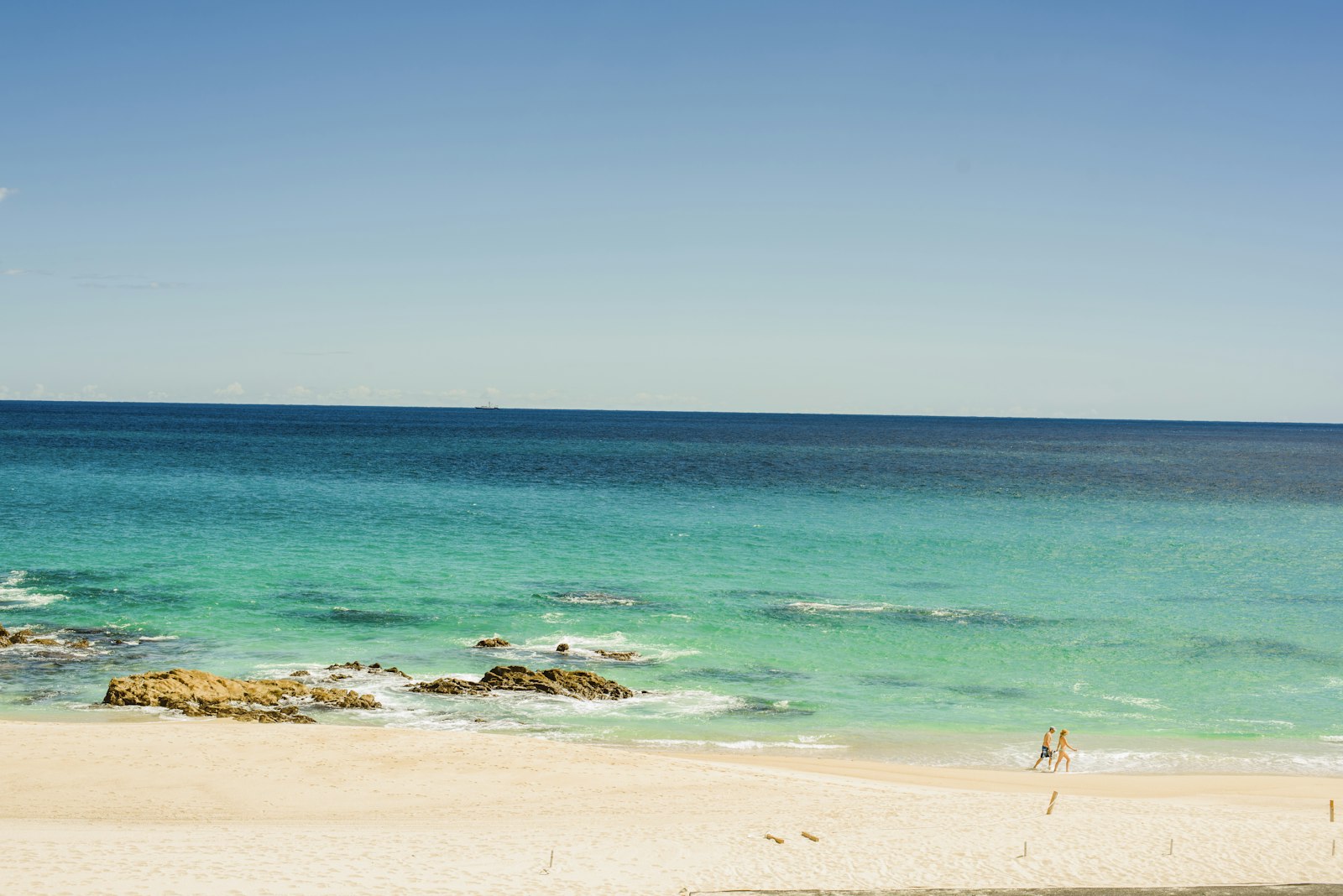
Best Swimmable Beaches in Cabo: The 7 I Actually Swim At
By Cabo Wander
The beach question I get more than any other is some version of "wait, can you even swim in Cabo?" It's a fair thing to ask, because most of the beaches in the hotel photos are for looking at. The water in front of them isn't safe to get into.
My short answer is yes, you can swim in the ocean here, at a short list of beaches. Four of them are dependable: Chileno, Palmilla, Médano and Santa María. Chileno is my number one, because it's the only one where the swimming, the snorkeling and the basics like a lifeguard and a bathroom are all good on the same day. After those four there are two small local beaches that almost nobody tells visitors about, and one you get to by boat that deserves more caution than its name suggests.
That's seven, and that's the whole list. You'll find posts that get to ten or twelve. They get there by counting surf breaks, hotel coves you can't easily reach, and beaches two hours away.
Keep in mind that "swimmable" describes a beach on a particular day. EVERY beach in this post closes when the sea is up, including my favorite, and in summer and fall that happens a lot. This list tells you where it's usually safe. The colored flag on the pole that morning tells you about today.
I ranked these by how often you can safely get in and how good the swim is when you do. How pretty the beach is came last. All seven are public, and none of them charges you to walk onto the sand.
1. Chileno Bay
Chileno gets the top spot because it does everything well at once. It's a protected bay about halfway along the highway between the two towns, with a lifeguard, a roped-off swim area, a reef you can reach from the sand, and no jet skis.
The detail I love most is the ropes. Swimmers get one lane and the kayaks and paddleboards get their own, so nobody is paddling over your head while you float. I've been in under a yellow flag on a cool winter morning and it was chilly but perfectly swimmable.
For the fish, swim out and to the right, along the rocks. I've had sergeant majors and parrotfish around me within a couple of minutes, and the odd pufferfish. It's fish over rock, so don't picture a coral garden. On a good day the water is a clear blue. On a bad one it's cloudy and cold, and you won't know which you've got until you're standing in it. I go month by month on that in my post on snorkeling in Cabo.
Getting there is easy once you know where you're going. The public beach has its own road, parking lot and paved walkway, right beside the Chileno Bay resort. The sign on the highway is small, and I've driven past it, so slow down when you see the resort. Parking is free. A guard at the entrance looks in your cooler for glass, which isn't allowed on any beach here. The walkway down is paved all the way, so it works for a stroller or a wheelchair.
Without a car, an Uber from Cabo San Lucas is roughly US$15 to $20 each way, and a taxi is more. I compare the two in getting around Cabo. Nothing waits at the beach for the ride home, so walk back up to the lot, where the signal is better, and call your car from there. The bus that runs between the towns will also let you off on the highway for a few dollars, and from there it's about a ten-minute walk down.
What I wish were different is that there's no restaurant and no bar. Some days someone comes around with cut fruit and sodas, and some days nobody does, so bring water and lunch. Shade is limited, so bring an umbrella or plan on renting one. Bring your own mask too. And I pack my own toilet paper, because the bathrooms run out.
The bigger catch is timing. When I get there around 8, there are a dozen cars in the lot. The lot is usually full by 10. By 11 on a Sunday it's already busy, and by noon the sand is towel to towel. The version I'd spare you is showing up at 12:30 on a Sunday in a rental car, circling, parking up on the highway, and then finding out there's no lunch.
Chileno isn't exempt from the swell, either. When the south swells come through in summer and fall, the flag here goes red or black like everywhere else.
So go early, on any day but Sunday, with everything you need in a bag. Done that way, it's the best morning in the water Cabo has. The full rundown is in my Chileno Bay guide.
2. Palmilla
If all you want to do is swim, Palmilla is the best beach in Los Cabos, and I think it's the one people overlook most. It's my first pick for small kids and for anyone staying in San José.
It's a sandy cove sheltered by a rocky headland at the San José end of the Corridor, about ten minutes from San José and twenty to twenty-five from Cabo San Lucas. What sets it apart is the sand. Chileno and Santa María are coarse underfoot, and Palmilla is fine, pale, proper beach sand. The water is the flattest I see all week, and every time I've been, the kids were in it before the adults had put their bags down. It also gets top marks locally for cleanliness, and it looks it.
You get a lot for a free beach, too. There are bathrooms and showers that don't cost anything, a lifeguard, and a handful of public palapas for shade if you're early enough to claim one. There's a boardwalk and staff on hand to help visitors with disabilities. Near the parking lot you can rent an umbrella and two chairs for about US$20, and kayaks, paddleboards and snorkel gear as well. There's some reef, but I wouldn't come here for the snorkeling.
The One&Only resort sits on the point, and people assume the beach belongs to the hotel. It doesn't. Take the Palmilla exit off the highway, cross the overpass, follow the road down through the development, and turn left before you reach the hotel's guardhouse. Nobody stops you. Resorts and public access rub against each other all along this coast, and the thing to remember is that every beach in Mexico is public by law. What you can't count on is walking through a hotel to reach it, so use the public road.
I also like that Palmilla is a working beach. The fishing boats come back around midday, run right up onto the sand, and the catch gets cleaned at the far end while toddlers splash at the other. It's about the least resort-like scene on the whole resort coast. It does mean boats, trailers and a fishy smell down at that end, so set up toward the middle.
Parking is the weak point. The lot is free and right on the beach, but it's small and partly sand, so watch where you put the car. On Sundays, local families arrive with coolers and speakers, and by about 1pm the beach is full and there's nowhere to park. It's a happy, noisy scene, and I enjoy it. It's just not the quiet cove you had on Tuesday. On a busy day I'd take an Uber.
And Palmilla isn't immune to the sea, even with that headland. It faces south, so a summer swell can put a red flag up here too. A couple of spots have rocks underwater, and the bottom drops off faster than the calm surface suggests, so keep little ones within arm's reach.
Bottom line: midweek, in the morning, this is where I'd take a nervous swimmer or a three-year-old.
3. Médano Beach
Médano is the easiest swim in Cabo and the only one with a town attached. I'd rank it first for convenience and last for peace and quiet, and that's how it ends up third.
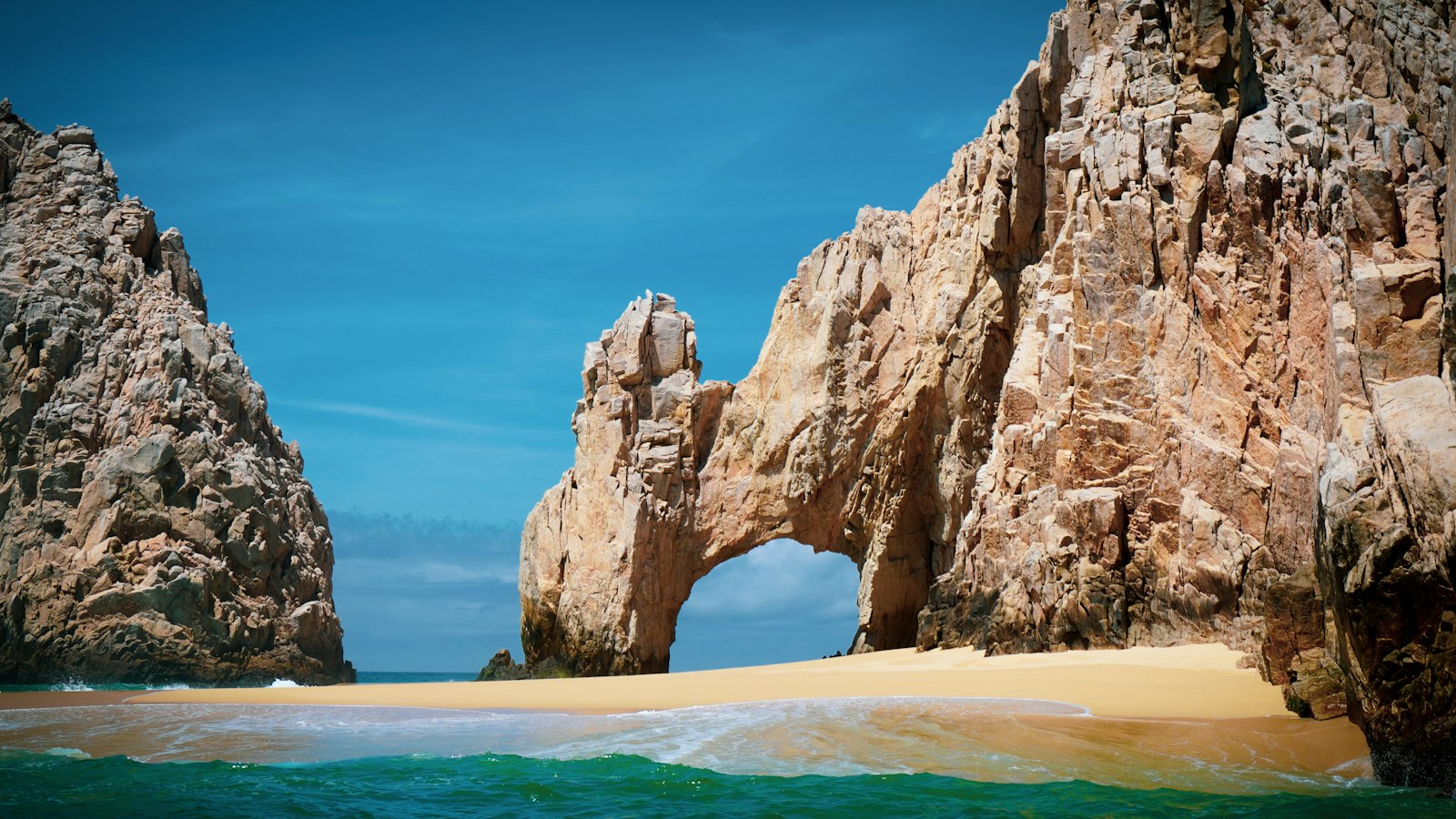
It's the long bay beach in Cabo San Lucas, facing the Arch, and it's the calmest big beach in the area. The slope in is flat and gradual, the resorts have roped-off swim areas out front, and there are lifeguard towers along it. It's swimmable on more days of the year than anywhere else on this list. When the swell closes the Corridor coves, Médano is usually the last one still open. You can walk to it from the marina and downtown, and it's the one beach here where food, a drink and a bathroom are all close by.
The swimming itself is pleasant more than special. The water is clean but it sits next to a harbor, so it isn't the clear blue of the coves, and there's nothing to see with a mask.
The thing to watch for at Médano is traffic. At the end by the marina, water taxis, glass-bottom boats and jet skis load right off the sand, and there are a LOT of them. Stay inside the buoys. That one rule takes care of the real hazard on this beach.
The other thing is the selling. One morning I walked on with a coffee at 8:30 and swam in water like a lake. The first hat seller found me around 10:30. By noon I'd said no thanks to a blanket, a massage, a hair braid and a ceramic turtle. Everyone is polite about it, and a "no, gracias" works. It's just constant at the marina end.
So walk east. The farther you go from the marina, the quieter it gets, and once you reach the stretch where the big resorts rope off their sand, the vendors and boats mostly drop away. That's the end I'd pick for families and for anyone who wants to read a book. The trade-off is that the quiet end is a long way from the restaurants and boats that made you choose Médano in the first place.
A few practical things:
- Getting on the sand. There are public access lanes between the hotels. There's one at the west end beside the beach hotels near the marina, one at mid-beach down the dry riverbed between Villa del Arco and Club Cascadas, and a ramp for beach wheelchairs near Villa del Palmar.
- Parking. Private lots a block back charge a few dollars. If you're staying anywhere in town, just walk.
- Water taxi. About US$5 to $7 from the marina once you've bargained, if you don't feel like walking.
- Bathrooms. There's a free public block with foot-rinse showers. The private ones charge.
- A chair. About US$15 to rent one, or buy a day pass at a beach club, which starts around US$40 and mostly comes back as food and drink credit. I rank those in the best beach clubs in Cabo.
Go before 10am if you can. It's flat and nearly empty then, and it clears out again after about 5. On cruise ship days the marina end fills up from mid-morning, and in March it belongs to spring break.
If you don't have a car, or you want lunch brought to your chair, this is your beach. Which stretch to sit on is covered in my Médano Beach guide.
4. Santa María
Santa María is a better snorkel than it is a swim, and that's why it sits below the other three. At 8:30 in the morning it's also the prettiest of the four. It's a horseshoe-shaped cove a few minutes down the highway from Chileno, with turquoise water and fish close to shore.
The snorkeling is as good as Chileno's, and on some mornings I've found the water clearer here. The best of it is at the far right end by the rocks. That happens to be right in front of a private residents' beach club you can't go into, but the water in front of it is anybody's. Both ends of the cove have fish.
It's also calm in a different way from Médano. Almost nobody is selling anything. I've lain on this beach and read for an hour without one person stopping at my towel, which is something I can't say about town. Parking is free in a paved lot that rarely fills, and there are bathrooms, changing rooms, outdoor showers and a lifeguard. A man with umbrellas shows up around 10, and about US$15 to $20 gets you shade. Sometimes someone has cold drinks in a cooler. Don't count on it, and bring your own mask, because nobody rents them here.
My complaint is the sand, which is really tiny pebbles. If you have tender feet, or kids who do, bring water shoes. I see Santa María recommended as the calm one for little kids all the time, and I'd send them to Palmilla.
The cove also gets less protection than its shape suggests. It faces south, so in summer it takes swell, and heavy waves and a strong pull can show up here on a perfectly sunny day. In winter and spring it's usually flat. Whatever the season, if the flag is red or black, this is not the beach to test it at.
Then there are the boats. The cove is nearly empty until about 10. By 11 there can be five to ten tour boats anchored in the bay. Their passengers snorkel from the boat and don't come ashore, so the sand stays quieter than Chileno's while the water gets busy.
To find it, follow the "Playa Santa María" sign on the highway, and ignore your phone. My map app sent me to the gate of a private community, and it was the guard there who pointed me back to the public turn. From the sign it's a short paved road to the lot, then a boardwalk to the sand. The Montage resort sits in the middle of the beach with its own loungers, and its restaurants take reservations through the hotel lobby, so you can't walk up from the sand for lunch.
For the ride, it's the same roughly US$15 to $20 each way by Uber from Cabo San Lucas. Phone signal down at the beach is patchy. I've had a car in two minutes and I've also stood there with no bars, so screenshot the pickup spot before you walk down.
Bottom line: get here before 9, snorkel the right side, and leave by 11.
5. Playa Empacadora (Cannery Beach)
This is my favorite find on the list. It's the swimmable beach in Cabo San Lucas that isn't Médano, and it's about a ten-minute walk from where the cruise ship tenders drop everyone off, in the direction almost none of them turn.
First, the names, because they cause a lot of confusion. Playa Empacadora, Cannery Beach and El Corsario are all the same small beach. It sits on the Land's End side of the harbor mouth, beside the old cannery pier, with the hill behind it.
It earns its spot because the water is calm and almost nobody is there. It's inside the bay, the sand slopes in gently, and there's a lifeguard tower. I was there on a weekday with two ships anchored in the bay and it was still mostly local families. Nobody tried to sell me anything.
The surprise is the snorkeling. At the south end there's a patch of reef right off the sand with a lot of fish, which is not what I expected next to a working harbor. At low tide you can walk from that end around to the little beach at Pelican Rock, the next cove toward the Arch. That's the rock every Arch boat stops at, and from here you see it from the side nobody photographs. At other tides, Pelican Rock is a water taxi drop.
To get there, start from the tender pier or the south side of the marina and follow the road toward Land's End, past the navy base and the old cannery. It's eight to ten minutes on foot along a working road.
It does look like what it is, which is the beach next to a cannery. It's small, the water is harbor water, and there's almost no shade. The only bathrooms are portable ones, or the pay bathrooms back at the marina. There's no food on the sand. Boats pass just outside, so stay close in. On Sundays it's busier with families.
It suits cruise passengers who want a free swim without a taxi. It also suits guests at the Land's End hotels, like Grand Solmar and Sandos Finisterra, whose own beach isn't safe to swim at, and anyone staying in town who wants a calm dip without the Médano scene. I'd go for an hour or two with a towel and a mask, then walk back for tacos.
6. Lover's Beach, Bay Side Only
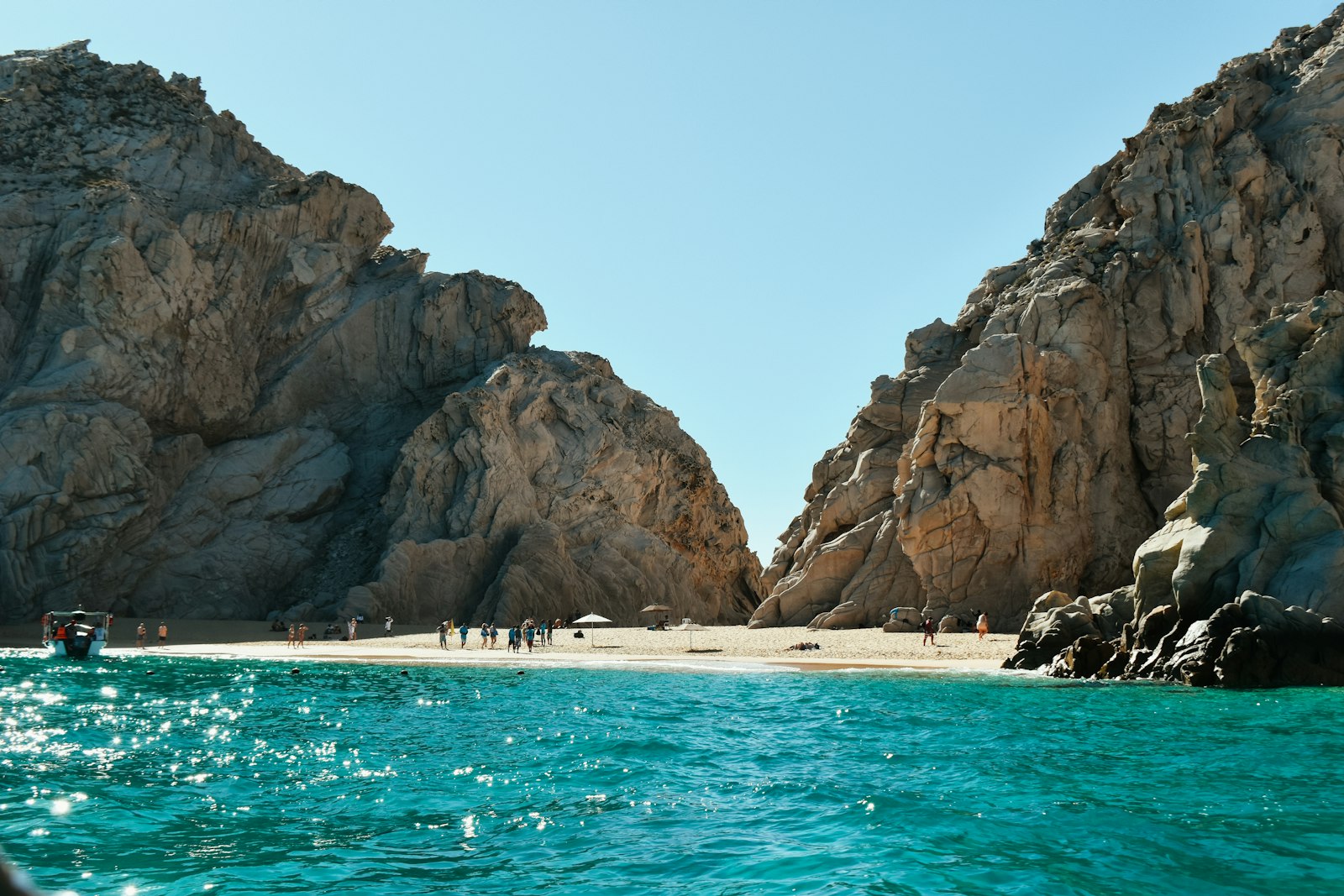
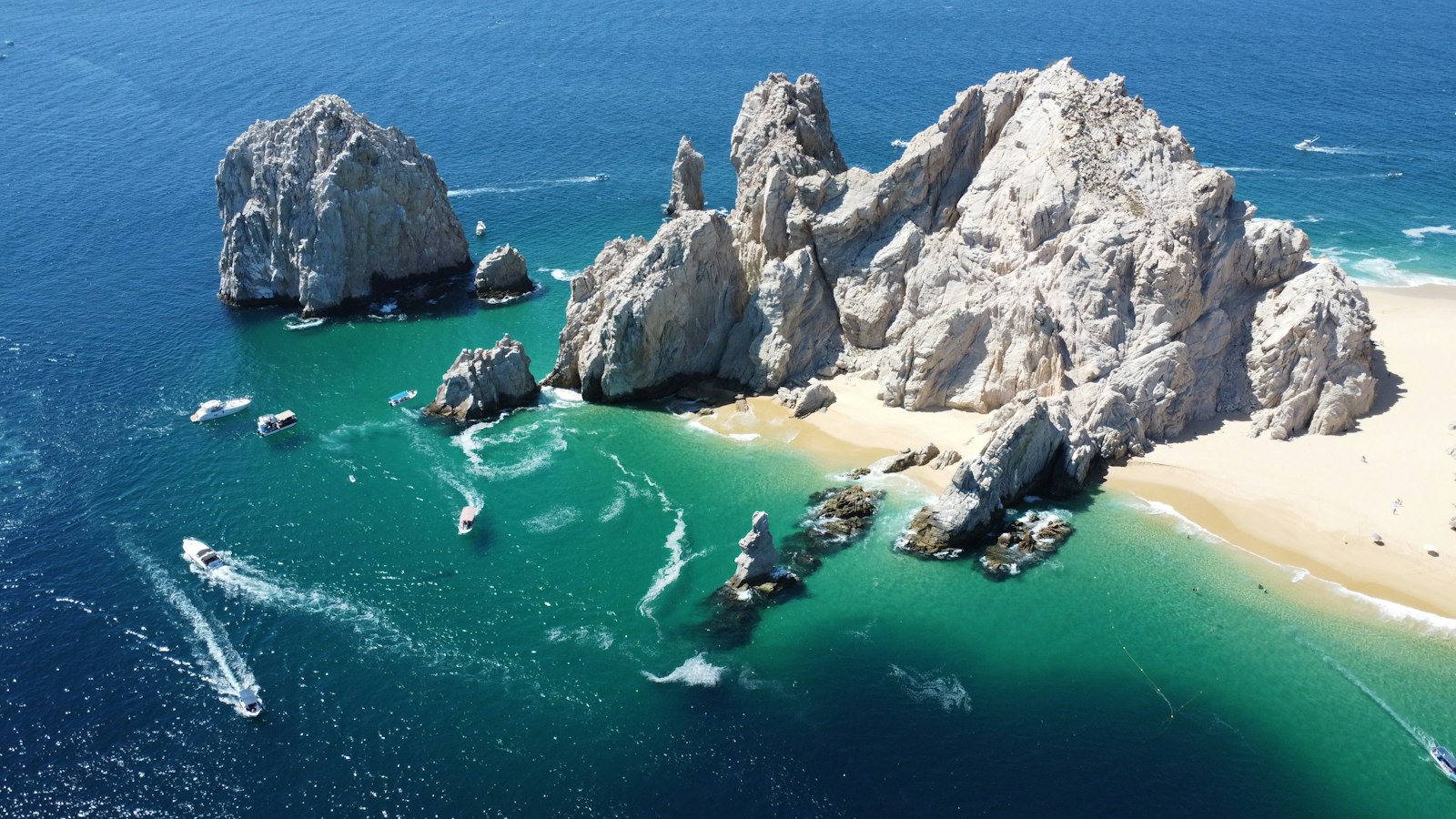
Lover's Beach is on this list for where it is. It's a strip of sand between granite walls out at Land's End, a short boat ride from the marina, and you should go. The swimming is the lesser part of it, and it comes with more caveats than any other beach here.
The beach faces the bay on one side. Through a gap in the rocks, the same sand faces the open Pacific, and that side is called Divorce Beach. You swim on the bay side only. Nobody should ever get in on the other side, and I'll come back to that below.
On the bay side, most days are fine for a careful swim. But there's no lifeguard, the bottom drops off quickly, and there's current near the point and under the Arch. The water is also colder than at the Corridor coves. I've felt the pull here on a day that looked completely calm, and it was stronger than I expected. So I get in directly in front of where the boats land, I stay where I can stand, and if I feel myself being pulled sideways, I get out.
For kids and weak swimmers, that means wading at the edge with an adult right beside them, and no more than that.
Getting there is by boat only. A water taxi from the marina or from Médano is about US$20 round trip, and there can be a few dollars on top for the dock fee and a park wristband. Two things to settle before you pay:
- Ask if the boat can land today. Landing depends on the sea and the sand that day, and some days it isn't allowed.
- Fix your pickup time and remember your boat. If you go back with a different captain, you'll pay twice.
It's a wet landing, off the bow into knee-deep water. There are no bathrooms and no shade. On a calm day the snorkeling along the rocks toward Pelican Rock is fair.
Go early. By late morning on a cruise ship day, the beach is a line of boats waiting to drop people off. The whole trip, including the Arch itself, is in my guide to El Arco and Lover's Beach.
7. La Playita
La Playita is the only place to swim in San José itself, and it has the calmest water of all seven. I've put it last because it's small, and because I'm less sure of it than the others.
It's a little beach just inside the entrance to the Puerto Los Cabos marina, sheltered by the breakwater, in the fishing village across the estuary from town. Inside the buoyed area there are basically no waves at all, which is rare in Los Cabos and great for toddlers. It's a ten to fifteen minute drive from the plaza, over the bridge, and parking is free. Hotel El Ganzo's beach club is right alongside and sells day passes for about US$50, most of which comes back as credit.
Think of it as a local swimming hole more than a beach you'd plan a day around. Fishing and charter boats go past in the channel. Outside the breakwater, the open beach to the east has ordinary surf and isn't for swimming, so stay inside the buoys. On Sundays it belongs to local families.
It's been a while since I spent real time here, so I'd check the water before committing a day to it. As a quick dip paired with a fish lunch in the village, it works well. If you're staying in town and wondering where the beach is, this and Palmilla are your two answers, and there's more on that in my San José del Cabo guide.
The Far Option: Los Arbolitos at Cabo Pulmo
I've kept this one off the ranking because of the drive. On its day, Los Arbolitos has the best snorkeling from shore within a day of Cabo. It's a small beach inside the marine park, about ten minutes down a dirt road past Cabo Pulmo village, with clear, gentle water and fish around the boulders at both ends.
It's also 2 to 2.5 hours from Cabo San Lucas, and the last stretch is washboard dirt. Check what your rental contract says about dirt roads before you go, which I cover in renting a car in Cabo. There's a gate fee of a few dollars that includes bathrooms and showers. There's no lifeguard. The village is cash only, with no ATM and no gas station.
From December to March, the north wind can chop the water up by afternoon and ruin the snorkeling, so go in the morning and check the wind first.
I wouldn't drive four or five hours round trip just for a swim. As one stop on a Cabo Pulmo day trip, I'd go happily.
Famous Beaches You Can't Really Swim At
Around the cape, deep water comes very close to shore. The swell arrives with all its energy and breaks hard on a steep beach, then pulls back just as hard. That happens on sunny days with no wind at all. Every so often a set of waves comes in much bigger than the ones before it, with no warning. People have died on these beaches while standing at the water's edge. They weren't swimming.
So on the beaches below, I don't go in, not even to my knees, and when the flag is against swimming I stay off the wet sand too. All of them are public and lovely to walk on, up on the dry sand. I talk about the wider picture in is Cabo safe.
Divorce Beach. The Pacific side of Lover's Beach, through the gap in the rocks. It's steep, the waves dump right onto the sand and run up onto dry beach, and there's no lifeguard. It's often emptier than the bay side, and that's the reason. Take your photo from well up the beach.
Solmar and the whole Pacific side. That's the beach in front of the Land's End hotels, the one below Pedregal, and everything out past Sunset Beach, Quivira and Diamante, all the way up the coast toward Todos Santos. It's the same water as Divorce Beach. These are walking and whale-watching beaches.
Cerritos. This is the one exception on the Pacific side, and it's a partial one. Cerritos is a surf beach with one swimmable corner. That corner is the cove under the rocky point at the north end, by the big yellow hotel, where it's shallow and sandy and the waves are gentle. In high season there are lifeguards, and I'd stay in front of them, on a small day. The rest of the beach has a rip current. Watch where the surfers paddle out and swim somewhere else, because they're using that current to get out. It's a fun stop on a Todos Santos day trip, and the details are in my Cerritos Beach guide. If swimming is the goal, it's an hour's drive to a beach that's less safe than the four you left behind.
The San José hotel zone. The long, wide beach in front of the big hotels has a steep drop-off close to shore and an undertow, and it's flagged against swimming most of the time. The spot where the estuary meets the sea is no better. This one catches more people than any other, and it's a big part of how I'd choose between Cabo San Lucas and San José del Cabo.
Las Viudas. I think it's the most beautiful small beach on the Corridor, just west of Santa María, with pinkish sand, sculpted rock and tide pools. Go and sit, and look in the pools. The waves break right at the shore among sharp rocks and will tumble you, and I've never seen a lifeguard there.
Costa Azul and Acapulquito. These are surf breaks at the west end of San José. Acapulquito shows up on some official lists of swimmable beaches, and I'd leave it off yours. It's rocky, and the shallows have sea urchins. Go to watch the surfers.
Most of the Corridor. The majority of resort beaches along the highway are open, south-facing and steep, and the hotels say so themselves. The exceptions are the coves in this post, plus a man-made one in front of the Hilton and Paradisus that works for guests of those hotels behind its breakwater. I list which hotels sit on water you can get into in where to stay in Cabo, and the rest of that coast is in my Tourist Corridor guide.
Before you book, ask the hotel what color the flag is on most days.
How to Read the Flags
Every beach with a lifeguard flies a colored flag. It's set in the morning and changed through the day as conditions change, so look again after lunch.
- Green: go ahead and swim.
- Yellow: use caution. Weaker swimmers should stay shallow.
- Red: don't go in.
- Black: the beach is closed. Stay out of the water and off the wet sand.
There's also a separate flag that goes up when there are jellyfish, which is mostly a summer and early fall thing. If you see a flag you don't recognize, ask the lifeguard before you get in.
A black flag is an instruction. I know it's tempting to treat it as advice when the sun is out and the water looks fine from your towel. Please don't. The wet sand is included because that's where a wave reaches you.
Here's the part that surprises people. You can wake up to sunshine and no wind and find every beach closed. The swell that closes them comes from storms hundreds of miles away, and the flags can stay black for two days or more after the sky clears. The port closes too, so the boats stop running. On those days it's a pool day... nothing on this list is a backup plan. South swell season runs roughly May through October, and in September and early October the closures can last several days in a row. Médano and Playa Empacadora are the last to close, and mornings are calmer than afternoons everywhere.
Something else fools a lot of visitors. Los Cabos has more Blue Flag beaches than any other municipality in Mexico, and you'll see the signs. That certificate is about water quality and how well the beach is managed. It says nothing about whether the water is safe to swim in. Grand Velas has one over a beach the hotel itself tells guests isn't suitable for swimming. The only flag that tells you about swimming is the colored one on the pole.
As for when the swimming is best, late October and November win easily, with the water around 80°F and the swells settling down. February to April is the calmest stretch on the Corridor and also the coldest, at about 71°F. I've got the sea temperature for every month in the best time to visit Cabo.
The Verdict
There are four beaches in Los Cabos I'd count on for a swim, three smaller ones worth knowing about, and a lot of beautiful sand that's for walking. If you only have time for one, go to Chileno, early, with a mask and a packed lunch.
Here's what I'd pick for you:
- Small kids: Palmilla, midweek. The middle of Médano and La Playita also work, and so does Chileno inside the ropes before 10am. I'd skip Santa María's pebbles and Lover's Beach.
- Snorkelers: Chileno along the right-hand rocks, then the far right end of Santa María. The south end of Playa Empacadora if you're staying in town. Los Arbolitos if you're making the Cabo Pulmo trip anyway.
- You want a drink brought to you: Médano, at a beach club or on a day pass. Nothing is sold at the Corridor coves beyond the occasional cooler.
- You want quiet: Playa Empacadora on a weekday, Santa María before 9am, or Palmilla midweek. Stay away from any public beach on a Sunday.
- No car, staying in Cabo San Lucas: Médano and Playa Empacadora on foot, Chileno by Uber.
- Staying in San José: Palmilla, a ten-minute ride. Please don't assume the hotel beach will do.
- Off a cruise ship with six hours: walk to Playa Empacadora, or take the water taxi to Médano.
- Not a strong swimmer: Médano inside the buoys, Palmilla or La Playita.
If you're fitting a beach morning around everything else, my list of things to do in Cabo has the order I'd do it all in.
If you'd rather wake up on one of these beaches, see the Cabo resorts with swimmable beaches, the best hotels on Médano Beach and Cabo with kids.
So, Chileno before 9, and bring a mask, lunch and toilet paper. Palmilla if you've got little ones. Médano if you want a chair and a margarita, and walk east. Check the flag every single morning, and if it's black, it's a pool day.
Quick Answers
Can you swim in the ocean in Cabo? Yes, at a short list of beaches: Médano in Cabo San Lucas, Chileno, Santa María and Palmilla on the Corridor, a couple of small harbor beaches, and the bay side of Lover's Beach. You can't on the Pacific side, in front of San José's hotels, or at most Corridor resorts.
Which is the best swimming beach in Cabo? Chileno for most people, because it's protected, has a lifeguard and a roped swim area, and you can snorkel off the sand for free. Palmilla is better for small children, and Médano is the one if you want food and drinks and no ride.
Why can't you swim at most Cabo beaches? Deep water comes close to shore, so the beaches are steep and the waves break hard and pull back hard, even on calm sunny days. People have been swept in while only standing at the edge.
What do the beach flags mean in Cabo? Green means swim, yellow means caution, red means don't go in, and black means the beach is closed and you should stay off the wet sand too. A separate flag goes up for jellyfish, and the flags change through the day. The tourism board keeps a page on beach flags and swimming.
Are Chileno and Santa María free, and can you get there without a tour? Both are free, with free parking, bathrooms and a lifeguard. An Uber from Cabo San Lucas is roughly US$15 to $20 each way, and you should sort out your ride back before you walk down to the sand.