Cerritos Beach: I'd Only Drive Out for a Surf Lesson
By Cabo Wander
Friends ask me two things about Cerritos Beach. Is it worth the drive from Cabo, and is it really the one beach on the Pacific side where you can swim?
Here's my answer to both. I'd make the drive on its own for exactly one reason, and that's a surf lesson. Cerritos is the best place near Cabo to learn, and it deserves a whole morning. For everybody else it's a 60 to 90 minute stop on the way home from Todos Santos, and a really nice one. I wouldn't drive an hour out here just to swim.
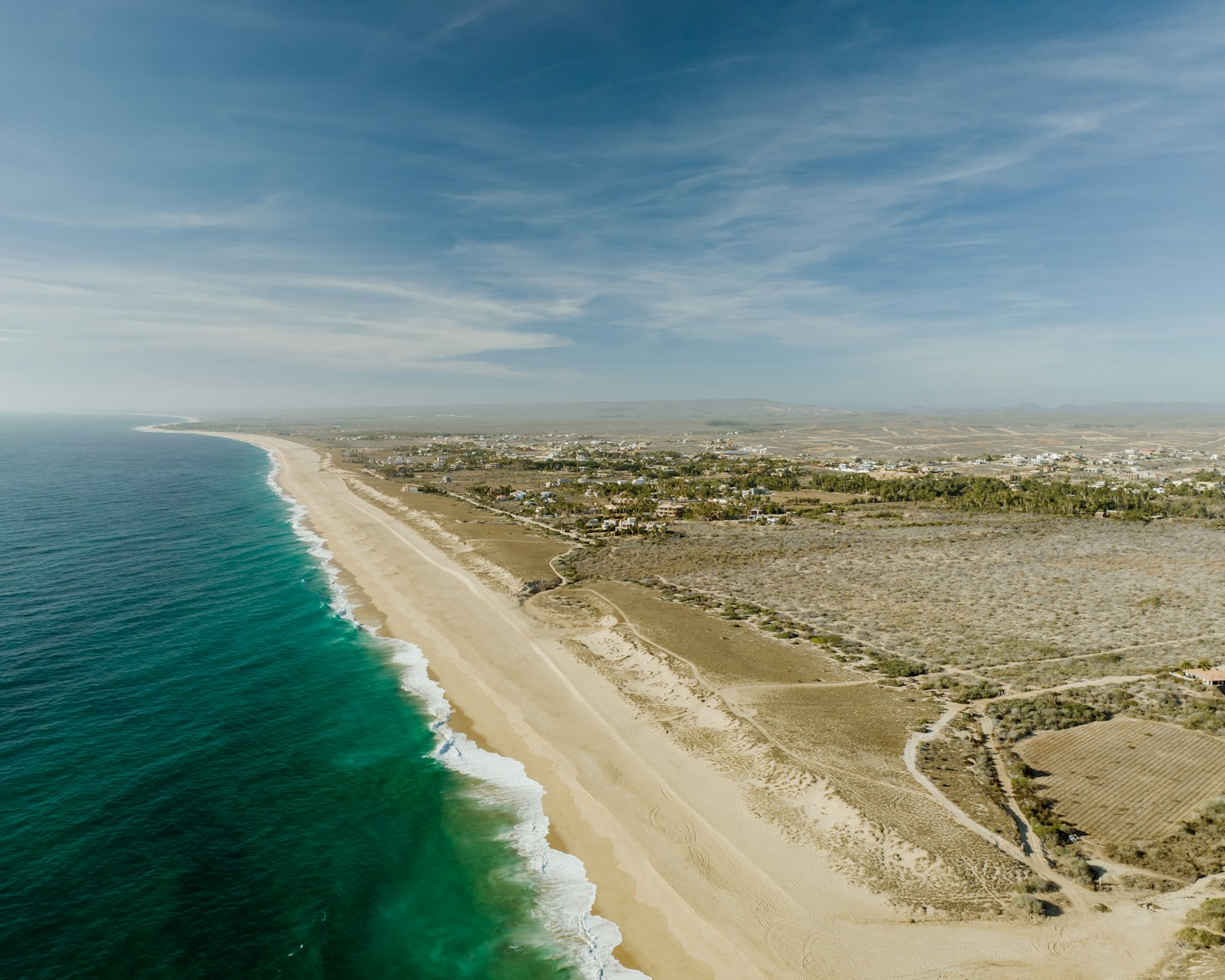
The thing that took me a few visits to understand is that Cerritos is a surf beach that lets swimmers in at one end. People talk about it as one place, and that's how you get one friend telling you it was perfect for the kids and another telling you it was way too rough. They were standing on different parts of it. There's the corner under the rocky point at the north end, where people wade. There's the middle, where the lessons and the waves are. And there's the south end, which is empty, and it's empty because of the current.
It's the beach stop in my Todos Santos day trip, and this post is the close-up. So let's get into it.
Can You Actually Swim at Cerritos?
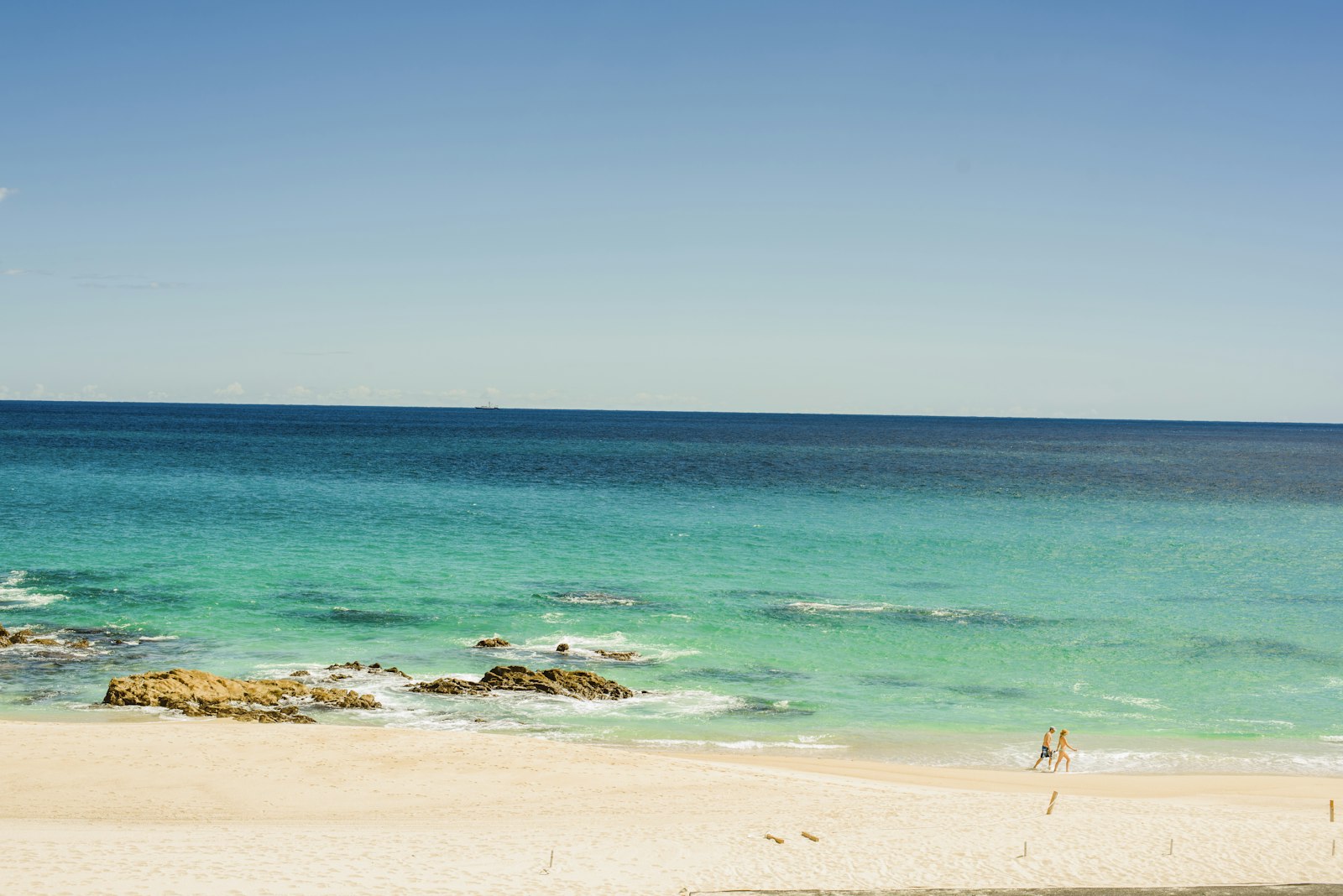
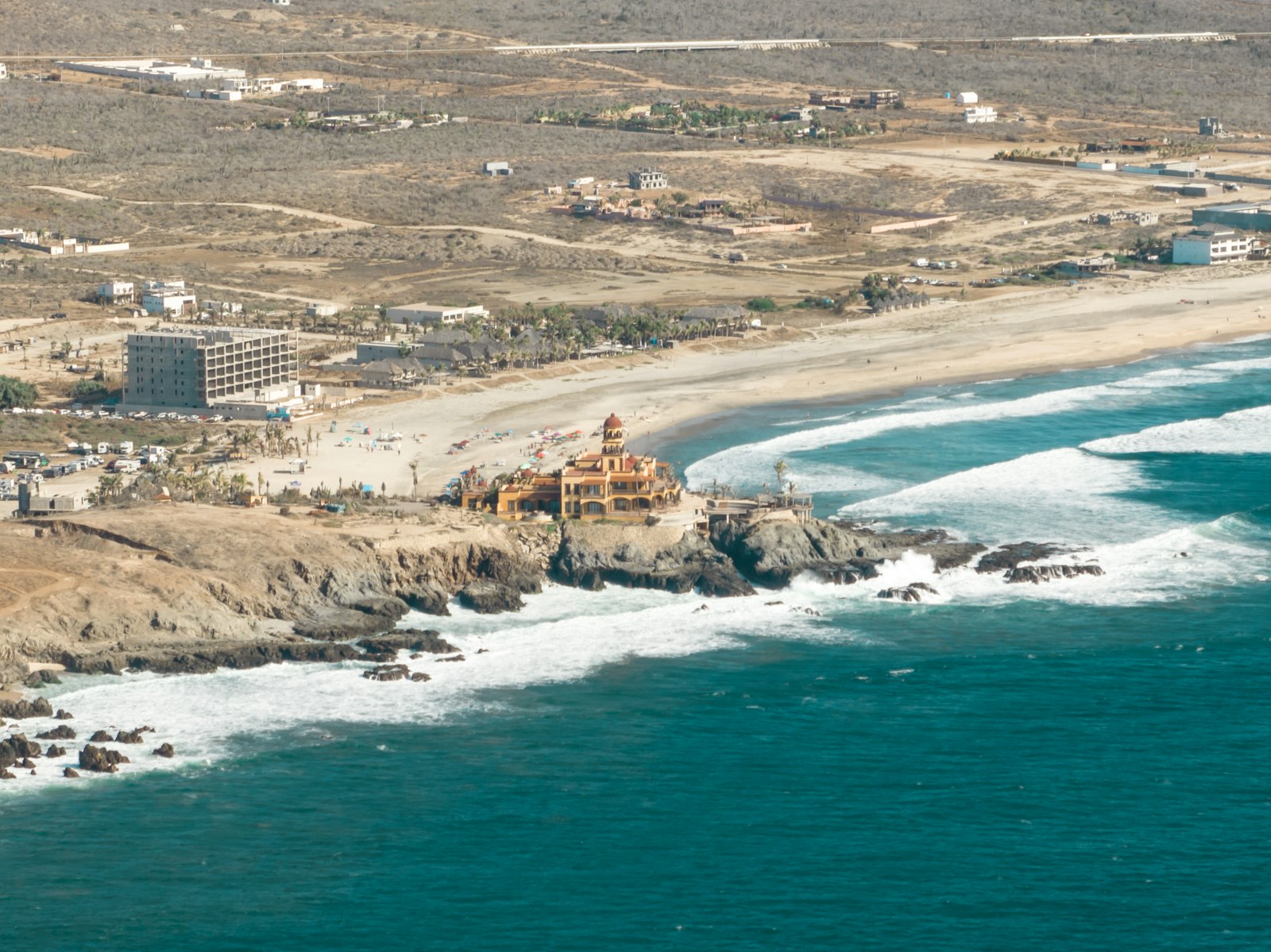
In one corner, on a small day. Stand on the sand facing the ocean and walk to your right, toward the rocky point with the big yellow building on top of it. The corner just inside that point is the swimming spot. The bottom is sand, the water is shallow, the waves are gentler than anywhere else on the beach, and you'll have company. Most people are wading waist-deep, body-surfing or riding a boogie board, and that's what the corner is good for.
How good it is depends completely on the size of the surf that day. On a small morning it's an easy, happy place to get wet. On a big winter swell, or when a summer storm is pushing waves up the coast, the corner gets heavy too, and I stay on the sand. Even on a nice day there's some pull, so I stay where I can stand, I keep kids within arm's reach, and if I notice I'm drifting sideways I walk out and start over.
The rest of the beach is a different story, so here's how I read it from right to left:
- The point itself: rocks, and a wave for people who already surf. Not a place to swim.
- The corner: where you swim, on a small day.
- The middle: the surf schools and the beach break. A beginner on a big foam board can't steer or stop, so I don't swim in among them.
- The south end, to your left: the rip current is down here, and it's usually marked with a red flag. The farther left you walk, the more room you get and the less safe the water is. It's a lovely stretch for a walk. I don't get in.
One more way to spot the current is to watch where the surfers paddle out. They use the channel because it carries them, so swim somewhere else.
About lifeguards. There's a tower by the corner, and some days there's a lifeguard on it. They're volunteers, there are no posted hours, and I've been there when nobody was up there. If someone's on duty I swim in front of him and I leave a tip. I just don't plan the day around him being there, and I wouldn't want you to either. That's the biggest practical difference between Cerritos and the coves closer to Cabo.
You'll read everywhere that this is "the only swimmable beach on the Pacific side." It's true in the sense that it's the one beach on this coast where regular people get in at all. It's the same open ocean that makes every beach in my guide to the Pacific side of Cabo a walking beach, with one corner that's sheltered enough on the right day. If swimming is the point of your day, you've got much better water closer to home. Chileno Bay is about 25 minutes from Cabo San Lucas with a roped swim area, and the full ranking is in the best swimmable beaches in Cabo, where Cerritos sits with the famous beaches you can't really swim at. The wider picture on flags and the ocean here is in is Cabo safe.
Bottom line: wade in the corner if it's a small day, and don't count it as your swimming beach.
Why It's So Good for a First Surf Lesson
This is where Cerritos earns the drive. The bottom is sand, so when you fall off, and you will, you land on sand. The other beginner wave near Cabo breaks over rock. Close to the point there's a soft, slow inside wave that's the right size for a first day, and the schools set up their tents right there on the beach, so the instructor walks you into the correct patch of water.
It also works for a group that's all over the map. While the beginners are in the whitewater, a friend who already surfs can be on the long wave off the point or the punchier one in the middle. And people really do stand up. I watched a boy in the lesson next to mine go from lying on the board to riding in on his own by the end of two hours.
Here's roughly how a lesson morning goes from a hotel near Médano:
- About 7:45: leave Cabo San Lucas, with a full tank.
- About 8:40: park and walk onto the sand. It's a longer walk than it looks.
- 9:00: find your school's tent. You get a foam board and a rash guard, and you spend the first twenty minutes on the sand practicing the pop-up.
- 9:20 to about 10:45: in the water. The instructor stands waist-deep, turns you around and pushes you into a wave. In winter the water is a shock for about a minute. Around the hour mark your arms start to quit.
- 11:00: collapse under the umbrella. At some schools the shade and chairs stay yours for a while.
- Noon: tacos, a three-minute walk back from the beach.
Two things I'd pass on to anyone booking. First, book two hours, or an hour and a half. With twenty minutes of a one-hour lesson spent on the sand, it ends right when you're getting the hang of it. Second, go in the morning. The wind comes up around midday, the water gets choppy, and a 3pm lesson is a much harder version of the same thing.
If it's your first time, please take the lesson and skip the idea of just renting a board. The school puts you in the right part of the beach, and a rental doesn't come with that.
Kids do well here from about six and up, which is also the minimum age I've seen on the tours. I'd send them out with a school and stay out of it myself. What else works at which age is in Cabo with kids.
Which School, and Whether to Take the Tour
There are a lot of schools on this beach, and on a normal day you can walk up and book one on the spot. From December to March I'd book ahead.
Two that work the beach every day are CRT Surf School and Mario Surf School. CRT is the one whose price list I've actually read, and the lesson there comes with the board, a rash guard, shade and chairs. I've found the instructors at Cerritos patient and good with nervous people, for the most part. I did have one lesson that was just okay, with an instructor who didn't seem all that interested, so I wouldn't promise you every one is a five-star morning.
Before you pay, ask three things. How long am I actually in the water? How many students per instructor? And in winter, ask the day before what the surf is doing. On the biggest swells the point is for experts only and beginners stay in the whitewater, and I can't tell you how each school handles a day that's too big, so it's worth the question.
Now the tour. I'm usually the one telling you to skip the coach tours out of Cabo. This one's different, and I think it's good value. A lesson tour from Cabo San Lucas starts at about US$80 a person and gets you the ride both ways, around two hours of lesson with one instructor for every three students, the board, the rash guard, chairs and an umbrella, and a taco lunch. It's about five and a half hours door to door. What it doesn't give you is Todos Santos, or any time to lie on the beach afterward.
If you don't drive, that tour is how I'd do it. The other ways of getting out here without a car don't work very well. An Uber will take you out and won't bring you back. I can't give you a taxi fare, because I've never seen one quoted, and the bus leaves you on the highway in Pescadero with no sure way down to the sand. The options that do work around Los Cabos are in getting around Cabo.
What It Costs
The beach is free. The prices below are what I'd budget, and I'd confirm every one of them on the day.
- Parking: free at the north end and along the main dirt street, or about US$5 (100 pesos) in the attended lot
- Group lesson at the beach: about US$60 to $85 a person. CRT lists about US$70 for one hour and US$140 for two
- Private lesson, two hours: about US$135 to $160
- Lesson tour from Cabo with the ride and lunch: from about US$80, and up to about US$165 for the longer ones
- Board rental: about US$20 to $25 a day
- Wetsuit rental: around 200 pesos a day
- Massage on the sand: roughly US$20 to $40, depending on the length
I'd assume tips aren't included in any of it and bring cash for the instructor.
For umbrellas, loungers and boogie boards I can't give you a number, because nothing is posted and I've never been quoted the same thing twice. Ask the price before you sit down. Same with the massage. Agree on the price and the length before you lie on the table.
So is the tour or the car cheaper? For two people, two group lessons plus a rental car for the day comes to roughly US$180 to $270 by my math, against about US$160 plus tips for two seats on the tour. If you're one or two people who'd rather not drive, take the tour. If you want lunch in Todos Santos and an hour on the sand afterward, the car is worth the difference.
Bring pesos in small bills. The vendors, the parking attendant and at least one of the beach restaurants are cash only, and I wouldn't count on finding an ATM out there.
When to Go
Morning, in every month. That's when the water is cleanest and the beach is at its emptiest. By mid-afternoon the wind is up, the surf is messier and the sand is as full as it gets.
The waves break here all year, and here's how the seasons change things:
- November: often the gentlest month, with the water still around 80°F. It's quiet until Thanksgiving.
- December to February: the biggest and most consistent surf of the year. The point is at its best for experienced surfers and at its most crowded between Christmas and New Year's. Lessons still run, in the whitewater. Book ahead.
- January to April: the cold months. The water is in the high 60s to low 70s, a few degrees colder than the coves on the Corridor, and I want a wetsuit top or a spring suit. Afternoons get windy.
- Easter week: the beach fills with families and the free parking is gone early.
- May and June: quiet, with small, clean mornings.
- July to September: the water is in the low to mid 80s and you won't need a wetsuit. The waves are usually smaller, with the odd big day, and a storm swell can make the whole beach unswimmable for days at a time.
I've seen people argue that summer is the season for beginners and that winter is. For a first lesson I'd worry less about the month and more about the day. You want a small swell and a morning start. The month-by-month picture for the whole region is in the best time to visit Cabo.
Sundays and Mexican holiday weekends are the full days. And from December to April, watch the horizon. I've seen whales from the sand here, and surfers sometimes see them from the water. If you'd like a closer look than that, I cover the boats in whale watching in Cabo.
Getting There
It's an easy drive. From a hotel near Médano it's 45 to 50 minutes up Highway 19, which is a free four-lane road, and I'd call it an hour door to door. From Todos Santos it's 10 to 15 minutes back toward Cabo. From San José it's a good deal longer, well over an hour each way.
The turn is between km 64 and 67 on Highway 19. Coming up from Cabo it's on your right. You'll see different kilometer markers quoted as the one true turn, and that's because there's more than one way in, so don't count on a sign and keep your map open.
Then the pavement ends. The road down to the beach is about a mile and a half of graded dirt and sand. Regular rental cars do it every day and you don't need four-wheel drive, but go slow, because the tires and the underside of the car are usually the parts a basic rental policy doesn't cover. I explain that in renting a car in Cabo. Expect dust on everything.
At the bottom the road opens into a small beach village, and somebody will wave you toward a paid lot. That's fine if you want it, and the attendant is a decent reason to pay. On a weekday I drive on to the north end and park for free, which also puts me closest to the swimming corner. The beach itself has no entry fee. You may be asked for a small parking or access fee on the way in, so have a few small peso notes ready.
A few things I do every time:
- Fill the tank in Cabo San Lucas. I've never confirmed a gas station out here.
- Leave nothing in the car, and shuffle my feet walking into the water in the warm months, the way I would on any beach on this coast.
- Be off the beach by about 4:15 to 4:30 in winter. The sunset here is gorgeous, and the highway home runs through open ranch land with livestock on it after dark. In winter it's dark before six.
If the sunset is what you're after, stay the night out here. That's the only way I'd see it, and my picks, including the surf hotels at Cerritos, are in the best hotels in Todos Santos.
What's on the Sand
If you've read an older post that describes an empty surf break, that beach is gone. Cerritos has restaurants, a pharmacy, surf shops and an OXXO within a short walk of the water now, and new condos going up behind it. I don't mind the bustle, and it does mean you can buy water and sunscreen. It just isn't the quiet beach people expect.
For food, I walk three minutes back from the sand to Barracuda Cantina, a taco truck with a bar. The fish taco of the day and the yellowfin ceviche are both excellent, and the grilled shrimp burrito is the thing to get if you're starving after a lesson. The mezcal margarita is for whoever isn't driving. It opens at noon, it's been closed on Wednesdays when I've checked, and it shuts early when the fish runs out. The rest of my picks along this stretch of highway are in where to eat in Todos Santos.
The beach club on the sand is handy for a cold beer and a bathroom, and that's how I use it. The service has been slow when I've sat down, and I once paid about US$14 for a smoothie that nobody had mentioned a price for. Ask for a menu with prices. If a full beach club day is what you want, Médano Beach does it much better.
The less fun parts are small ones. There's no public restroom, so plan on buying a drink somewhere to use theirs. In season someone will stop by your towel every ten minutes or so with bracelets, fruit or a massage table. That's less than Médano and more than Chileno, and a "no, gracias" has always done it. There's no shade unless you rent it. Some days there are a lot of loose dogs, and some days I haven't seen one.
And the sand gets HOT from late spring through fall. Wear your flip-flops right down to the water.
Surfing Closer to Cabo
Since people ask: yes, you can surf closer than this, and it depends on the season and where you're staying.
The other beginner wave is Old Man's at Costa Azul, on the edge of San José. It's a slow, rolling wave, and it's a summer one, at its best from about late May through September. If you're staying in San José in those months, learn there. It's ten minutes from your hotel, lessons start at around US$50, and it saves you a long drive each way. The catch is the bottom, which is rock with sea urchins in the shallows, so listen when the instructor tells you where to stay. In winter it goes flat. What else is around that end of town is in my San José del Cabo guide.
Roughly, the swell comes from the south in summer and San José's side has the waves. The rest of the year it comes from the west and Cerritos is the place. Cerritos also breaks in summer, which is why I call it the year-round answer and the only real one from November to March.
If you already surf, Zippers is the fast wave next door to Old Man's, and San Pedrito, just north of Cerritos, is for experienced surfers only. I wouldn't put a beginner on either.
The Catch
Cerritos is a good beach to learn to surf at and a pretty ordinary beach for anything else, and it's an hour from most hotels.
If you came to swim, you'll spend a lot of the visit looking at the water and deciding. If you came for peace and quiet, you'll find a busy beach with people selling things, and the quiet end is the one you shouldn't swim at. And you'll never see it at its prettiest hour on a day trip, because that's exactly when you need to be on the highway.
None of that bothers me when I've come for a lesson or an hour's walk and a taco. It would bother me a lot if I'd given up a whole beach day for it.
The Verdict
I'd drive to Cerritos for a surf lesson and for nothing else on its own. As the last stop on a Todos Santos day, give it 60 to 90 minutes and you'll be glad you did.
Here's who I'd send:
- First-time surfers, from about age six: go, make it the point of the day and be in the water by 9.
- You're driving to Todos Santos anyway: stop on the way home, around three, and leave by 4:30 in winter.
- You know your way around a boogie board: the corner on a small day is a lot of fun.
- You don't drive and want to try surfing: take the lesson tour from Cabo.
- You already surf: come in winter for the point.
And who I'd send somewhere else:
- You want to swim or snorkel: Chileno, which is closer and calmer.
- Toddlers and non-swimmers: a protected cove near Cabo. This water is too rough.
- You're staying in San José in summer: learn at Old Man's.
- You want a beach club day: Médano.
- You're off a cruise ship: only on a tour that's timed to your tender. It's too far to gamble on a taxi, and the better uses of those hours are in my Cabo cruise port guide.
It isn't the beach I'd pick for a lazy day, and I still stop every time I'm on that highway. Where it falls against everything else you could do with a day is in things to do in Cabo.
Here's how I'd text it to a friend: Cerritos is for the surf lesson. Leave by 7:45, gas up first, turn between km 64 and 67 and take the dirt road slow. Book two hours, morning only. If you swim, it's the corner under the point by the big yellow building, small days only, and never down the left end. Don't count on a lifeguard. Tacos at Barracuda after. Small pesos, flip-flops... and be on the road home before dark.
Quick Answers
Is Cerritos Beach worth visiting from Cabo? For a surf lesson, yes, as a morning of its own. On a Todos Santos day it's worth an hour or so on the way home. For a swim or a quiet beach day I'd stay closer to Cabo.
Can you swim at Cerritos Beach? In the corner under the rocky point at the north end, when the surf is small. Stay out of the middle, where the lesson boards are, and the south end, where the rip current is. There may or may not be a lifeguard.
How far is Cerritos Beach from Cabo San Lucas? About 40 miles up Highway 19, which is 45 to 50 minutes from a hotel near Médano. It's 10 to 15 minutes south of Todos Santos.
How much is a surf lesson at Cerritos? About US$60 to $85 a person for a group lesson at the beach, and about US$135 to $160 for two private hours. A tour from Cabo with the ride and lunch starts at about US$80.
Where can I surf near Cabo without driving to Cerritos? At Costa Azul in San José, where Old Man's is the beginner wave and Zippers is for people who already surf. It's a summer spot, roughly late May to September. In winter, Cerritos is the answer.