Renting a Car in Cabo: Ignore Any Price Under $40 a Day
By Cabo Wander
Every so often a friend texts me a screenshot of a Cabo rental car for seven dollars a day and asks if it's too good to be true. It is. Nobody has ever driven out of the lot at that price.
The most useful thing I can tell you is to ignore any price under about US$40 a day. Mexican law requires liability insurance on every rental car, the cheap quotes online leave it out, and it gets added at the counter, usually at US$20 to $40 a day. A small car really costs about US$50 to $90 a day all in, or roughly US$300 to $600 for a week.
The second thing is that most people don't need a car for their whole trip. What I do now, and what I'd tell you to do, is rent for the one to three days I'm leaving town, from a company whose quote already has the liability insurance in it, booked directly with that company.
And honestly, the driving is the easy part. The roads are good and mostly four lanes. Nearly everything that goes wrong with a Cabo rental goes wrong at the counter when you pick up, or in the five minutes when somebody walks around the car at the end. If you haven't sorted out your arrival yet, my Cabo airport guide covers every way to get to your hotel, and this post picks up where its rental car section stops.
Do You Need a Car at All?
For a lot of trips, no. It depends on where you're sleeping and what you want to do.
By Where You're Staying
- Médano Beach or the Cabo San Lucas marina: no car for the stay. Short taxis are US$10 to $15, Uber is cheaper, and most of what you came for is on foot. A car here sits in a paid lot four days out of five. Rent for one day if you want Todos Santos. What's within walking distance is in my Cabo San Lucas guide.
- San José's historic center: no car for the stay either. A day or two if you want Cabo Pulmo, the East Cape or Todos Santos. It's the handier town to rent from, because the airport lots are close. The town itself is in my San José del Cabo guide.
- The two ends of the Corridor: optional. You're ten or fifteen minutes from one town, so a couple of rides is cheaper than a week of car.
- The middle of the Corridor: this is the one place I'd think about a car for most of the stay. A taxi is US$25 to $50 each way to either town, so two dinners out covers two days of rental. It only works if you'll go out four or more times and one of you sticks to soda.
- The Pacific side: worth it if you plan to leave more than two or three times. In a condo out there, I'd rent for the whole stay.
- The East Cape: yes. There's no Uber out there and very little else, and the transfer alone is about US$280 each way.
- A villa or a condo, anywhere: usually yes. You'll want groceries and beaches, and there's no bell desk to call you a cab.
If you haven't picked an area yet, the cost of leaving each one is half of how I choose in where to stay in Cabo.
By What You're Planning
A week at the resort with a couple of dinners out doesn't need a car. Neither does a trip built around boats from the marina, Médano and one evening in San José. Uber covers all of that, and I compare it with taxis and the bus in getting around Cabo.
Dinner at a farm restaurant, or any dinner with wine, is a taxi night. Please don't rent a car for that.
Beach-hopping on the Corridor is where a car is nice to have and still not required. Parking is free at the coves, but an Uber from Cabo San Lucas does the same round trip for about US$30 to $40.
The days a car earns its money are the ones out of town. Todos Santos and Cerritos is the big one. A small-group tour is roughly US$100 to $150 a person and gives you as little as an hour on the same three streets, while a one-day rental for two comes out about even and lets you run the day on your own clock. Cabo Pulmo is the other. A tour from Cabo is US$200 to $300 a person, and driving yourself means the car plus about US$80 to $100 each for a boat in the village. La Paz I'd only do as an overnight, and a car is the right way to do that too. All of those are ranked in things to do in Cabo.
A private driver for a full day runs roughly US$450 to $600. For a group of five or six who'd all like a margarita with lunch, that's a fair deal. For two people, I'd rent the car.
The Middle Path: One to Three Days
What I do myself is take a private transfer from the airport, spend the first days on foot and by Uber, and rent a car for a day or two from an office in town for the day trips.
I love this plan because it skips the three worst parts of renting. You're not at an off-airport counter after a flight. You're not returning a car to the airport before your flight home. And you're not paying for four days of a parked car. For a single day from a town office, I budget about US$60 to $100 all in, plus gas. I've built that one car day into my 5-day Cabo itinerary.
The catch is that the local companies that quote with insurance included are out by the airport, and I haven't found one with an office in town. So in town you're dealing with a big brand's desk, and you need to book with the liability cover already added. More on that below.
How the Insurance Works
The price you see online is for the car. The price you pay is for the car plus the legal right to drive it, and the whole game is which of those two numbers a company shows you first.
A counter can sell you four different things. The names change from company to company, so go by what each one does.
- Liability insurance. This covers damage and injuries you cause to other people and their property. It's required by Mexican law, you can't decline it, and no desk will hand you keys without it. You'll see it called TPL, PLI or "basic protection". When it isn't in your quote, it's usually US$20 to $40 a day at the desk.
- Extra liability. This raises the limit on the first one. It's optional.
- Collision and theft cover. This covers the rental car itself, above a deductible, and it goes by CDW or LDW. The law doesn't require it. In practice you either buy it or show that you're covered another way and accept a large hold on your credit card. The deductible can run into the thousands of dollars.
- The full package. This wipes out the deductible and bundles everything together. It costs the most and it's the one the desk pushes hardest.
Tires, glass and the underside of the car usually aren't covered by the basic collision cover, and nobody mentions that until it matters. A nail in a tire cost me US$100.
People get three things wrong here, and the first is that your car insurance from home doesn't cover liability in Mexico. That's true for US policies, and I'd assume the same for a Canadian one until your insurer tells you otherwise in writing.
Your credit card is a maybe, and only for part of it. Where a card's rental coverage applies in Mexico, it covers damage to the rental car. It NEVER covers the liability insurance the law requires. So "decline everything, your card has you covered" is bad advice here. Check your own card's terms before you go, ask the issuer for a letter of coverage and bring it, and expect the desk to put a big hold on the card if you turn down their collision cover. You also need to be okay with paying for any damage yourself and claiming it back once you're home.
The "full coverage" a comparison site sells you for a few dollars a day is a reimbursement policy. The desk in Cabo doesn't recognize it as Mexican insurance, so you'll still be charged for liability when you get there.
The liability insurance is real, and charging for it is legitimate. What's sneaky is leaving it out of the quote.
On the collision part, I've done it both ways. With my card's coverage, I've been through a counter in under five minutes and had the hold come off afterward with no fuss. If a four-figure hold would cramp your trip, or chasing a claim from home sounds like homework, just buy the company's collision cover and enjoy your vacation. Either way, decide before you're standing at the desk.
What It Really Costs
Here's what I'd put in the budget.
- A small car, all in: about US$50 to $90 a day, or US$300 to $600 for a week
- An SUV: more
- A single day from a town office: about US$60 to $100
- Under 25, or a second driver: a daily fee for each, so ask what it is
The low end of that range is a summer or fall week from a company that quotes with liability included. The high end is a big brand's full no-deductible package in winter. Christmas, New Year's and Easter run higher than all of it.
The comparison sites will show you daily rates in the single digits and the twenties. What I've noticed is that the cheaper the headline, the more it multiplies at the desk. A bargain week roughly doubles or triples once the liability goes on, and that's before anyone has tried to sell you the collision cover.
My best week here cost me about US$350, which is US$50 a day, and I paid exactly the amount on the reservation. In this market that counts as a wonderful experience.
On top of the car, there's gas, which runs a little over a dollar a liter. Todos Santos and back took less than US$20 of it in a small car, and a Cabo Pulmo day is roughly US$25 to $35. There's a toll if you use the toll road, and a few dollars for parking in town. The beaches are free. Where a car fits in the rest of the trip budget is in how much Cabo costs.
Bottom line: if a quote is under US$40 a day, something is missing from it, and I'd find out what before I gave anyone a card number.
Who to Rent From
My rule is to rent from a company whose quote already includes the liability insurance.
The one I can point you to is Cactus, a local company with a lot near the airport and its own shuttle. The quote I got from them included the mandatory liability, the total at the desk matched it, and the paperwork was quick. I'd still email them before you book and ask two things: what the deductible is, and whether collision cover is in the price or extra. "Insurance included" at a local company has meant the legally required part for me, and I'd rather you find out the rest at home. The trade-offs are the ones you'd expect from a small outfit. The cars can be older than at the big brands, the office closes in the evening, and small damage gets charged at their own price.
Then there are the big names. National, Enterprise, Alamo, Avis, Budget and Hertz all rent at the airport, and their online prices generally don't include the liability cover. They can still be a good choice. You add the liability yourself when you book, on the company's own website, and treat that total as the real price. Keep in mind that these are local franchises, so the logo you know from home doesn't promise the experience you get at home. I've had a rental with a big name that was smooth from start to finish, and I've had one that wasn't.
In town, it's the big brands or nothing. National and Enterprise share an office in downtown Cabo San Lucas. Alamo has downtown offices in both towns. Avis has a downtown office plus desks inside several hotels, including on Médano. The hotel desks keep short hours and close for lunch, so call before you walk over.
The ones I'd skip are the deep-discount brands that only ever show up at the bottom of a comparison site's price list. That's where the liability gets charged again even when the voucher says it's included, the holds are biggest and the lines are longest.
You'll also see BBB recommended in a lot of older advice. Its long-standing reputation and what I've been hearing lately don't match, so I'm not going to send you there.
How to Book
Book directly with the rental company, on its own website. Most of the arguments I've had or watched at a Cabo counter started with a voucher from a third-party site that said something was included.
If the brand has a Mexican version of its site, price it there too. I've gotten a better prepaid rate that way.
On prepaying, my rule is to prepay only directly with the company, and only for a rate that names the liability cover. A prepaid booking through a comparison site is how a cheap week turns into a four-figure argument at the counter, with your money already gone. A booking you pay for at the desk and can cancel is safer, because it leaves you free to walk away.
Then take screenshots before you fly, because you won't have data at the curb:
- The final price page, with every line showing
- The words saying liability insurance is included
- The deductible and the deposit amount
- The currency
- The confirmation number, the office's local phone number and the shuttle instructions
The currency one sounds fussy, and it has cost me money. I've been quoted in dollars and then billed in pesos at an exchange rate well off what my bank was giving. Get the total in one currency, in writing.
Booking directly with the liability added isn't bulletproof either. I once booked six days in a big brand's own app for about US$300, with the liability add-on selected, and was handed a fresh contract at the counter, in pesos and in Spanish, for about US$800. The screenshots are what you argue with, and being free to leave is what makes the argument short.
A few smaller things:
- The card. You need a credit card in the driver's name for the deposit hold, which can be anywhere from a few hundred dollars to a couple of thousand. Don't plan on renting with a debit card.
- Your age. The big brands I've checked rent from 21, with a daily surcharge under 25, and some stop at 75.
- Your license. Your regular license from home is fine. You don't need an international permit.
- A second driver. Add them at the counter and pay the fee. An unlisted driver in an accident is one of the standard ways insurance gets voided.
- One-way rentals. You can pick up in one town and drop in the other, or pick up in town and return at the airport on your way home, which saves you a transfer. I've done it with one of the big brands. Book it in advance and ask about the fee.
For Christmas, New Year's, Presidents' week and Easter, book early and reconfirm a few days out. Which weeks those crowds land in is in the best time to visit Cabo.
Picking Up the Car
No rental car is parked at the terminal. Every company takes you by shuttle to a lot a few minutes away, so follow the instructions in your confirmation to the letter. From the curb to driving off, I allow 45 minutes to an hour and a half. Saturday is the slowest day for it.
The friendly people in the rooms after customs who ask who your rental is with aren't your rental company. A couple of brands do have a real counter near baggage claim, which is confusing. If you're not sure, walk outside and look for the shuttle with the right name on it.
If your flight lands in the evening, check the office hours before you book. The small local companies close their desks earlier than the big brands do.
At the counter, read the contract in this order before you sign: the daily rate, the number of days, each insurance line and its daily price, the deductible, the deposit, the fuel level, the return time and place, and the currency. Ask what isn't covered. Ask who to call after an accident.
Then comes the pitch. I've heard all of these. The insurance on your booking isn't enough. Your credit card doesn't work in Mexico. Without the full cover they'll have to hold several thousand dollars. An upgrade is only a little more. Would you like to prepay a tank of gas, or buy a toll package?
Here's what I say: "I'll take the required liability insurance and nothing else, thank you. Please show me the total." If I'm using my card for collision, I add: "I'm declining the collision cover. I understand there's a hold. How much is it?" If the total doesn't match my screenshot and they won't move, I leave and rent somewhere else.
Before you drive off, film the car. Take one continuous video with the agent in the shot, covering every panel, the bumpers down low, the wheels, the windshield, the roof, the interior, and the fuel gauge and odometer with the engine running. Then take photos of every mark and make sure each one is drawn on the checkout sheet. One desk told me to film the car without my asking, which tells you what the return inspection is for.
Check the tires, the spare, the jack and the wrench while you're at it. And ask how the toll gets paid in that car, because rentals generally don't come with a toll tag.
Driving in Cabo
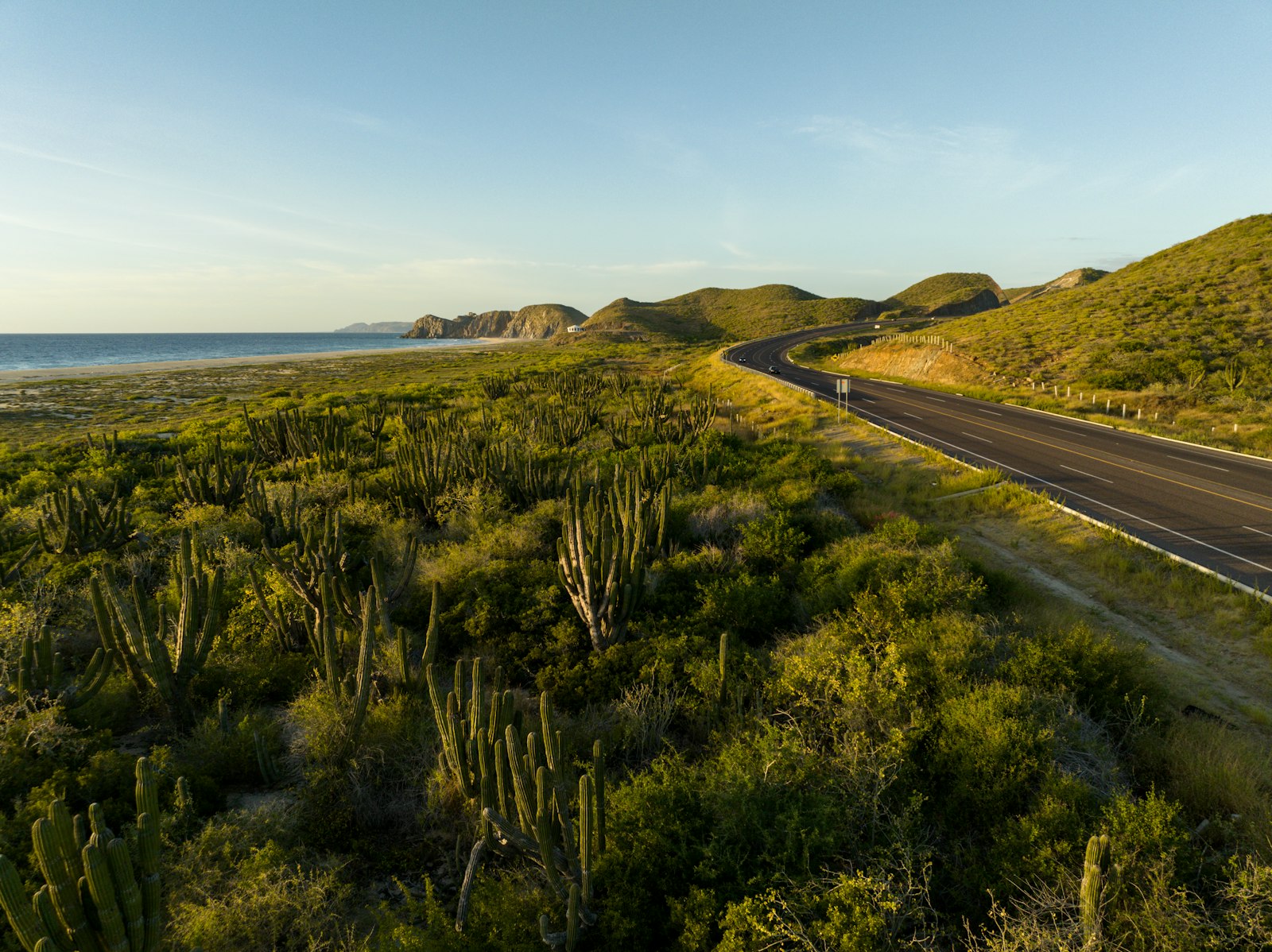
After all that, the driving is a relief. By day it's easy, the main roads are in good shape, and the map apps work fine on the highways. Speed and distance signs are in kilometers.
The Corridor Highway
This is the four-lane road along the coast between the two towns, and it's the one you'll use most. The posted limit when I last drove it was 90 km/h for most of the way, dropping to 60 as you come into each town. People sail into those 60 zones at full speed, so watch for the signs at both ends.
You can't turn left across it. There's a median, so you drive past what you want, loop around at a U-turn spot and come back. I explain how those loops work in my Tourist Corridor guide. The short version is that your first drive to your own hotel will probably include driving past it. By day two you won't think about it.
It's slowest around 8am and 6pm.
The Toll Road
There are two ways south from the airport. The toll road runs inland to the north side of Cabo San Lucas, and it's the one you want for San Lucas or the Pacific side. It has no useful exit for Corridor hotels, and you don't need it for San José.
The booth takes cash as things stand. How tolls get paid has been changing in Mexico, so carry pesos and ask at the rental desk whether anything is different. Whatever you do, don't roll up with only a card.
Highway 19 to Todos Santos
Highway 19 is the nicest drive in the area. It's four lanes, it's free, and it's about an hour up the Pacific coast from Cabo San Lucas to Todos Santos, with Cerritos 10 or 15 minutes before town. Leave around 8:30 and start back by mid-afternoon. The stops are in my Todos Santos day trip post.
The same road carries on to La Paz, and it's shorter and easier than the mountain route north of San José, which is two lanes and curvy. I still wouldn't do La Paz and back in a day, and I explain why in my La Paz day trip post.
The Road to Cabo Pulmo
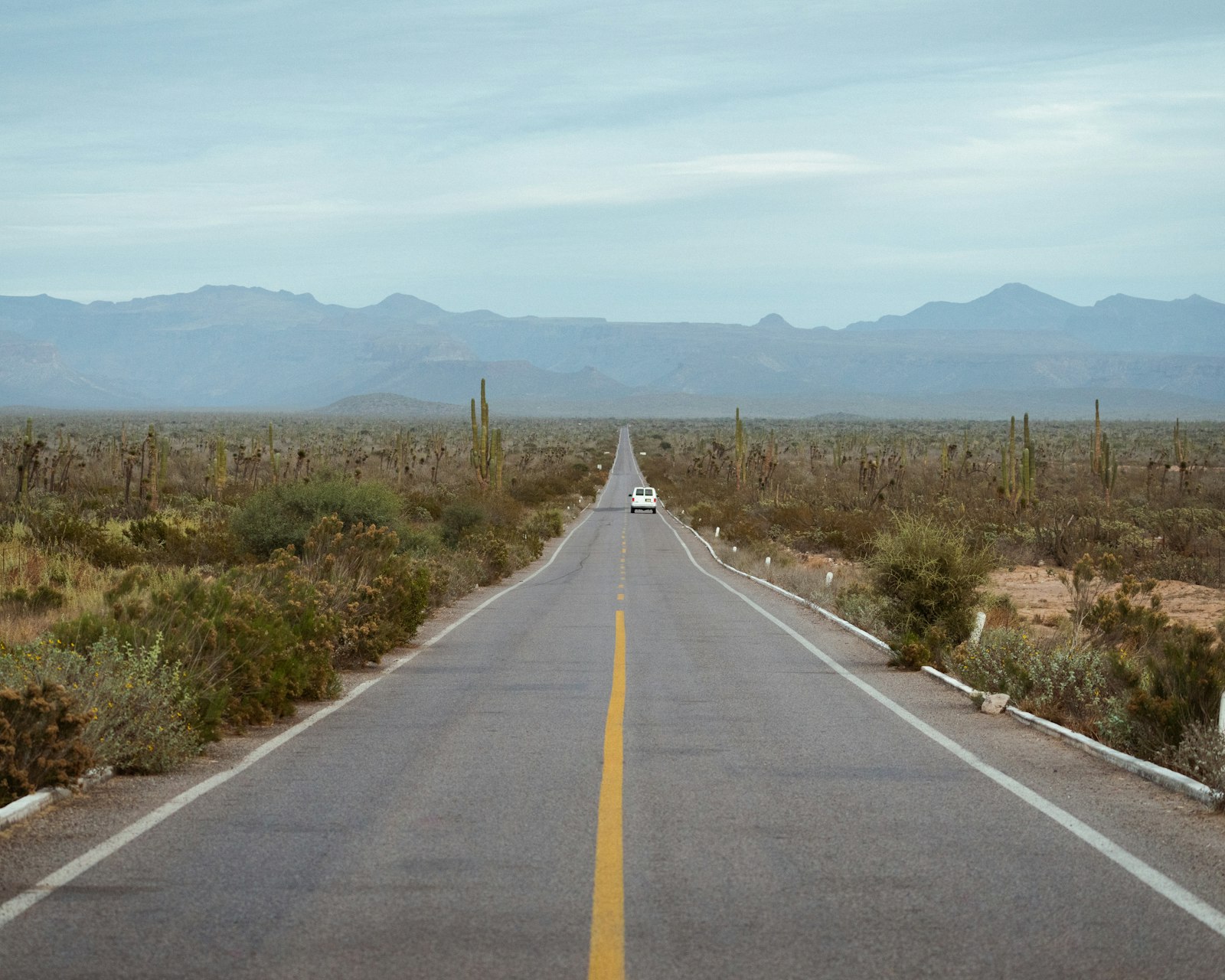
This is the one drive to think hard about. It's 2 to 2.5 hours from Cabo San Lucas, a bit less from San José, and the last stretch is washboard dirt. A regular car gets through if you go slowly. You don't need four-wheel drive, though a little extra clearance is nice, and I wouldn't try it right after rain.
The real question is whether your rental contract allows it, and I can't give you a clean answer. I've been told that leaving the pavement voids the insurance, and I've been told it's fine, and nobody on either side has ever shown me the line in a contract. So ask the company directly, in an email, whether the dirt road to Cabo Pulmo is covered, and keep the reply. Even with a yes, assume the tires, the glass and the underside of the car are on you.
Start with a full tank, pesos in your pocket and an offline map. There's no gas station and no ATM in the village, and barely any phone signal. The rest of that day is in my Cabo Pulmo day trip post.
Speed Bumps, Cows and the Dark
Every town and village has speed bumps, called topes. A lot of them aren't painted and have no sign, and the first one usually finds you in front of a taco stand. Hit one fast and you can damage the underside of the car, which is the kind of damage basic cover leaves out.
I don't drive outside the towns and the Corridor after dark. Cows and horses wander onto the rural highways at night, and that goes for Highway 19, the road north of San José and everything on the East Cape. Plan every day trip so you're back before sunset.
After a summer storm, the dry riverbeds run with water across the roads. Never drive through a running one.
Gas Stations
Every station is full service. An attendant pumps, and a tip of 10 to 20 pesos is normal.
This is the one place I get out of the car. Look at the pump and check that it's been reset to zero. Say the amount out loud, or say "lleno" for a full tank. Pay in pesos with small bills and count them into the attendant's hand. If you pay by card, walk it to the terminal yourself and don't let go of it. The worst gas station story I know from here is a card handed through the window near the airport that came back with a second charge of about US$1,500 on it.
On the Corridor, there's gas at the Cabo San Lucas end and near Palmilla, and nothing I'd count on in between. Fill up the evening before you return the car. The stations by the airport, in a hurry before a flight, are the last place I'd want to do it.
Parking
Parking at the public coves is free. At Chileno the lot is usually full by 10am, and Sundays are the worst, so my Chileno Bay guide has you there at 8. Santa María's lot rarely fills, and you should follow the highway sign to it and ignore your phone. Palmilla's lot is small and partly sand, so watch where you put the wheels. Directions to all of them are in the best swimmable beaches in Cabo.
Near Médano, private lots a block back charge a few dollars. Street parking in downtown Cabo San Lucas is tight, and honestly I just pay for a lot. On the Corridor, guest parking is free at the Hilton and at Grand Velas, and I'd ask anywhere else.
Don't leave anything in sight in a parked rental.
Police Stops and Checkpoints
If you're pulled over, stay calm and stay polite, even if you think you're in the right. Pull over somewhere lit, turn on the inside light, keep your hands on the wheel and stay in the car. Keep your license, the rental agreement, your proof of insurance and a copy of your passport together where you can reach them. You're allowed to ask what the stop is for, and "¿Cuál es el motivo?" does it.
It does happen here that an officer asks for cash. Don't offer money, because offering a bribe is illegal too. Ask for the written ticket ("la infracción, por favor"), and don't sign anything you can't read.
There are also breathalyzer checkpoints on the highway between the towns and around the bar areas, mostly on weekends and in high season. The limits are stricter than a lot of visitors expect. For a renter there's a second cost, because alcohol typically voids every layer of your insurance. If you're driving to dinner, one of you isn't drinking. I talk about the bigger picture in is Cabo safe.
If Something Goes Wrong
In an accident, stop and stay there. If anyone is hurt, call 911. Then call the number on your rental contract before you do anything else, because the insurer sends an adjuster to the scene. Don't move the car unless it's dangerous where it is, and don't admit fault, agree to pay anyone or sign anything until the adjuster arrives. Take photos of everything, including the other car's plate.
For a breakdown on a highway, Mexico has free roadside patrols called the Green Angels, reached by dialing 078. I wouldn't count on them getting to you quickly out on the East Cape.
Returning the Car
Give yourself more time than you think you need. For an international flight in high season, I bring the car back three to three and a half hours before departure. That's my usual three hours for the airport, plus the inspection, the paperwork and the shuttle to the terminal. On a Saturday I go earlier.
The dispute you're protecting yourself from goes like this. The agent crouches at the front bumper and finds a scratch, there's no agreed record from pickup, and the cost comes out of your deposit.
So at every return, I:
- Film the car again, in the lot, before I hand over the key
- Get the agent to sign the return sheet with "no new damage" and the fuel level on it
- Ask for a final receipt showing a zero balance before I get on the shuttle
- Take a photo of the odometer and the fuel gauge
Then I watch my card for a month. If a charge shows up later, the two videos and the signed sheet are what I'd send my card company.
The Traps
Most of these I've covered, but here they are in one place so you can skim them before you book.
- The single-digit daily rate. The liability isn't in it. Ask for the total with liability insurance before you pay anything.
- Prepaying a comparison site. Your money is gone before the argument starts. Book directly, and prepay only a rate that names the liability.
- Buying a comparison site's "full coverage". The desk won't accept it. Buy the liability from the rental company.
- Counting on your credit card for liability. It can't cover that part. Check what it does cover, and bring the letter.
- Declining collision without room on your card. The hold can be a few thousand dollars for the whole trip. Know your credit limit first.
- A new contract in pesos. Check the exchange rate against your bank's before you sign.
- Skipping the video. The whole return dispute turns on it. Film at pickup and again at return.
- A tank marked full that isn't. Photograph the gauge before you leave the lot.
- A week-long rental from a Médano hotel. Rent for the day trip only.
- Picking up at the airport to "save the transfer". It's the slowest, most pressured way to start a vacation. Take the transfer and rent in town.
- Handing your card out the car window at a gas station. Get out and pay cash.
- Driving home from Todos Santos or the East Cape after dark. Start back by mid-afternoon.
- Taking the Cabo Pulmo dirt road without asking. Get the answer in an email first.
- Returning the car two hours before your flight. Three to three and a half.
The Verdict
Renting a car in Cabo is a good idea for fewer people than actually rent one, and for the right day it's the best money you'll spend on the trip. I love having a car for Todos Santos. I wish the booking part were more honest... and since it isn't, the fix is to know the real number before you go.
If you're on Médano or in San José's center, skip the car for the week and rent for a day or two. If you're in the middle of the Corridor, on the Pacific side in a condo, in a villa or out on the East Cape, a car for the stay makes sense. Wherever you are, book directly, with the liability insurance already in the total, and plan on US$50 to $90 a day for a small car.
I wouldn't bother if your plan is a resort and two dinners, or if you'd be the only driver and want wine with dinner. The same goes if you get rattled by a sales pitch at a counter, because a small-group tour to Todos Santos is a perfectly nice day too.
The checklist version: ignore anything under $40 a day, the insurance isn't in it. Real price is $50 to $90 all in. Only rent for the day trips. Book direct with a company that includes liability, screenshot the total. At the desk, required liability only, then film the whole car. Pay cash for gas and watch the pump. Home before dark. Bring it back three hours before your flight and film it again.
Quick Answers
Do I need a rental car in Cabo? Not if you're staying on Médano or in San José's center and mostly doing boats, beaches and dinner. Rent for a day for Todos Santos or Cabo Pulmo, and think about a car for the whole stay only in the middle of the Corridor, on the Pacific side, on the East Cape or in a villa.
Why did my cheap rental quote jump at the counter? The online price left out the liability insurance that Mexican law requires. It gets added at the desk, usually at US$20 to $40 a day, and the desk then tries to sell you collision cover on top.
Does my credit card cover a rental car in Mexico? Possibly for damage to the rental car itself, so check your card's terms and bring a letter of coverage. It never covers the required liability insurance, and the desk may put a large hold on the card if you decline their collision cover.
Can I rent a car for just one day from town? Yes. Several of the big brands have offices in Cabo San Lucas and desks in hotels. Budget about US$60 to $100 for the day all in, plus gas, and book with the liability cover already added.
Can I drive a rental car to Cabo Pulmo? A regular car makes it if you go slowly on the dirt at the end. Whether your contract allows it is something I've heard both ways, so ask the company by email before you go.