Cabo Pulmo Day Trip: Is It Worth It? I'd Stay the Night
By Cabo Wander
Every friend of mine who snorkels asks the same thing once they've read about Cabo Pulmo. Is it really worth giving up a whole day of the trip?
My answer is yes, if you really like snorkeling and you're here in the warm, calm months, which is roughly June to early December, with October and November the best of it. For everybody else, and for anyone visiting from January to March, I'd skip it.
The reason I'm that blunt is the math. From Cabo San Lucas you'll spend four and a half to five hours in a car, round trip, with the last stretch on washboard dirt. The boat trip at the end of that drive lasts two to two and a half hours, and you're in the water for about an hour and a half of it. That's a LOT of car for the amount of ocean. The reef is good enough to earn it, but only for someone who wants the reef.
So if I were planning this for you, I'd do one of two things. Drive it yourself from San José del Cabo, which is the closer town, and get on a village boat at 9am. Or, better, stay a night out there. An overnight turns one very long day into two short drives, and it gives you a second morning if the wind takes the first one.
It's number nine on my list of things to do in Cabo, and that's a ranking for a first-timer with no particular hobby. If you travel with your own mask, it's a lot higher.
The Honest Math
I'd rather you saw these numbers before you saw any photos of fish.
- From Cabo San Lucas: a bit over two hours each way, so four and a half to five hours of driving.
- From San José: about an hour and a half to an hour and three-quarters each way.
- On the boat: two to two and a half hours, with three or four stops.
- In the water: roughly half an hour at each stop, so about an hour and a half in total.
Put those together and, from San Lucas, you're in a vehicle for about three hours for every hour you spend with your face in the sea. On a tour, with hotel pickups added, the day can run eleven or twelve hours door to door.
That extra half hour each way from San Lucas matters more than it sounds. It's the difference between leaving at 7 and leaving at 6:15, and in winter it's the difference between getting home in daylight and driving a two-lane country highway at dusk. I think of Cabo Pulmo as a day trip from San José and an expedition from Cabo San Lucas. If this is the day you're building the trip around, it's one more reason to look at the old town as a base, and my San José del Cabo guide covers what else you get there.
Bottom line: the reef deserves the trip, and the trip is mostly road.
How the Day Goes, Hour by Hour
This is a self-drive day from San José in the fall. The times are approximate, and from Cabo San Lucas you'd leave by about 6:15 and get home that much later.
- The night before. Message the shop to confirm the morning boat and ask what the wind is doing. Get pesos from an ATM in town, fill the tank and download the map to your phone.
- About 6:45. Leave San José on Highway 1 north. It's two lanes with curves, and there are speed bumps in the little towns along the way.
- About 7:45. Turn right off the highway toward La Ribera, then right again at the sign for Cabo Pulmo. Top off the tank here.
- About 8:00. A dozen miles or so of patched two-lane road heading south, with the sea showing up on your left now and then.
- About 8:20. The pavement stops. The car starts to hum and then to rattle, and you slow way down. Give the dirt half an hour.
- About 8:45. The village. You pay the balance in pesos, sign a waiver, and get a wristband, a wetsuit that nearly fits and a life jacket.
- About 9:15. The boat launches right off the sand. A truck backs the trailer into the waves, and you wade out and climb in over the side.
- 9:30 to almost noon. Three or four stops. At each one the guide gets in first and you follow.
- Around noon. Back in through the surf, which the captain times between sets. Then lunch in the village.
- After lunch. If it's still calm, there's the option of a beach snorkel at Los Arbolitos, ten more minutes down the dirt.
- Mid-afternoon. Start back, so the dirt and the back roads are behind you well before the light goes.
The part nobody warns you about is how early the good bit is over. You're done with the reef by lunch, and the rest of the day is tacos and driving. I don't mind that at all, because the morning is when the sea is flat. By the time I'm eating, the palm fronds have usually started moving, and the afternoon boat is heading out into a choppier sea than I had.
The Drive
Take Highway 1 north from San José, turn toward La Ribera, and then head south. That's the route, and it's the only one I'd use in a rental car.
The highway part is easy. It runs up through Miraflores and Santiago, with speed bumps in each, to a junction at Las Cuevas where you turn right for La Ribera. Just before you reach La Ribera itself there's a signed right turn for Cabo Pulmo. From Cabo San Lucas you drive to San José first and pick up the same road.
The Dirt Stretch
The last six miles or so are dirt, and washboard is the right word for it. A regular car does it fine at around 15 miles an hour. You don't need four-wheel drive. A little extra clearance is nice to have.
Go slowly even when it feels wrong. The road feels smoother if you speed up, and that's how people lose a hubcap out there. Tires, hubcaps and the underside of the car are what take the beating on this road, and those are the parts a basic rental policy usually leaves out.
After a big summer or fall storm, the dry riverbeds can run across this road, and it can take a couple of days to be drivable again. Never drive into one that's running.
Your Rental Contract
I can't tell you whether your rental contract allows this road, and I wish I could. I've heard that leaving the pavement voids the insurance, and I've heard that it's fine, and I've never seen the actual line in a contract. So email your rental company before the trip, ask whether the dirt road to Cabo Pulmo is covered, and keep the reply. The whole insurance picture is in my post on renting a car in Cabo.
Gas, Cash and Signal
The last gas station is in La Ribera, about half an hour before the village. There's no gas in Cabo Pulmo and no ATM, and most places want cash, so bring pesos. I fill up in San José and treat La Ribera as a top-off on the way in. If you leave it for the way out, you'll spend the whole dirt road watching the needle.
Phone signal is weak in the village and patchy on the way there. Download the map before you leave.
The Road to Avoid
On a map there's a shorter way, a coast road that runs straight up from San José. Please don't take it in a rental car. The pavement gives out not far from town, and after that it's hours of sand, potholes and washboard with no gas and almost no phone signal. It can take two to three hours on a good day, so it isn't even faster. It's a pretty drive, and I'd leave it to people with their own trucks.
Getting Home
Be back on pavement by mid-afternoon. Cows wander onto these roads, I've braked for them on the paved part and the dirt, and you don't want to meet one after dark. From Cabo San Lucas in winter, when the days are short, this is the part of the plan with the least room in it. The roads and the ocean are the two things I take seriously here, and I go through both in is Cabo safe.
Also, don't put this the day after the other long drive. I love my Todos Santos day trip, and doing the two back to back is about seven hours of driving in two days of vacation.
The Boat and the Park Rules
You can't swim out to the reef on your own. You go with an authorized local boat and a guide, and the rules out there are strict. The guides enforce them, too.
Once you're on the boat, everybody wears a life jacket in the water, the whole time. The groups are small. The time at each site is limited, about half an hour in my experience, and then you're called back to the boat. You don't pick the sites either. They're chosen that morning, depending on the conditions and on where the park wants the boats.
The life jacket is the rule people ask me about, because it means you can't dive down. If you're a strong swimmer who likes to duck under for a closer look, you'll want to, and you can't. I spent the first ten minutes wishing I could and then got on with looking at fish.
A few smaller things to know:
- Don't touch or stand on anything. The guide will keep you up off the coral.
- Wear a rash guard. Biodegradable sunscreen is the rule in the park, and a long-sleeved top means you barely need any.
- Bring your own camera. I was told the guides aren't allowed to take photos for you, which is a funny change from every other boat in Cabo.
- The park fee for Cabo Pulmo National Park is about 125 pesos a person, and it's usually folded into what you pay the boat. Your wristband is the receipt, so keep it on. Kids under 12 don't pay it.
The rules are the reason the day feels short, and they're also the reason there's so much to see. A reef that every boat could visit for as long as it liked wouldn't look like this one.
Snorkeling from the Beach at Los Arbolitos
Los Arbolitos is the usual spot for snorkeling from the sand, about ten minutes south of the village on more dirt road. There's a small fee at the gate. What's required of you in the water there is something I've heard described a few different ways, so ask at the gate what the current rules are, and wear a snorkel vest anyway.
I'd treat it as a bonus for a calm day. If there are whitecaps by the time you've had lunch, skip it. Don't count on buying food or renting gear there, either.
What You'll See
The two things that set this place apart are the hard coral and the schooling jacks.
The coral grows on rock ridges that run out from the shore, and it's the real thing. That's a big change from the coves near the resorts, where the bottom is granite boulders and sand, as I explain in my post on snorkeling in Cabo.
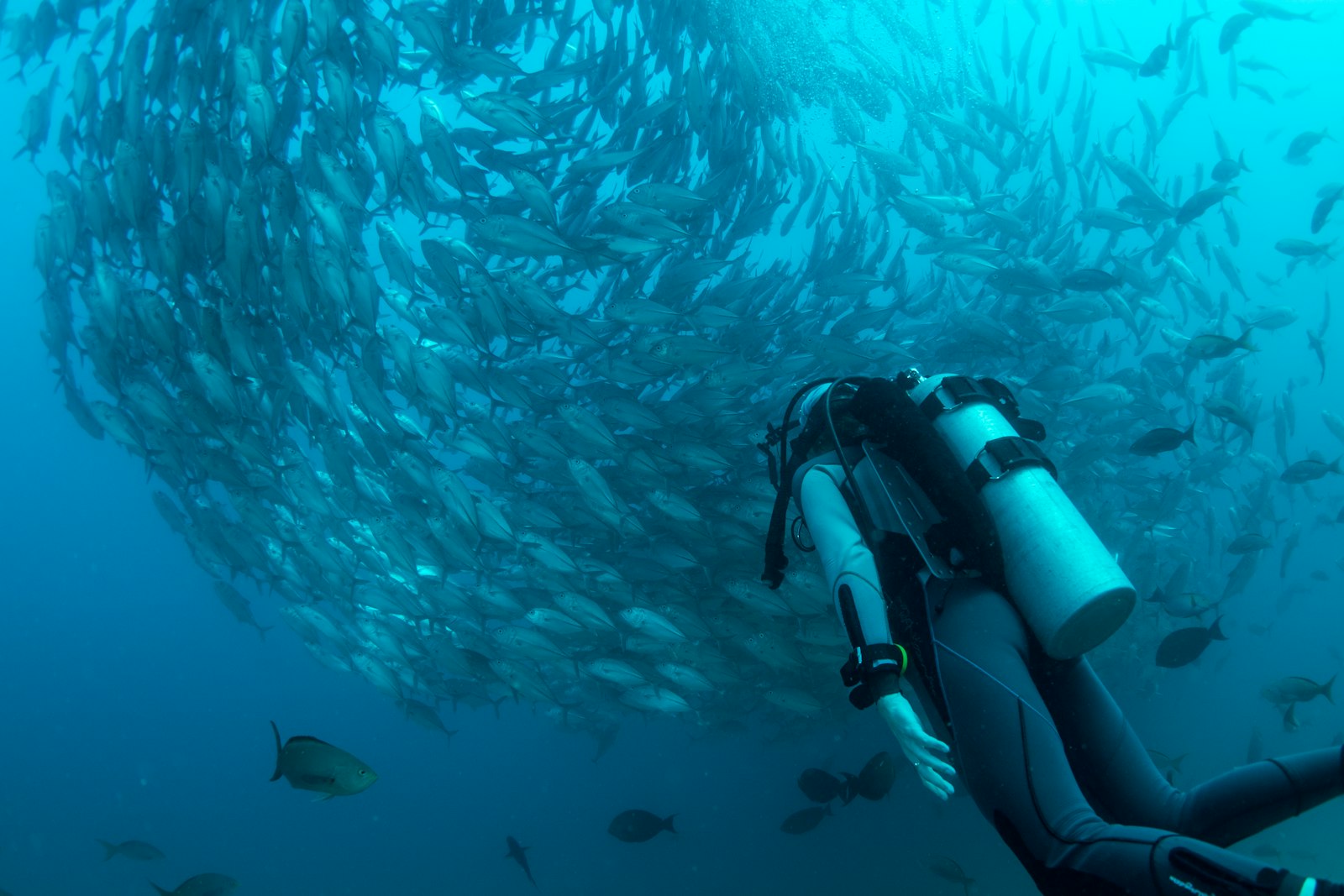
The jacks are the sight people drive out for. On a good day, one of your stops puts you over a school of bigeye jacks, a few hundred of them, turning in a slow column under the boat. It looks like the photo on the tour page, which almost never happens to me.
The other difference is how big the fish are. Snapper, grouper and parrotfish here are simply larger and calmer than the ones at the cape. There's a nice reason for that. Fishing was stopped in this park back in the 1990s, after the local fishing families asked for protection themselves, and one long-running study found more than five times as much fish, by weight, on the reef after a decade.
Sea lions and turtles are both possible. There's a sea lion colony on the rocks at the south end of the park, and whether your boat goes there is decided on the day. In winter you may see humpbacks from the boat on the way out.
I wouldn't expect bull sharks. They're something divers come here for, well below where you'll be floating. And if a listing mentions whale sharks, somebody has mixed this up with La Paz, which I cover in my La Paz day trip post.
When to Go and When to Skip It
The warm, calm months are roughly June to early December. Inside that window, October and November are the ones I'd plan a trip around, with the water around 80°F and at its clearest.
The rest of that window comes with small print. June is calm, and the water is still at its cloudiest. July and August are good if you start early, because it's very hot on land. September can have the best water of the year, and it's also when storms can shut down the boats and the road for days. By December the water is cooling and the north wind has started, so take the morning boat and bring a layer. I've been cold on that boat ride in December with a wetsuit on.
From January to March, I'd skip it as a snorkel day. The water drops to the mid 60s to about 70°F, and the north wind blows hard enough to cancel boats, often by midday.
The boats don't go when it blows, and you may not find out until you're standing on the beach. I've made the long drive in winter, looked at gray water with whitecaps on it, and been offered tomorrow, or a credit for my next visit. I was more than two hours from my hotel at nine in the morning.
So in any windy month, message the shop that morning before you leave, and ask before you book what happens to your deposit if the boat doesn't go. And whatever the month, take the first boat. The wind builds around the middle of the day.
The full calendar for the region, storms included, is in the best time to visit Cabo.
Drive Yourself or Take a Tour?
I'd drive. It costs about half as much, and you end up on the same kind of boat with the same local guides.
A tour from Cabo is a van to the village, the boat, lunch and the van home. What you're paying extra for is somebody else doing the dirt road in somebody else's vehicle, with no rental contract to worry about and the boat already booked. That's a fair thing to pay for! If you're not renting a car at all this trip, and from Médano you don't have to, as I explain in getting around Cabo, the tour is how you get here.
Two I'd look at:
- Dive Cabo runs it a few days a week for about US$275 a person, with transportation, gear, lunch and park fees included. It's a dive shop, and the groups are small.
- Cabo Adventures runs a full-day version with a van and lunch. The minimum age is 10. They don't take pregnant guests or anyone with back problems, and wetsuits are only handed out in the winter months.
A tour doesn't fix the early start, though. It's somewhere between 5 and 7am, usually before your hotel serves breakfast, so ask for a boxed one. You have no say over when you leave. There's no stop at Los Arbolitos. And the wind can cancel a tour boat exactly the way it cancels a village one, after the same drive.
If you do drive from Cabo San Lucas, it's doable, and it's long. In the short days of winter I'd take the tour or move my base for a night.
What It Costs for Two
This is my own arithmetic for two people, and the gap is bigger than I expected the first time I added it up.
Driving yourself:
- Rental car for the day, insurance in: about US$60 to $100
- Gas: about US$20 to $35
- The toll road, if you're coming from San Lucas: a little over US$10 round trip
- Two seats on a village boat: about US$160 to $175, with gear, a wetsuit, the guide and the park fee
- Tip for the guide and captain: US$15 to $25
- Lunch in the village: US$25 to $60
That comes to about US$300 to $400 for two.
A tour from Cabo: about US$550 to $700 for two once tips and the extras are in.
So the tour costs roughly US$250 to $300 more, and that's the price of not driving the dirt yourself.
Couples should know that some shops need a minimum of three people to send a boat, and two people on their own can end up paying for the third seat. That pushes a self-drive day closer to US$400 to $480. Ask when you book whether you can join another group.
The one cost I can't put a number on is whatever that road does to the car. Where a day like this fits in the whole trip is in how much Cabo costs.
Staying the Night
If I could change one thing about how most people do Cabo Pulmo, I'd have them stay over.
The boats go at about 9 and the wind comes up around midday, so the people who slept nearby have every advantage. They get the first boat without a 6am alarm, and if that morning is blown out, they have another one. Two short drives are also a lot kinder than one five-hour day.
There are two ways to do it:
- In the village. Simple cabañas run from around US$60 to $110 a night, as far as I've been able to pin down. Simple is the word. Bring pesos, something for breakfast and a flashlight, and don't count on wifi or reliably hot water.
- Up the coast at Costa Palmas. The Four Seasons is about 45 minutes away and runs its own boats to the park. It starts around US$900 a night before tax and service, so it's a very different kind of night. It's number six in the best luxury resorts in Cabo.
For two people in the village, with the car for two days, a cabaña, the boat and three meals, I'd budget about US$450 to $600. That's still less than the tour.
The Village
Cabo Pulmo is tiny. It's about a hundred people on three sandy streets, with a row of dive shops and hand-painted signs.
There are a few simple places to eat, and the dive resort has a restaurant upstairs from its dive center. Seafood tacos and a cold beer are what you want after the boat, and I've been perfectly happy with mine. I wouldn't call lunch a reason to come. Opening hours out here are loose, too, so have snacks in the car in case your first choice is shut.
What isn't here matters more. There's no bank, no ATM, no gas and no grocery store, cards mostly aren't accepted, and the nearest doctor is half an hour back up the road in La Ribera. There's also no lifeguard anywhere in the park. I find all of that kind of wonderful, as long as I showed up with pesos and a full tank.
A Note for Certified Divers
If you dive, this is a much easier yes, and it's the strongest case for staying the night. Two tanks with the dive resort in the village run about 2,800 pesos, or around 3,500 once you've rented gear and paid the park fee, so call it US$160 to $200. You need to be certified, the groups are small, and the park assigns the sites here as well. Bull sharks are what a lot of divers come for, and nobody can promise them. A dive day from Cabo San Lucas is a very long day for about an hour and a half underwater, so sleep out here if you can. The dive sites closer to town are in my post on scuba diving in Cabo.
Who Should Skip It
I'd rather talk you out of this now than have you find out at 8:40am on a dirt road.
- You're here from January to March. Cold water and a real chance of no boat.
- It's your first trip, you have four or five days and you're in Cabo San Lucas. It takes a third of your real days. In my 5-day Cabo itinerary it only goes in as a swap for the Todos Santos day, in the fall, for people who love the water.
- You get carsick or have a bad back. It's half an hour of rattling each way and then a small open boat.
- You don't swim. You'd be floating in open water in a life jacket for an hour and a half at the end of a very long drive.
- Your kids are under about eight or ten. I'd skip the boat with them.
- You want lunch, drinks and a pool with your snorkel. That's a catamaran day, and this is nothing like one.
For most of those people, the better answer is a lot closer. A free morning at Chileno Bay gets you an hour with a LOT of fish and has you back at the pool by lunch.
How to Book It
Book the boat directly with a shop in the village, a few days ahead, and ask for the morning departure. Three I'd start with are Cabo Pulmo Sport Center, Cabo Pulmo EcoAdventures and the dive center at Cabo Pulmo Beach Resort. They take bookings by WhatsApp or online.
The going rate is about 1,500 pesos, or US$80 to $100 a person, with a mask, fins, a wetsuit and the guide included. I'd give it longer than a few days around Christmas, at Easter and on fall weekends.
Ask these before you send a deposit:
- Is this the morning boat, and what time do you want me at the shop? Usually about half an hour before it leaves.
- Is the wetsuit included, and the park fee?
- Do you have a minimum number of people? If you're a couple, ask whether you can join another group.
- What happens to my deposit if the wind cancels the boat?
- Do I pay the balance in pesos? Assume yes.
For a tour from Cabo, book on the company's own website and ask the deposit question there too.
If Cabo Pulmo is the main reason for your trip, it's worth choosing your base around it. San José or the East Cape puts you much closer, and I compare every area in where to stay in Cabo. The towns and hotels up that coast are in my East Cape guide.
The Verdict
Cabo Pulmo has the best snorkeling within reach of Cabo, and it asks for a whole day and a rough road in return. I think that's a good trade for people who love snorkeling and a poor one for people who merely like it.
What I love is the reef itself, the size of the fish and the fact that a tiny village decided to protect it. What I wish were different is the ratio. It's a lot of road for an hour and a half in the water, and in winter the wind can take even that away after you've already driven out.
Here's where I'd send you:
- Keen snorkelers in October or November: go. Rent a car, leave from San José if you can, and be on the 9am boat.
- Certified divers: go, and stay a night.
- Staying in San José or on the East Cape with a car: this is your natural day out.
- Based in Cabo San Lucas and not driving: take the tour, or better, give it a night.
- Anyone here from January to March, and anyone who'd be just as happy with an hour at Chileno: skip it and don't feel bad.
I'd do it again as a day trip from Cabo San Lucas once, in the fall. After that I'd only go back to stay the night... which is how I'd tell you to do it the first time.
The plan, start to finish: only go if you love snorkeling, and only June to early December, October or November if you can. Drive from San José, Highway 1 to La Ribera then south, never the coast road. Ask your rental company about the dirt road in an email. Gas up in La Ribera, bring pesos, book a 9am village boat on WhatsApp for about $80 each, and message them that morning about the wind. Back on pavement by mid-afternoon. Or just stay the night.
Quick Answers
Is Cabo Pulmo worth the drive from Cabo? For keen snorkelers and certified divers in the warm months, yes. On a short first trip, for non-swimmers, or from January to March, I'd skip it.
How far is Cabo Pulmo from Cabo San Lucas and San José? A bit over two hours each way from Cabo San Lucas, and about an hour and a half to an hour and three-quarters from San José. The last six miles or so are dirt.
Do you need a tour, or can you drive yourself? You need a local boat and guide to snorkel the reef, but you don't need a tour from Cabo. Drive out and buy a seat in the village for about 1,500 pesos, or US$80 to $100 a person.
Can you drive a rental car to Cabo Pulmo? A regular car makes it on the Highway 1 and La Ribera route if you go slowly on the dirt. Whether your contract covers it is something to ask your rental company in writing. Don't take the coast road from San José.
What happens if it's windy? The boat doesn't go. Message the shop the morning of your trip before you leave, and ask when you book what happens to your deposit.