East Cape Baja: Pick Your Month Before You Pick a Town
By Cabo Wander
The friends who ask me about the East Cape have usually done Cabo a few times already. They've heard there's a quieter coast up the Sea of Cortez with calm water and empty beaches, and they want to know if it's worth the drive.
My answer is yes, for two or three nights, with a rental car, if you're going for one specific thing in the month that thing works. If you just want to see what's up there, I'd skip it. You'll be bored by the second day, and without a car you'll be stuck from the first evening.
People look it up as "East Cape, Cabo", and I get why, but it helps to think of it as its own trip that happens to share Cabo's airport. And it's really four trips on one highway:
- The reef at Cabo Pulmo, which is best from June to early December
- The wind at Los Barriles, for kiters and windsurfers, from mid-November to mid-March
- The fishing, from about May to October
- A calm, quiet beach you can swim at, at anything from a simple hot springs hotel to the Four Seasons
Look at those months again, because this is the part most guides leave out. The weeks the kiters want are the weeks swimmers and snorkelers should stay away. The months the divers and anglers want are when a lot of the restaurants in Los Barriles are closed. There's no month when all four work. So I'd choose in this order: the activity, then the month, then the town.
One note on the name. In where to stay in Cabo I use "East Cape" the way hotel shoppers do, to mean the Four Seasons at Costa Palmas, and I say I wouldn't use it as a base for seeing Los Cabos or bother with it on a three-night trip. Both of those still stand. Locally the name covers the whole coast, about 60 miles from the San José marina up to Los Barriles, and that's the East Cape this guide is about.
What It's Actually Like
You pick up the car at the airport and turn north, away from every resort you've ever stayed at. It's a two-lane highway through cactus and small ranch towns with speed bumps, and about an hour later you're in Los Barriles.
Los Barriles is the East Cape's one real town, with about 1,700 people, and funnily enough it isn't in Los Cabos at all. The county line runs just south of it, so it belongs to La Paz. The ride of choice is a side-by-side ATV, and they park in a row outside the supermarket. Breakfast at the big fishing hotel starts at 5:30am, which tells you who the hotel was built for. You'll read that it's a sleepy fishing village. It was. Now the main street has ATV rental shops and a brewery, and the winter crowd is mostly American and Canadian snowbirds.
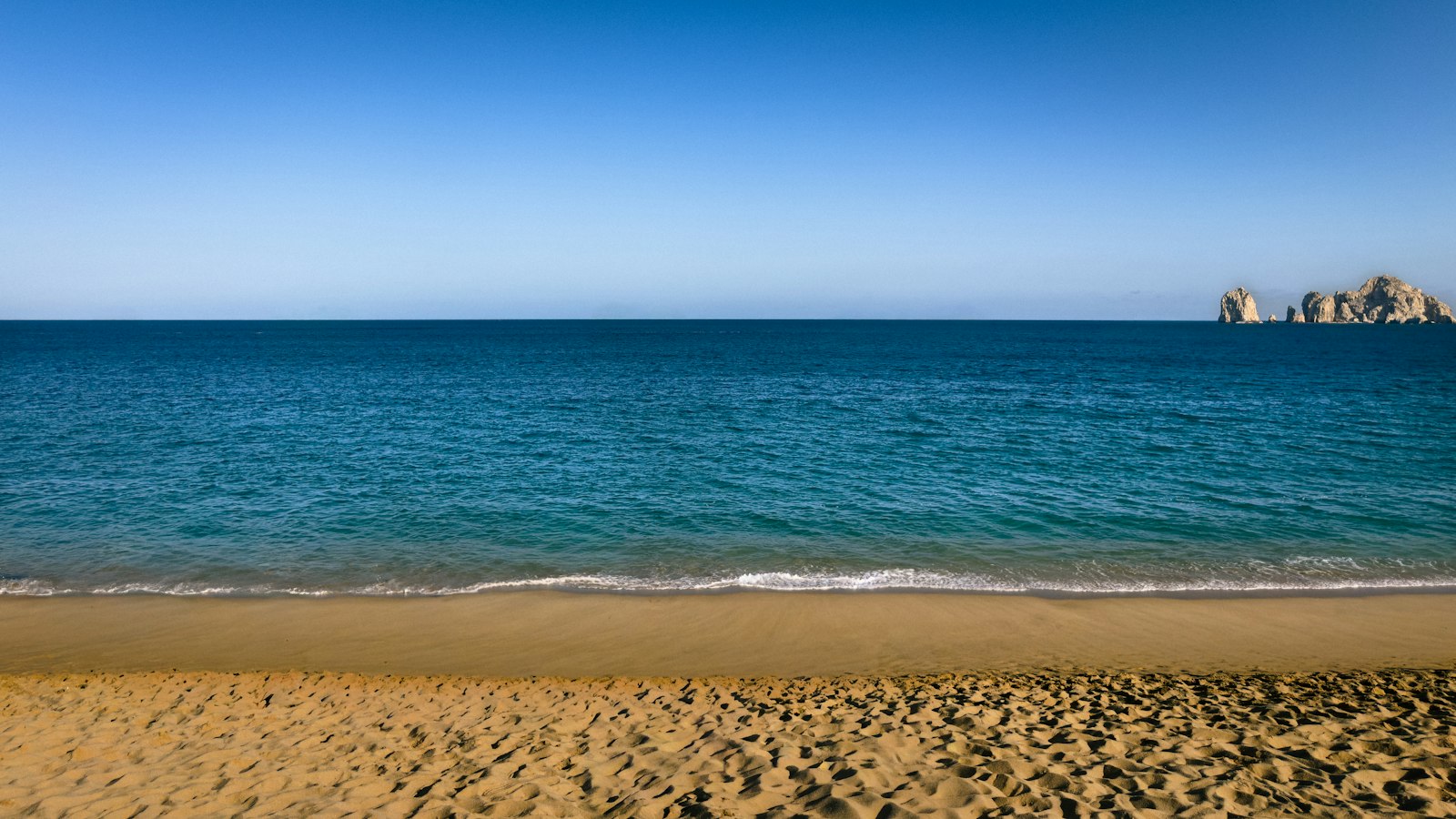
What I love up here is how simple the days are. You swim in front of where you're staying, because on a calm day you can, and that alone is a big change from the Corridor. You eat fish tacos. You go to bed early because you're on a boat in the morning.
The nights are the honest part. There's a karaoke bar, a few beach bars, and that's the list. Outside of Los Barriles there isn't even that. La Ribera is a working town with a gas station and a mini-market, Cabo Pulmo is about a hundred people on three sandy streets, and Costa Palmas is a gated resort where the evening belongs to the hotel.
So the feel changes completely with the calendar. In late October the bay is flat and warm and you'll wonder why everyone doesn't come here. In February the morning is glassy until about eleven, and then the palms start to lean and the sand moves across the beach at ankle height. In late August it's in the mid 90s by ten in the morning and a few of the restaurants you looked up have a handwritten sign on the door.
Pick the Month First
I'd plan this whole area around October and the first half of November if I had the choice. The water is in the low 80s and at its clearest, the north wind hasn't started, the restaurants have reopened, and the fishing is still good. It's the one stretch when three of the four trips line up.
Here's how the rest of the year goes.
January to mid-March belongs to the wind. The north wind here is called El Norte, and it blows at roughly 20 to 30 miles an hour, usually in runs of a few days with calmer ones in between. It keeps office hours, too. Mornings are often flat, it builds late in the morning, and by one o'clock it's howling. The water is in the mid 60s to about 70°F. Boats at Cabo Pulmo get canceled. Everything in town is open and it's the busiest time of year, because this is exactly what the kiters came for. If you don't kite, you'll be reading a book behind a windbreak next to a cold pool. You may see humpbacks offshore, which helps.
Mid-March through June is the quiet shoulder. The wind eases off, though April can still blow, and the sea warms up slowly. It's a calm, good-value time for a beach stay, and the roosterfish show up in late spring. Two cautions. The water at Cabo Pulmo is at its cloudiest around May and June, and Easter week brings a lot of local families to the beaches and the waterfall.
July to September is for anglers and divers, and I mean only them. The sea is flat and in the mid 80s, the fishing is at its best, and the diving is excellent between storms. On land it's fierce, in the mid to upper 90s and humid. The kite school is locked up, and a lot of the restaurants in Los Barriles close for the summer and reopen starting in October. It's also storm season, and after a big one the dirt roads can be cut for days. I go through that risk month by month in Cabo hurricane season.
Mid-November and December is when the first northers arrive and the kite season opens. The water cools off through the 70s. Mornings on the water are still lovely, so do everything early and bring a layer.
Bottom line: the months with the nicest weather on land are the worst beach months up here. If your dates are fixed, let them tell you which of the four trips you're taking. The whole region's calendar is in the best time to visit Cabo.
The Places, South to North
There are five stops worth knowing, and I'd rank them by how many people each one actually suits: Los Barriles and Buena Vista first, then Cabo Pulmo, then Costa Palmas, with the dirt coast last. La Playita comes first on the map, so I'll start there.
La Playita and Puerto Los Cabos
This is where the East Cape begins, and it's ten to fifteen minutes from San José's plaza, so it's a swim stop more than an outing. La Playita is the local beach next to the Puerto Los Cabos marina. There's a roped-off swim area by the harbor mouth with almost no waves, plus palapas, restrooms, free parking and a few food stalls. It's small, and on weekends it's full of local families, which I like.
If you're staying in town and missing the ocean, this is the easy fix, and it's one of the reasons I rate the old town as a base in my San José del Cabo guide. Outside the rope it's an open beach, so stay inside it. Hotel El Ganzo next door sells a day pass for about US$50, and most of that comes back as food and drink credit.
The Coast Road: Zacatitos to Vinorama
This is the East Cape in the photographs, with empty beaches, surf breaks and a dirt road running along the sea. It's the prettiest part and the one I'd tell most people to leave alone.
The pavement gives out not far past the estuary bridge. After that it's washboard, soft sand and potholes, with no gas station, no ATM and almost no phone signal anywhere between San José and La Ribera. Near Zacatitos the road is diverted inland around a resort development, so the line on your map isn't the line you'll drive. Its condition swings from freshly graded to very poor within a few months, and after rain a regular car won't get through. San José to Cabo Pulmo this way takes two to three hours, which is longer than the highway.
So please don't count on it as a through route to anywhere. It works for surfers in summer, when the south swell lights up Shipwrecks and Nine Palms, and for people with their own truck or a rented 4x4 who want the remoteness. There are a few off-grid lodges out here, from about US$40 a night for something basic to US$400 and up for a design hotel, and a handful of places to eat around La Fortuna. People with trucks often reach the northern lodges on an inland dirt road from near the airport and skip most of the coast.
If you do book one of these lodges, book at least two nights. On a one-night stay the road eats the whole thing.
Cabo Pulmo
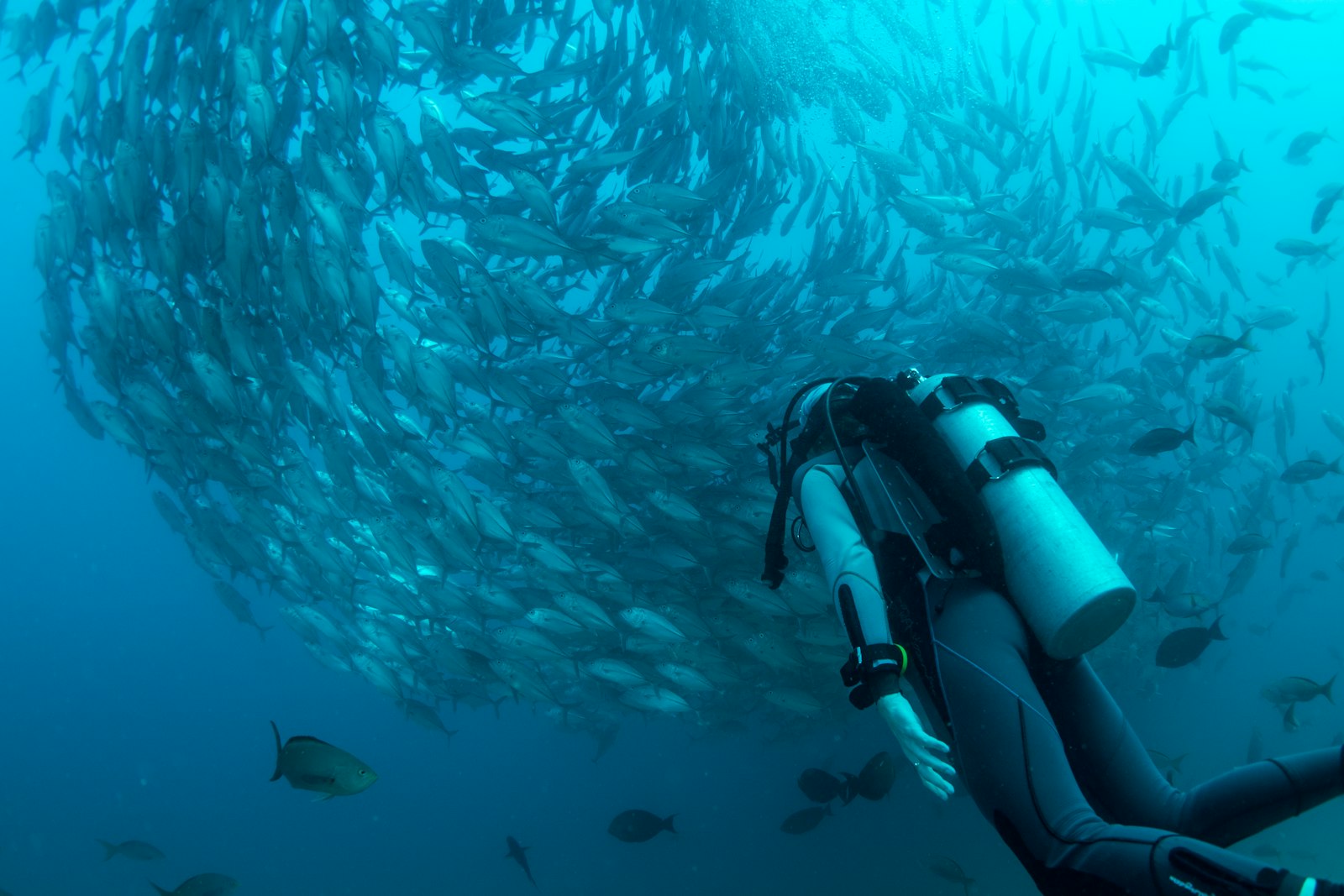
Cabo Pulmo is the single best reason to come to the East Cape. It's a protected coral reef with far more fish, and far bigger fish, than anything near the resorts. If you've only been in the coves I cover in snorkeling in Cabo, this is a different thing.
I've written the whole day up in my Cabo Pulmo day trip post, so I'll only give you the East Cape angle here. The boats leave at about nine and the wind comes up around midday, so the people who slept nearby get the best of it. From Los Barriles it's about an hour's drive. From La Ribera it's 30 to 40 minutes, and the last six miles are dirt. A cabaña in the village is roughly US$60 to $110 a night, and you bring pesos, a flashlight and something for breakfast.
My tip if you're staying in Los Barriles: don't pay a hotel shop's price for a Cabo Pulmo trip. Drive the hour and buy a seat on a village boat, which is around US$80 to $100 a person.
The catch is the season. From January to March I'd skip it for snorkeling.
La Ribera and Costa Palmas
La Ribera is a working town of a few thousand people, and it's growing fast. For a visitor it's the last gas station and ATM before Cabo Pulmo, and the gas station keeps pretty unpredictable hours. The town beach is calm and shallow, but public ways down to it have been closing off as the coast gets developed, so I wouldn't plan a beach day around it.
Ten minutes away, through a guardhouse, is Costa Palmas. It's a gated marina development with a golf course, a small Marina Village of restaurants, and the Four Seasons.
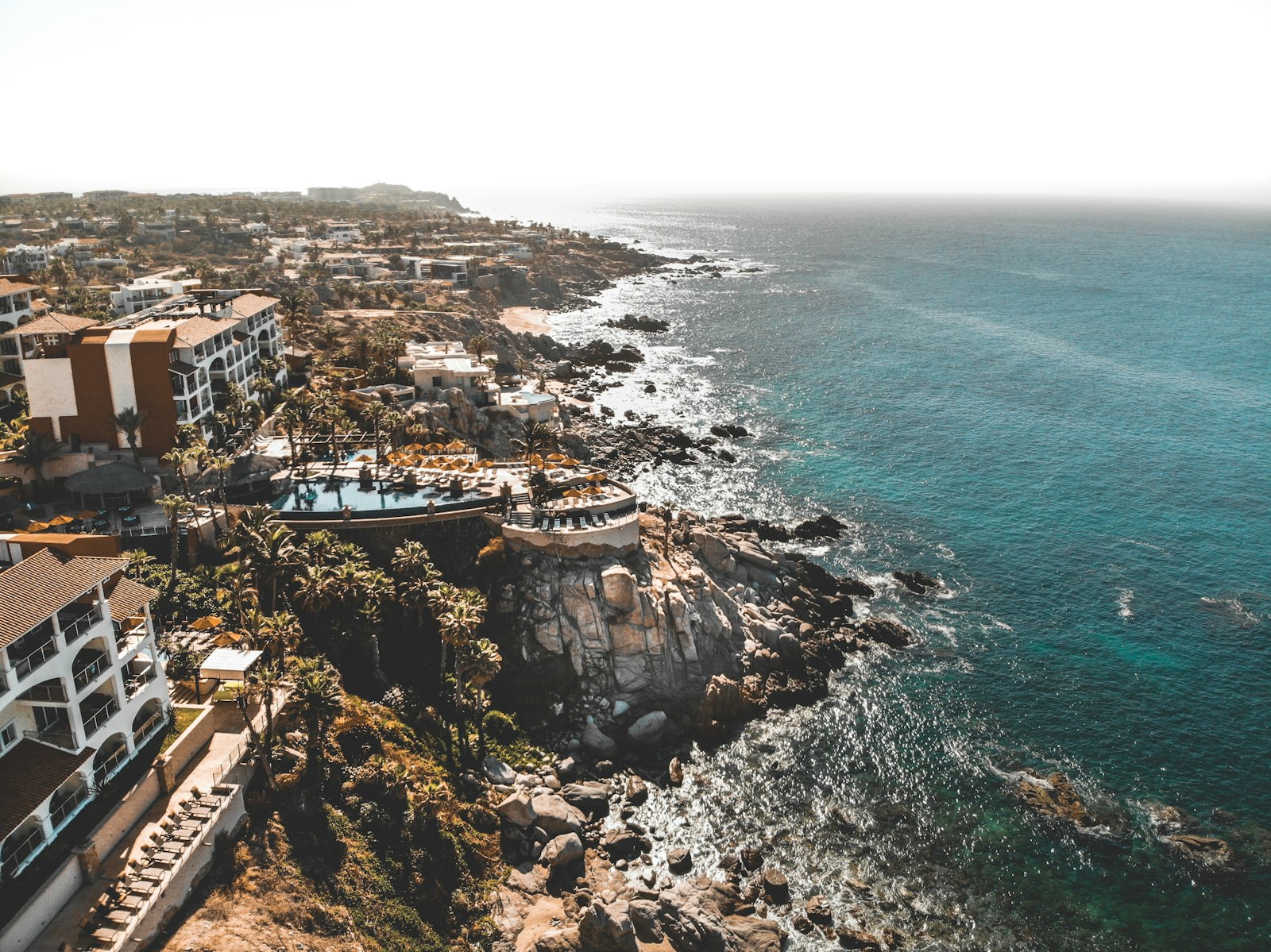
The Four Seasons has the best hotel beach in the region for getting in the water. It's two miles long and calm enough for kayaks and paddleboards, which you can't say about any hotel beach on the Corridor. Rooms start around US$900, and once tax and service add their third it runs from about US$1,200 a night to well past US$3,000. Book an ocean-view room. The ground-floor rooms with plunge pools give up a lot of privacy.
What I'd want you to know before you pay that is how alone you are. It's VERY quiet. You'll spend all of your time at the resort, because La Ribera isn't set up for visitors and everything else is a drive. Dinner is at the hotel or in the Marina Village at big-city prices with about a third on top, so US$200 to $250 for two is a normal night. The beach is also breezy on winter afternoons and short on shade.
It sits high on my list in the best resorts in Cabo, for the right person. That person has done Cabo, wants calm water and no scene, and has the budget. Just make sure you've booked the right one, because there's a second Four Seasons on the Corridor more than an hour away, and I compare them in Four Seasons Cabo del Sol vs Costa Palmas.
There's also an Aman at Costa Palmas now, called Amanvari, starting somewhere north of US$4,500 a night. It's too new for me to have an opinion on it.
Buena Vista
Buena Vista is a few miles south of Los Barriles, strung along the highway, and I'm including it for one hotel. The Buena Vista Oceanfront and Hot Springs Resort is the value pick on the East Cape. It's an old family-run place with about 56 bungalow rooms, hammocks on the patios, a tub fed by a natural hot spring and its own fishing outfitter. Warm water even seeps up through the sand in the shallows out front.
I love what it is. I'd also be straight that it needs some upkeep, and if you want polish you'll notice. Very roughly, plan on US$100 to $175 a night with tax. If you don't mind a few rough edges, I think it's the best deal up here.
Los Barriles
This is where I'd put most people, because it's the only place on the East Cape with a supermarket, an ATM, gas, a clinic and a dozen places to eat. It's also the only place with something to do on a day when the wind has canceled your plan.
It suits kiters, anglers, anyone driving on to La Paz, and anyone who wants this coast at a normal price. Most winter visitors rent a condo or a house. The hotels are the old fishing resorts on the beach.
- Hotel Palmas de Cortez is the big traditional one, with a couple of pools, its own fleet and that 5:30 breakfast. It's fine. I think the rates have climbed past what the rooms deliver, so I'd book it for the fishing more than for the hotel. Roughly US$250 to $350 a night with tax.
- Hotel Playa del Sol is its sister down the beach, in about the same price range, with a pool and pickleball courts.
- Punta Pescadero Paradise is ten miles north on a rough dirt road. It's the best liked of the group and has good snorkeling off the rocks. Once you're there you're staying there, so give it more than one night.
I want to be clear that those prices are loose. Small-hotel rates up here are hard to pin down and move around a lot, so treat my numbers as a starting point. And if an old fishing forum sends you to one of the classic lodges south of town, check that it still exists as a hotel. A couple of them have been sold for redevelopment.
The catch in Los Barriles is the timing. The beach is at its worst for swimming exactly when the weather is nicest, and a good part of the town shuts in late summer.
Can You Swim?
Yes, almost everywhere, on a calm day. That's the whole appeal of this coast, and it's the opposite of what I had to tell you in my guide to the Pacific side of Cabo, where you can't get in at any hotel at any price.
The Sea of Cortez doesn't have the Pacific's pounding surf and undertow. What it has in winter is wind. From about December to March, most of this coast gets choppy by midday, the water is cold, and the "calm, swimmable East Cape" you read about is a morning thing at best.
Here's where I'd actually swim:
- Costa Palmas: the best of them, and in practice it's for hotel guests.
- Los Barriles and Buena Vista: lovely when it's calm. In the wind season there's a real shorebreak, and the town beach turns into a launch for kites and fishing boats. ATVs drive on the sand, so keep an eye on small kids.
- Los Arbolitos and Los Frailes, near Cabo Pulmo: the sheltered public ones, at the end of dirt roads with nothing for sale when you get there.
- La Playita: inside the rope, ten minutes from San José.
- The dirt coast: sometimes. Those are surf beaches in summer, with no services and no signal.
I couldn't find a lifeguard anywhere on the East Cape, so treat every beach as unguarded. And shuffle your feet when you wade in over sand, the way you would anywhere stingrays live.
If a swim is the main thing you want and you'd rather not drive an hour for it, the best swimmable beaches in Cabo has closer ones.
Getting There and Getting Around
You need a car. I say that about very few places in Los Cabos, and I mean it here without any hedging.
Rent at the Airport
This is the one trip where an airport rental for the whole stay is plainly the right call. The rental lots are a couple of minutes from the road north, so you never touch the Corridor traffic at all. How to find the shuttle to the lots is in my Cabo airport guide.
The math is simple. A private transfer from the airport to Los Barriles or Cabo Pulmo is about US$220 each way for the car, and to the Four Seasons it's closer to US$280. Two of those cost about what a small rental car does for a week with insurance. And after the transfer drops you off, you have no wheels in a place where everything worth doing is 20 to 60 minutes away.
There's no Uber up here and no taxi I'd plan a day around. I list what does work in getting around Cabo, and for the East Cape the answer is short. There's a long-distance bus from San José toward La Paz that will let you off in Los Barriles, but it stops on the highway and there's no way onward from there. In town you can rent an ATV or an e-bike, which is fun, and it won't get you to Cabo Pulmo.
The Highway
Take Highway 1. From the airport, plan on these:
- Santiago: about 45 minutes
- Los Barriles: about an hour
- La Ribera and Costa Palmas: about an hour. The hotel says 45 minutes and I'd plan on the hour.
- Cabo Pulmo: about an hour and a half
Add 15 to 20 minutes if you're starting in San José's center. From Cabo San Lucas, add 40 to 50, which puts Los Barriles close to two hours away. I've seen fishing listings promise "45 minutes from Cabo San Lucas". It's about double that.
The road is easy in daylight. It's two lanes with curves, speed bumps in the little towns, and dips where the dry riverbeds cross. The junction that matters is Las Cuevas, where you turn right for La Ribera, Costa Palmas and Cabo Pulmo, or keep straight for Buena Vista and Los Barriles.
I wouldn't drive it after dark. Cattle wander onto the road, and there are no lights. In winter that means leaving Los Barriles by about four if you're heading back to San José.
Dirt Roads and Your Rental Contract
Almost everything good up here ends on dirt: the last six miles to Cabo Pulmo, the roads to the waterfall and the hot springs, the ten miles to Punta Pescadero, and all of the coast road. A regular car handles the first three if you go slowly.
Whether your rental contract covers them is something I can't answer for you. Ask the rental company in writing before the trip, name the roads, and keep the reply. I'd assume tires, glass and the underside of the car are on you either way. The insurance side of that is in renting a car in Cabo.
Gas, Cash and Signal
Fill the tank in San José and get your pesos there too. There's gas in Los Barriles and in La Ribera, and on the highway around Santiago, and none in Cabo Pulmo or on the coast road. ATMs are in Los Barriles and La Ribera only. The hotels and bigger restaurants in Los Barriles take cards. Cabo Pulmo, the waterfall and the hot springs are cash.
Phone signal is fine on the highway and in the towns, weak at Cabo Pulmo, and close to nothing on the coast and up the canyons. Download the map before you leave.
There's a clinic in Los Barriles and one in La Ribera. The nearest hospitals are in San José and La Paz, over an hour away, and that's worth knowing if you're traveling with little kids or anyone fragile.
Where to Eat and Drink
Nobody drives to the East Cape for dinner, and I'd rather say so than oversell it. Los Barriles has good tacos, one or two places that would hold their own in San José, and a lot of American-style bar and grill. It's also not the bargain it used to be.
These are the ones I'd send you to in Los Barriles:
- Taquería El Viejo. This is the first stop. Order the fish and shrimp tacos. They're good, they're fast, and the prices are fair.
- La Casita. Sushi, in a small Baja town, and it's surprisingly excellent. It also does ramen, but the sushi is the thing to order. It's the one dinner here I'd actually look forward to.
- Campestre Triny. Mexican seafood, and a solid choice for a second night.
- Lazy Daze Beach Bar. Feet in the sand and a great view. I'd go for a beer at sunset.
Smokey's and Tío Pablo's are the snowbird sports bars, and Tío Pablo's is where the karaoke is. They're friendly and the food is ordinary.
The big warning is summer. Many of these close in August and September, and I can't tell you which ones will be open in any given year. If you're coming then, message a couple of places before you count on them, and have the hotel restaurant as a backup.
At Costa Palmas the names are serious. Estiatorio Milos is inside the Four Seasons, and Mozza Baja, Nancy Silverton's wood-fired pizza place, is in the Marina Village. I can tell you what the check looks like. I can't honestly tell you it's worth it. If you're not a hotel guest and you want to drive in for lunch, call and reserve first, because there's a guardhouse and I don't know how they handle walk-ins.
In Cabo Pulmo, it's seafood tacos and a cold beer after the boat, and that's exactly right for the moment. On the dirt coast there's a sushi bar at La Fortuna that people drive half an hour of washboard to reach. It's expensive and you need a reservation, which is a funny thing to need on a road with no phone signal.
What to Do
Each of the four trips is really one activity, so here they are, plus the inland stop that makes the drive more fun.
The Waterfall at Santiago
This is my favorite stop on the highway and the one I'd make even on a day trip. Santiago is a small old mission town about 45 minutes north of the airport. From there you follow a dirt road for 15 to 25 minutes to a ranch called Sol de Mayo, pay about 250 pesos a person (around US$15), and walk about fifteen minutes down into a canyon. The last part is steep rock steps with a rope for a handrail. At the bottom there's a waterfall about 30 feet high dropping into deep green pools you can swim in.
Go in the morning. The canyon loses the sun by early afternoon, and it's a lot less inviting in the shade. How much water is coming over depends on the time of year, and it's usually strongest after the summer rains and into winter. The only restrooms are at the ranch, and the restaurant there isn't always open, so bring water and a snack.
Santa Rita Hot Springs
The hot springs are a pleasant hour, and if I only had time for one I'd pick the waterfall. Santa Rita is up a different valley from Santiago, 20 minutes or more on a rougher dirt road with some very soft sand. It costs about 160 pesos, roughly US$10. The walk in is short and easy, and the hot water comes out of the canyon wall into small pools right beside a cool stream, so you can go back and forth.
It's closed on Wednesdays, which is about the only fixed schedule on the whole East Cape. Bring food, water and cash, because nothing is sold there.
A warning about older blog posts. A lot of them send you to a different hot spring called El Chorro. It has been closed for years, so don't drive out there on the strength of an old article.
Either stop adds about two hours to a drive between San José and Los Barriles. You can do both in a day, but they're up separate valleys and it's a lot of dirt.
Kiteboarding and Windsurfing
Los Barriles has had a kite school on the same beach since 1998, and it opens in mid-November and closes in mid-March, like a ski lift. The main launch is at the north end of town. The wind is steady and strong, and the beach has a shorebreak, so it suits people who can already ride.
If you want to learn, I'd honestly look at La Ventana, which is a separate trip about two hours from the Cabo airport toward La Paz. It has a curved bay that catches a beginner who drifts downwind, and a lot more schools. Los Barriles is closer and has more of a town around it. Lessons run somewhere around US$90 to $110 an hour, and I'd ask the school for its current price before you plan a budget around mine.
You need several days for this. Wind comes in runs, and a day trip can easily land on a calm one.
Fishing
This coast is the old heart of Baja sport fishing, and the hotels here were fishing lodges before they were anything else. One family's hotels alone run a fleet of more than fifty boats. Boats leave at first light, right off the beach or the hotel pier, and they're back by early afternoon.
The signature fish is the roosterfish, which is caught close to shore and is at its best from late spring through fall, with the biggest ones from June to August. Marlin, tuna and dorado peak from July to October. In winter the wind keeps boats in on a lot of days.
A full day on a 28 to 32 foot boat for up to four people runs about US$450 to $900. Rods, bait and cleaning are usually in that. The license, the tip and lunch usually aren't. How that compares with a charter out of the San Lucas marina is in my post on sport fishing in Cabo.
Diving and Snorkeling at Cabo Pulmo
For certified divers this is the easiest yes on the East Cape, and it's worth two or three nights from August to December. The bull sharks that a lot of divers come for are more reliable in the colder months, and nobody can promise them. I compare it with the sites off Land's End and the Corridor in scuba diving in Cabo. Snorkelers should aim for October or November and give it one or two nights.
What I'd Skip
The coast road as a scenic drive in a rental car. It's slower than the highway, and a flat tire out there is a very long afternoon.
Dinner in San José from an East Cape hotel. It's over an hour each way, and the drive home is in the dark with cattle on the road.
Whale sharks. Some listings offer them at Los Barriles. Those trips are in La Paz, and I cover them in my La Paz day trip post.
Day Trip, Add-On or Base?
An add-on is the right shape for almost everybody. Two or three nights in the middle or at the end of a longer trip gives you two mornings on the water, which matters in a place where the wind decides things. My 7-day Cabo itinerary has a two-base option that this slots into nicely.
As a day trip, only the inland loop is comfortable. From San José, the waterfall in the morning and lunch in Los Barriles is about an hour each way on pavement plus the dirt, and you're home before dark. If there are five or six of you and nobody wants to drive, a private driver for the day runs about US$430 to $570 before the tip. From Cabo San Lucas I wouldn't do any of it as a day trip except Cabo Pulmo on a tour, once.
As a base for the whole trip, it works for kiters, anglers, divers, and Four Seasons guests who have no plans to leave. It doesn't work for seeing Los Cabos. The Arch is close to two hours away from Los Barriles or Costa Palmas.
And one night in Los Barriles is a natural stop if you're driving between Cabo and La Paz. It breaks up the mountain stretch, which is an hour and a half to two hours of switchbacks beyond town.
The Catch
The catch is that the East Cape only gives you one thing at a time. You can have the reef or the wind, the fishing or the open restaurants, the warm sea or the comfortable air. I've said it a few times now because it's the mistake I see most. People book February for the weather and then find out they can't snorkel.
The second catch is how little there is around whatever you came for. There's no walkable strip and no nightlife, and outside Los Barriles there are almost no services. I find that restful for three nights. A lot of people find it boring by the second, and I don't think they're wrong.
Value is the third. The old fishing hotels in Los Barriles charge more than they used to without having changed much, and the luxury end is priced like a big American city. The good deals are the hot springs resort at Buena Vista, a rental condo, and a cabaña at Cabo Pulmo.
And it's changing. More luxury hotels are planned along this coast, the old lodges are being sold, and construction traffic around La Ribera is part of the drive. "Old Baja" is how the East Cape gets sold, and it's also what's getting built over. The reef, the wind and the highway are the same as they've been for years. I'd go for those.
The Verdict
The East Cape is a great two or three nights for someone with a reason to be there, and a long drive to not much for someone without one. Pick the activity, then the month, then the town.
Here's who I'd send, and where:
- Certified divers: Cabo Pulmo village or Costa Palmas, two or three nights, August to December.
- Keen snorkelers: Cabo Pulmo village, one or two nights, October or November.
- Kiters and windsurfers who can already ride: Los Barriles for a week, mid-November to mid-March.
- Anglers: Los Barriles, Buena Vista or La Ribera, three to five nights, May to October.
- You've done Cabo and want a calm beach with nobody on it, big budget: the Four Seasons at Costa Palmas, outside the windiest winter weeks.
- The same thing on a normal budget: the hot springs resort at Buena Vista or a condo in Los Barriles, in April to June or October to mid-November.
- Driving to La Paz: one night in Los Barriles.
- Staying in San José with a car and a free day: the waterfall and lunch in Los Barriles.
And here's who I'd send somewhere else:
- First-timers with under a week: Médano Beach or San José.
- Anyone on a three-night Cabo trip: skip it. Too much of the trip goes to the road.
- Anyone without a car: skip it, or book a resort you're happy never to leave.
- Winter visitors who mostly want to swim and snorkel: the wind and the cold water will get in the way.
- Summer visitors who mind the heat: August and September are fierce and half closed.
- People who want restaurants, shopping or a night out: there's a dozen places to eat and a karaoke bar.
- People who want to learn to kite: probably La Ventana.
What would I do? Three nights in late October with a car from the airport. The waterfall on the way up, Los Barriles for tacos and a flat warm bay, a morning boat at Cabo Pulmo on day two, and a soak in the hot spring tub at Buena Vista on day three. I wouldn't go in February unless I'd taken up kiting... and I wouldn't go in any month without the car.
Here's how I'd text it to a friend: East Cape is a 2 or 3 night add-on to a longer trip, and I wouldn't base a Cabo trip there. Rent a car at the airport, Highway 1 only, skip the coast road, no driving after dark. October and early November for swimming and the reef, mid-November to mid-March only if you kite, summer only if you fish or dive. Stay in Los Barriles unless you're doing the Four Seasons. Gas and pesos in San José. Stop at the Santiago waterfall in the morning.
Quick Answers
Where is the East Cape, and how far is it from Cabo? It's the Sea of Cortez coast northeast of San José del Cabo, running about 60 miles up to Los Barriles. Los Barriles and Costa Palmas are about an hour from the airport and close to two hours from Cabo San Lucas. Cabo Pulmo is about an hour and a half from the airport.
Is the East Cape worth visiting from Cabo? For divers, keen snorkelers, kiters, anglers and people who want a quiet beach they can swim at, yes, for two or three nights in the right month. On a first trip of under a week, or without a car, I'd skip it.
Can you do the East Cape as a day trip? The inland part, yes. The Santiago waterfall or hot springs plus lunch in Los Barriles is a comfortable day from San José. Cabo Pulmo is a hard day, and the coast road isn't a day trip in a rental car.
Can I drive the coast road in a rental car? I wouldn't. It's dirt for most of its length, with no gas and almost no signal, and near Zacatitos it's diverted inland around a development. Use Highway 1, and ask your rental company in writing about any dirt road you plan to drive.
When is the wind season in Los Barriles? Mid-November to mid-March is the core of it, with some wind from mid-October to mid-April. Mornings are often calm and it builds toward midday, in runs of a few days at a time.