Cabo Hurricane Season: The Weeks That Actually Matter
By Cabo Wander
When a friend finds a great September rate in Cabo, the text I get is always the same: is hurricane season really that bad?
Here's the most useful thing I can tell you. The official season is six and a half months long, and the weeks that matter are about eight of them, from the last days of August to the third week of October. Even inside those weeks, a hurricane coming ashore is the unlikely outcome. The likely one is a few days when the port is closed and the beaches are flagged off, often under a sunny sky, because of a storm that never comes near town. And most hotel storm policies and standard travel insurance don't pay anything for that.
So that's the trip to plan for. If I were booking those weeks, I'd want a room rate I could change, insurance bought the same day I booked, no boat trips paid for ahead of time, and a hotel I'd be content to spend a day shut inside.
I'll be honest that I'd still rather go in June or November. But plenty of people book September with their eyes open and have a great week, and this post is about how to be one of them.
The Official Season and the Real One
Hurricane season for Cabo officially runs from May 15 to November 30. You'll often see June 1 printed as the start. That's the Atlantic's date, and Cabo is on the eastern Pacific, which opens two weeks earlier.
For planning a trip, neither date tells you much. Most Pacific storms form off southern Mexico and head west into open ocean, and very few turn north toward the peninsula. The ones that do, do it late in the summer, when the water around the cape has warmed up to the mid 80s. September has more storms on record for the Baja peninsula than every other month put together.
Here's how I'd split up the calendar:
- Mid-May through July: I can't find a hurricane coming ashore at the resorts in these months. A swell from far to the south can flag a swimming cove for a day or two, and that's about it.
- The first three weeks of August: The odds of a landfall are very low. A passing storm far offshore can cost you a boat day now and then.
- The last ten days of August: Low, but real. A tropical storm arrived on August 31 in 2017 and did a lot of damage.
- September 1 to about the 22nd: This is the peak. Six of the seven hurricanes that have come ashore at or near the resorts since 2000 landed in these three weeks.
- The rest of September: Still high. Plan on losing some boat or beach time at some point.
- October 1 to the 21st: A smaller risk, and still a real one. A hurricane came ashore near Cabo San Lucas on October 21 in 2023.
- From about October 25 on: I can't find a storm that mattered here later than the 21st, and nothing at all in November.
That's why June is still my pick for the cheapest month that's also a safe bet on weather. It's inside the official season and outside the real one. I go through the whole year, whales and prices included, in the best time to visit Cabo.
How Often a Hurricane Actually Hits
About one year in four, a hurricane comes ashore at or near the resorts. "Cabo rarely gets hurricanes" is something you'll read a lot, and one in four isn't rarely. It also means that in most years the cape is missed, brushed or just rained on.
This is the record since 2000:
- Marty, September 2003: Category 2, just northeast of Cabo San Lucas
- John, September 2006: Category 2, on the East Cape, an hour or so from the resorts
- Henriette, September 2007: Category 1, just east of Cabo San Lucas
- Odile, September 2014: Category 3, near Cabo San Lucas
- Newton, September 2016: Category 1, near Cabo San Lucas
- Olaf, September 2021: Category 2, near San José del Cabo
- Norma, October 2023: Category 1, just up the Pacific coast from Cabo San Lucas
Six in September and one in October. They don't come on a schedule, either. There were three in five years in the 2000s, and then seven quiet seasons in a row before Odile.
So what does an ordinary hit do to a vacation? Take Norma. The airport closed for about a day. The port stayed shut for three days after the storm. Parts of town were without power for up to a week, while the big resorts ran on their generators. Olaf was similar and shorter: the airport closed overnight, and most of the power was back in two days. I don't know of any hotel that closed for more than a few days after either one, though I can only tell you I haven't found one.
Odile is the worst case, and it stands alone. It hit as a Category 3 on September 14, 2014, with about 30,000 visitors in town. The airport terminal was wrecked, power and water were out across most of the state, and stranded visitors were flown out on military and airline relief flights. It was about three weeks before limited commercial flights started again, and late November before airlines were back to a normal schedule. Some of the best-known luxury hotels stayed closed for seven to nine months. Nothing else in the record comes close to it. It has happened once since 2000, and I think the honest way to put it is that it's rare and it's real.
One more storm belongs here, because it wasn't a hurricane at all. Tropical Storm Lidia, at the very end of August 2017, dropped close to a foot of rain on San José. Two bridges on the highway between the towns collapsed, flights stopped, and several people died in the flooding. Around here the rain does more harm than the wind.
What Usually Happens: The Port Closes
What usually costs you days is a decision by the port captain, and it happens far more often than a landfall. It can start in early August, weeks before the landfall window opens.
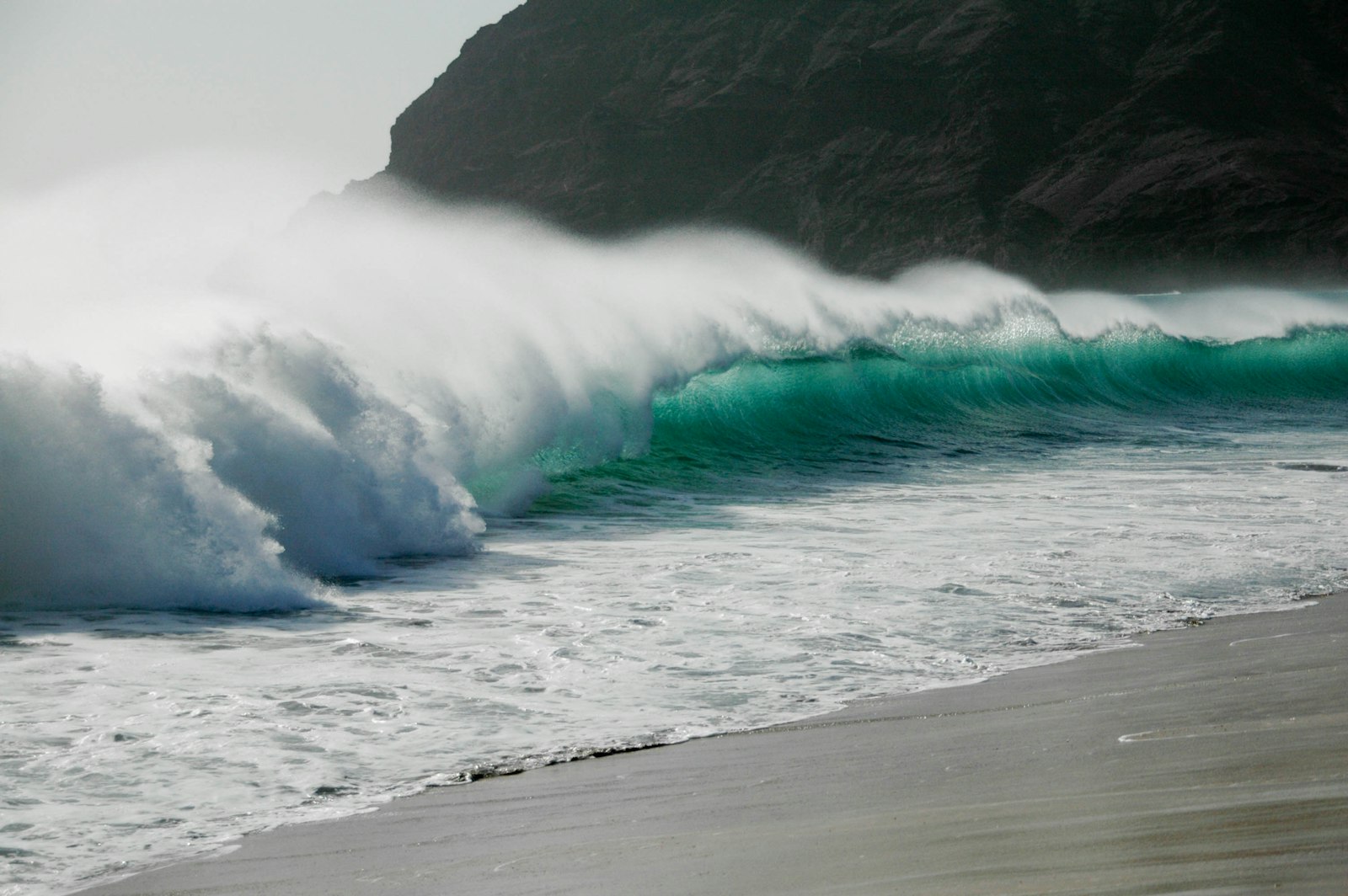
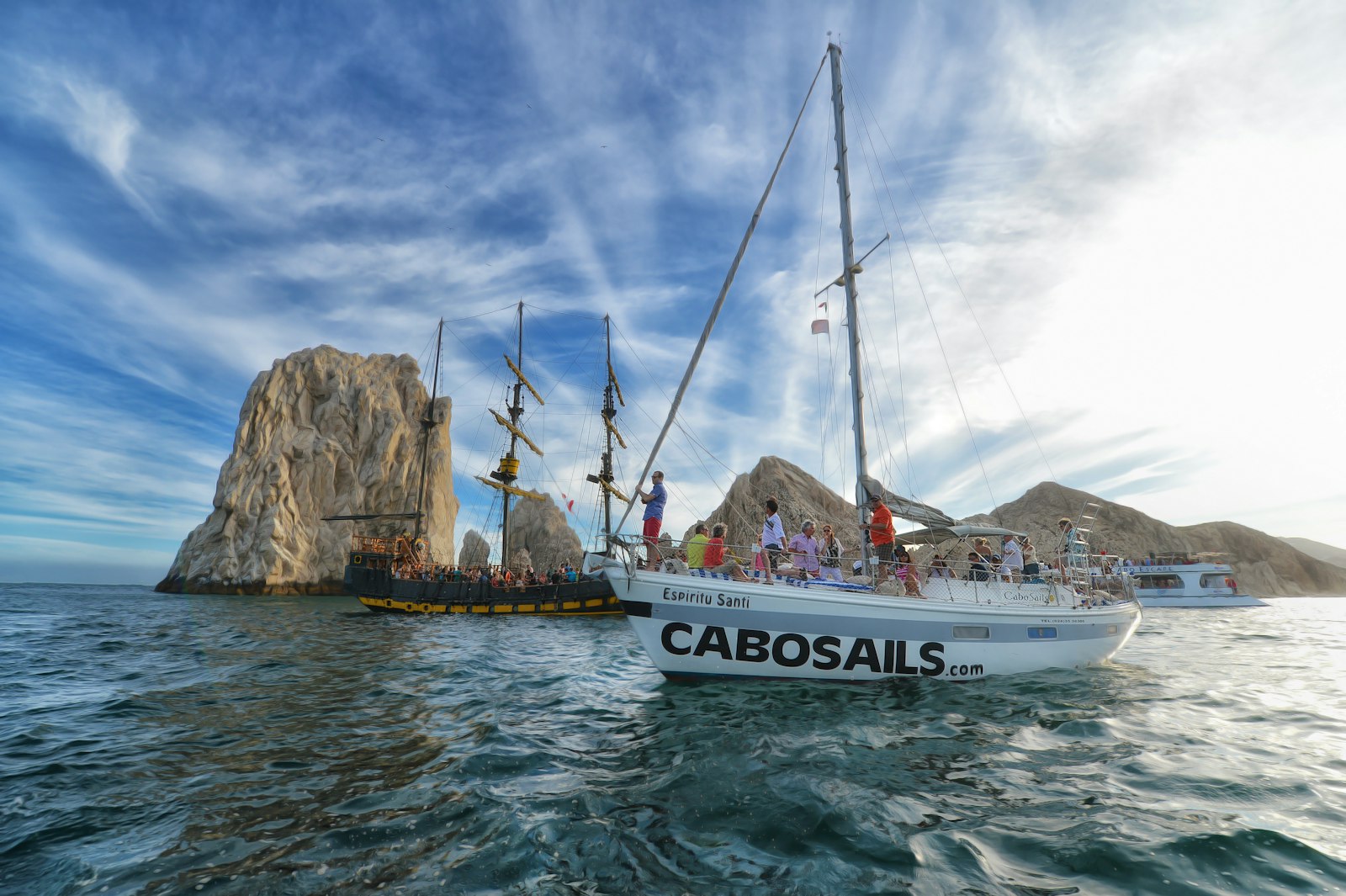
The way it goes is this. A storm passes hundreds of miles offshore. Long, slow swells start reaching Cabo under a clear sky. The port captain closes the harbor to small boats, and in Cabo that's every tour boat, water taxi, fishing charter and cruise ship tender. The Arch, the snorkel cruises, the sunset boats and the fishing all stop at the same moment, sometimes with only a few hours' notice. Then the lifeguards put up black flags, which means the beach is closed and you stay off the wet sand too.
Nobody publishes a count of how many days a year this happens, so I'm not going to give you a number. A closure can last a few hours or several days. The flags tend to outlast the port closure, because the swell shows up before the storm and hangs around after it. I give it two days or more after the sky clears. After a heavy rain the water near the arroyo mouths goes brown for a few days as well.
Even the dependable swimming beaches close in a big swell. Médano and the harbor beaches are the last to close and the first to reopen, and I keep track of how each one holds up in the best swimmable beaches in Cabo.
What keeps running is everything on dry land. ATV tours, ziplines, golf, spas and restaurants carry on, and so does a Todos Santos day trip as long as it hasn't rained. If it has rained, give the dirt roads a couple of days. The tracks on the East Cape and out to Cabo Pulmo cross dry riverbeds that run after a storm, and my East Cape guide covers which roads those are.
The good news is the refund. Reputable operators give your money back in full or reschedule you when the port is closed. A reschedule isn't much use on a five-night trip with the port shut for three of them, and nothing pays you back for the lost day. And if the boats are the whole point of your trip, like a week of scuba diving in Cabo or a few days of sport fishing, build in a couple of spare days. The diving and the fishing are both at their best this time of year, which is the frustrating part.
If you're coming by ship, the same thing applies to you, only faster. Cabo is a tender port, and when the swell is up the ship skips the stop. I talk about that in my post on a Cabo cruise port day.
How Much Warning You Get
Less than most people expect. A storm that forms close to the Mexican coast can go from getting a name to coming ashore at Cabo in a day or two.
Newton in 2016 took about a day and a half from the day it was named to its landfall. Olaf in 2021 was a hurricane within a day of being named and ashore the next night. Odile's early forecasts kept it offshore, and the hurricane warning went up only about a day before it hit. Norma was kinder and gave about four days.
The place to watch is the US National Hurricane Center, at hurricanes.gov, under the eastern Pacific. It's free, and it's the source everybody else is quoting. Here's how I read it:
- About a week out, the outlook map shows a colored patch where something might form, with the odds. All I do at this point is hold off on paying for boats.
- Three to five days out, a named storm gets a forecast cone. The cone shows where the center of the storm will probably go, and the center stays inside it about two times in three. At five days the far end of the cone is around 300 miles across. Both towns and the highway between them fit in about 20.
- A day and a half to two days out, a hurricane watch and then a warning go up. A watch means hurricane conditions are possible, and a warning means they're expected. This is the point where airlines post waivers, hotel policies kick in and flights out fill up.
So I wouldn't cancel a trip over a cone five days out. It's wide enough to miss Cabo by a hundred miles or more on either side. I'd make the call when a watch or a warning goes up, and if a warning is posted I'd take it seriously even under a blue sky, because it's issued that far ahead on purpose.
Keep in mind that the cone says nothing about swell or rain. Cabo can sit outside it the whole time and still have a closed port, and the port can close with no watch or warning in effect at all.
What a Storm Is Like at a Resort
It's dull and a little strange, and it lasts about a day.
The beach and the pools close first, and the staff carry in the loungers and board or tape the windows. For an ordinary storm you're asked to stay in your room. For a severe one, guests are moved to a ballroom or conference hall in the middle of the building, picked because it has no windows. The restaurants close and you're handed a boxed meal, something like a sandwich, a snack and a bottle of water. Room service stops. The bars close too, even at an all-inclusive, which seems to be the detail people remember.
The large resorts have big generators that keep the lights, the air conditioning and the water running, and the front desk passes along what the authorities are saying about flights and the airport. A growing list of hotels holds the local government's storm shelter certificate, which checks the building, the backup power, the supplies and the plan. Ask your hotel whether it has one. This is the part of the system that works well here, and it's the reason I'd rather be in a big concrete resort than anywhere else if a storm did come. I rank those in the best resorts in Cabo.
A villa, a condo or a small hotel is a different situation. There may be no generator, and nobody on site with a plan. I'd ask about backup power and water before I booked one for these months.
As for getting hurt, I don't know of a guest being seriously injured inside a hotel by a storm here. The deaths I do know of happened in the flooding, to people crossing flooded streets and riverbeds, and on the wet sand in big swell. Don't drive or walk into a running arroyo, don't park a rental car in a dry one, and don't go down to the beach to look at the waves. There's more on all of that in is Cabo safe.
What Your Hotel Will and Won't Do
Read the storm policy for your own hotel before you book. A few resorts publish one, and I couldn't find one at all for a lot of the big names, so it's worth asking in writing.
The ones I've read follow the same pattern:
- You get a certificate. It covers the prepaid nights you didn't use, it's good for about a year, and it can't be turned into cash.
- It takes an official trigger. That's a hurricane watch or warning for the area, or a direct hit. Some policies say watch and some say warning, and the difference is about half a day.
- It's for direct bookings only. Every policy I've read sends guests who booked through a travel site, a package or an agent back to whoever they booked with.
- The certificate has blackout dates. Typically Easter week, Christmas and New Year's.
- Nothing else is covered. Airfare, transfers, and meals or services you missed while the hotel was locked down are all left out.
Hard Rock and Nobu on the Pacific side both publish policies shaped like that, and the two are in my Hard Rock vs Nobu comparison if you're considering either. The wording gets revised, so check the current version on the hotel's own site. Hard Rock's has also offered a move to a sister hotel at the same rate, including the one in Cancún. I'd think twice about that offer, since Cancún has its own hurricane season in the same months, which is one of the things I weigh in Cabo vs Cancún.
The only cash refund I've come across is sold as a paid add-on when you book. That's insurance with the hotel's name on it.
What matters most is what none of these policies cover. A closed port doesn't trigger them. Neither do closed beaches, a rainy week, or a forecast that makes you nervous. And as I understand it, a hotel that's open and able to take you can hold you to a nonrefundable rate no matter what the forecast says. That's why the rate you book matters more than any storm policy. Book the one you can change or cancel. It usually costs a little more than the nonrefundable deal, and I think it's the best money you'll spend on this trip.
What Travel Insurance Covers
I'm not an insurance expert, and the terms vary by insurer and by where you live. Read the policy before you pay for it. What follows is how these policies generally work.
The rule that matters most is the named-storm cutoff. A policy generally covers a hurricane only if you bought it before that storm was named. Once a storm has a name, insurers treat it as something you could see coming, and a new policy won't cover it. Some word it even more broadly, as named or forecast.
That rule bites harder in Cabo than people expect, because of how little warning the close-forming storms give. In a busy September there can be several named storms on the map at once, too. So waiting to see how the season looks doesn't work. I buy the policy the day I pay the first deposit.
A standard policy generally pays when one of a short list of things happens:
- Your flight is canceled, or delayed for a set number of hours, by the storm
- There's a mandatory evacuation where you're going
- Your hotel can't be lived in
- On some policies, a hurricane warning is posted for your destination close to your departure
It generally doesn't pay because the forecast looks bad, because you've changed your mind, because the port is closed, because your tours were canceled or because the beaches are flagged. Whether a hotel's certificate counts against a claim is something I'd ask the insurer.
Then there's cancel for any reason. It's an upgrade you add to a policy, and it's the only thing I know of that pays when you simply don't like what's coming. Here's roughly how it works:
- It pays back about 50 to 75% of what you prepaid.
- It usually has to be bought within two or three weeks of your first trip payment.
- You generally have to cancel at least two or three days before you leave.
- It adds something like 40 to 50% to the cost of the policy.
- It isn't sold everywhere.
Is it worth it? If the boats and the beaches are the reason for your trip, a standard policy won't help you when they close, and this upgrade is the only cover that might. If you'd be fine at the pool, I'd skip it.
Get medical and evacuation cover in the same policy, whatever month you travel. The private hospitals here expect payment up front.
Flights and Getting Home
If your airline cancels your flight and you decide not to travel, you're owed a refund, weather included. On US airlines that refund is supposed to come automatically. What the airline doesn't owe you in a weather cancellation is a hotel room or meals, and that's the gap the delay and interruption parts of an insurance policy are for.
When a storm threatens, airlines usually post a waiver that lets you move your flight within a window of a few days without a change fee. The waiver follows the forecast and shows up when the airline decides, so until then you're on your regular fare rules. Most regular fares on US airlines can be changed without a fee these days, and basic economy usually can't. Check yours, and for these months I'd skip basic economy.
If the airport closes while you're there, the airline puts you on its next open seat. In a week when planes are full, that can be a day or two later, and the extra hotel nights are yours to pay. So I leave slack at the end of the trip. If I had to be home on Monday, I'd fly Saturday.
Don't head to the airport until your airline shows your flight is operating. The hotel is a much better place to wait than the terminal, and my Cabo airport guide covers the trip home on a normal day.
The Weather When There's No Storm
Most days in September are hot and sunny, which gets lost in all the storm talk.
August and September are also hot and humid, and I mean properly hot. Highs are in the mid 90s, nights only drop to the mid 70s, and the air is sticky in a way Cabo isn't for the rest of the year. If you wilt in the heat, these aren't your months. The ocean is 83 to 85°F, the warmest it gets all year, and it's as clear as it gets for snorkeling and diving. By August even the pool is warm.
It rains on about four days in September. That rain comes in one or two big dumps, usually from the edge of a passing storm, and then the sun is back. October cools off from about the middle of the month.
A few favorite restaurants will be closed. The Office on the Beach and Edith's close for a stretch every September, the farm restaurants outside San José take a break around the same time, and the San José Art Walk is off from July through October. Hotels use the quiet weeks for repairs, so you might find a restaurant or a pool inside your resort closed. Most of town is back by the middle of October. I'd also pack repellent for dusk, because the mosquitoes pick up after the rains.
The upside is how empty it is. The hotels are less than half full in September, nobody is fighting over lounge chairs, and the staff have time for you.
What You Save
On average, a room in September costs about a third less than the same room in March. At mid-priced hotels it's closer to 40% off. At the very top it's thin, because the fanciest resorts don't drop their rates much. If you ever see "50 to 70% off" promised for hurricane season, that's not what I've found.
Against that, set the cost of protecting the trip. Standard travel insurance generally runs somewhere around 4 to 10% of what the trip costs, and more with the cancel-for-any-reason upgrade. The changeable room rate costs a little more than the nonrefundable one. You still come out well ahead, but the real saving is smaller than the headline one.
If the low price is the reason you're looking at these months, my picks for affordable Cabo hotels are a good place to start, and the full budget is in how much Cabo costs.
What I'd Book
Here's the whole thing in the order I'd do it.
- A room rate I can change or cancel. This matters more than everything else on the list.
- The hotel booked direct, if its storm policy matters to me. If I book a package, I get the agency's storm terms in writing.
- Insurance on the day of the first payment, with medical and evacuation cover, and a decision about cancel for any reason made right then, because the window to add it closes.
- No prepaid boats. I book directly with operators who state a full refund when the port is closed, and I pay on the day where I can.
- Boat days at the start of the trip. That leaves room to move them. The one trip I care about most never goes on the last day.
- A flight I can move, home a day or two before I really have to be.
- A hotel I'd be fine spending a day inside. That means big, solid, with a generator, and with enough indoors to pass the time. An all-inclusive makes more sense than usual on a trip like this, since you may be eating in for a day or two anyway.
- A location that works without boats or a beach. San José's old town, or somewhere on Médano within a walk of restaurants, beats an isolated resort on the Corridor or the Pacific side when everything on the water is shut. The areas are laid out in where to stay in Cabo.
- A small storm kit. Cash, a power bank, a flashlight and three extra days of any medication. Card machines and ATMs go down when the power does.
None of this makes the boats run. If the port closes, it closes, and the list just keeps a storm from costing you more than a few days.
The Traps
These are the ways I see the savings disappear.
- Booking nonrefundable to save a little more. In a landfall year, that can cost you the whole stay.
- Waiting to buy insurance until you see how the season looks. A storm can be named and ashore inside two days.
- Assuming insurance pays if you decide not to go. It pays for the events it lists, and being nervous isn't one of them.
- Reading a hotel's "hurricane guarantee" as a refund. It's a certificate, for direct bookings, with blackout dates, after an official warning.
- Prepaying a week of boat tours through a reseller. Good operators refund quickly. Resellers are slower.
- Canceling over a five-day cone. It's wide enough to miss by a hundred miles or more.
- Ignoring a warning because the sky is blue.
- Believing "it's going to miss us" means nothing will change. A miss still closes the port and the beaches.
- Trusting that it's over by mid-October. Norma came ashore on October 21.
- Skipping June and July because of the official dates. Those two months are dry and quiet.
- Planning a wedding or a group trip for September because the venue is cheap. A fixed date with a lot of people's flights attached can't bend.
- A dirt-road day trip the day after rain.
- Flying home on the last possible day before something you can't miss.
The Verdict
Hurricane season in Cabo is a long official window with a short real one inside it. From the last days of August to about October 21, you're making a bet with good odds and a bad worst case. Most of the time you get a hot, quiet, cheap week. Fairly often you lose a few days of boats and beach. About one year in four a hurricane comes ashore at or near the resorts, and that usually costs about a day shut inside and a day or two getting home. Once since 2000 it was much worse than that.
I'd book those weeks if you're:
- A couple or a group of friends who came for the pool and a cheap room, with dates that can move
- A diver or an angler who can build in two spare days
- On a budget, as long as the rate is changeable
I wouldn't book them if you're:
- A first-timer who wants the Arch, a snorkel boat and a sunset cruise, since most of that list needs an open port. There's more on that in the Cabo first-timer mistakes I'd avoid.
- A family tied to school dates. It's hot, the beaches may be closed, and a locked-down resort is a long day with kids.
- Planning a wedding, a honeymoon or any trip that can't be moved
- Someone who can't stay two extra days or pay for a rebooking
- Dependent on steady power or a fast flight home for medical reasons
- Miserable in heat and humidity
If you want the warm ocean without the bet, go from about October 25 to mid-November. The water is still in the 80s, it's at its clearest, everything has reopened and the risk is close to nothing. Prices are on their way up by then, the hotels around the marina fill for the fishing tournaments in late October, and Thanksgiving week is priced like high season.
And if what you want is cheap with no storm risk at all, that's June, with a cooler ocean. This post doesn't change that answer, and the month-by-month post has the details.
Here's how I'd text it to a friend: the real season is the end of August to October 21, and September is the peak. Odds are you won't see a hurricane, but you might lose a few days of boats and beach, and nobody pays you back for those. Book a rate you can change, buy insurance the day you book, don't prepay boats, and pick a hotel you'd be happy stuck in. If that sounds like too much, go in June or early November.
Quick Answers
When is hurricane season in Cabo? Officially May 15 to November 30. The storms that matter at Cabo arrive between the last days of August and about October 21, and September is far ahead of every other month.
How often does a hurricane actually hit Cabo? About one year in four, a hurricane comes ashore at or near the resorts, almost always in September. Only one since 2000, Odile in 2014, was a major hurricane when it hit.
Will my hotel refund me if there's a hurricane? Almost never in cash. The policies I've read give a certificate for unused nights, only after an official watch or warning, only for direct bookings, and with blackout dates. Read the policy for your own hotel.
Does travel insurance cover hurricanes in Cabo? Generally yes, if you bought it before the storm was named, and only for listed events like a canceled flight, an evacuation or a hotel you can't stay in. It generally doesn't cover a bad forecast, a closed port or closed beaches. Terms vary, so read yours.
Is October safe from storms? The first three weeks are still in season. From about the 25th, the risk is close to nothing.