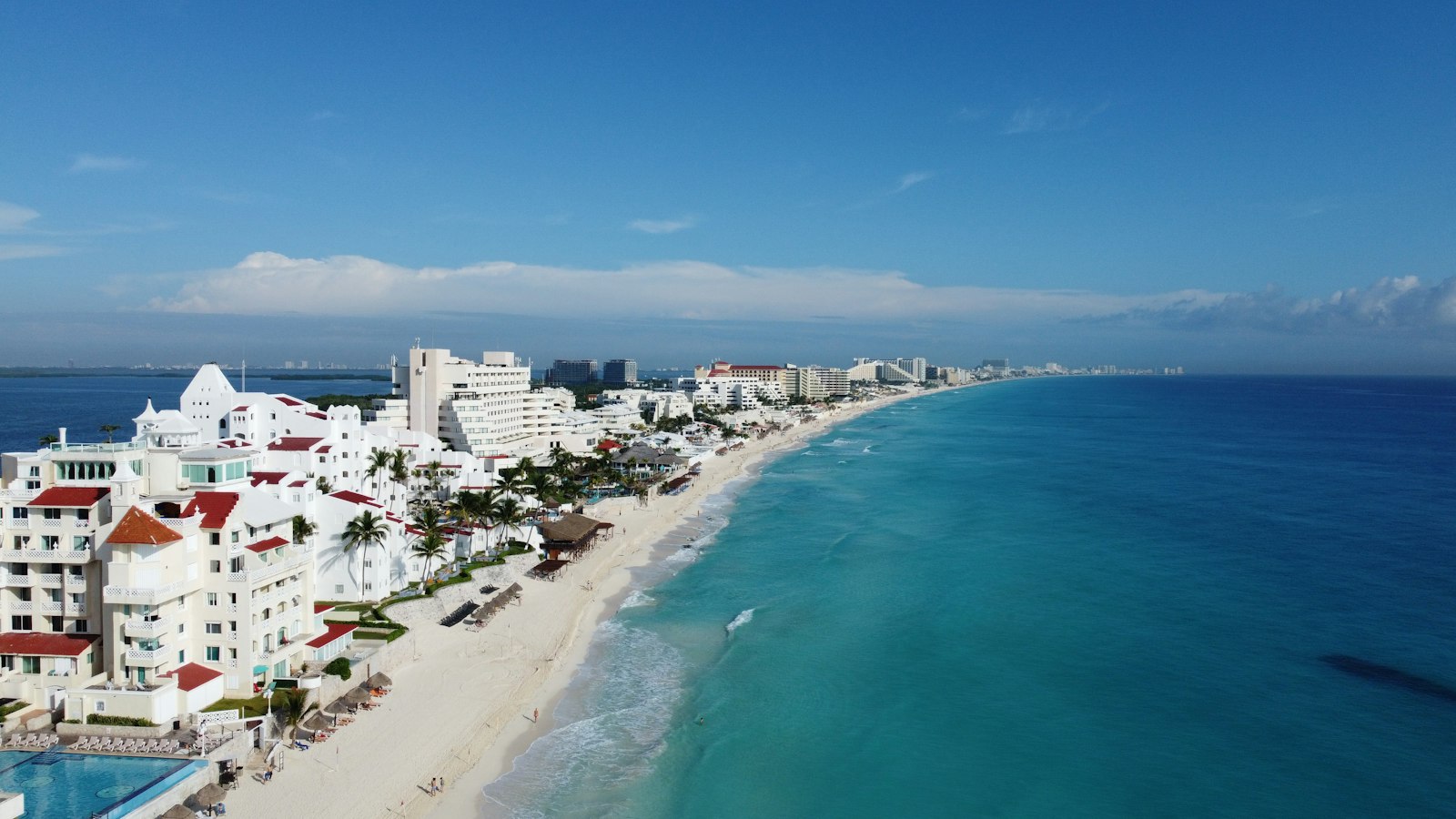
Cabo vs Cancún: Which One I'd Book, and When
By Cabo Wander
"Should we do Cabo or Cancún?" is a question I get from friends all the time, and they usually expect me to say Cabo before they've finished asking. I've been to Cabo more times than I can count, so that's fair. But my honest answer is that for the beach vacation most people are picturing, Cancún and the Riviera Maya are the better buy for a lot of you.
Here's how I sort it. If walking out of your hotel into a warm, calm sea is the whole point of the trip, book the Caribbean side, especially from December to April and especially with little kids. If you'd rather have dry sunshine, desert and ocean scenery, whales, fishing, golf, dinner in a real town and no seaweed, book Cabo, and plan on doing a lot of your swimming in a pool.
Two things can flip that. The first is the month. From about May to October the Caribbean coast has seaweed, sticky heat and its own storm season, while Cabo's ocean is warming up and has no seaweed at all. The second is your home airport. Cabo is the short flight from the West Coast and Cancún is the short flight from the East Coast and most of the Midwest, and on a four-night trip that can settle it by itself.
I should say up front that Cabo is the coast I know from the inside. What I've written about the Caribbean side is homework, and I've kept it to the things that stay true from year to year.
The Quick Version
Book Cancún or the Riviera Maya if you want to swim in the sea in front of your hotel, you're traveling in winter, you have kids under about eight, you want an all-inclusive at almost any budget, or you want ruins and cenotes on your days off the sand.
Book Cabo if you care more about dry air and scenery than about getting in the ocean, you're coming for whales, fishing or golf, you like to go out for dinner, you're flying from the West, or seaweed and humidity have spoiled a beach trip for you before.
Book whichever is the shorter nonstop if you only have three or four nights.
Can You Swim in Front of Your Hotel?
This is the biggest difference between the two, and the Caribbean side wins it easily.
Most resort beaches over there are swimmable on most days, and the water is warm all year. It's in the high 70s in the middle of winter and the mid 80s by late summer. On that coast the sea is what you're buying.
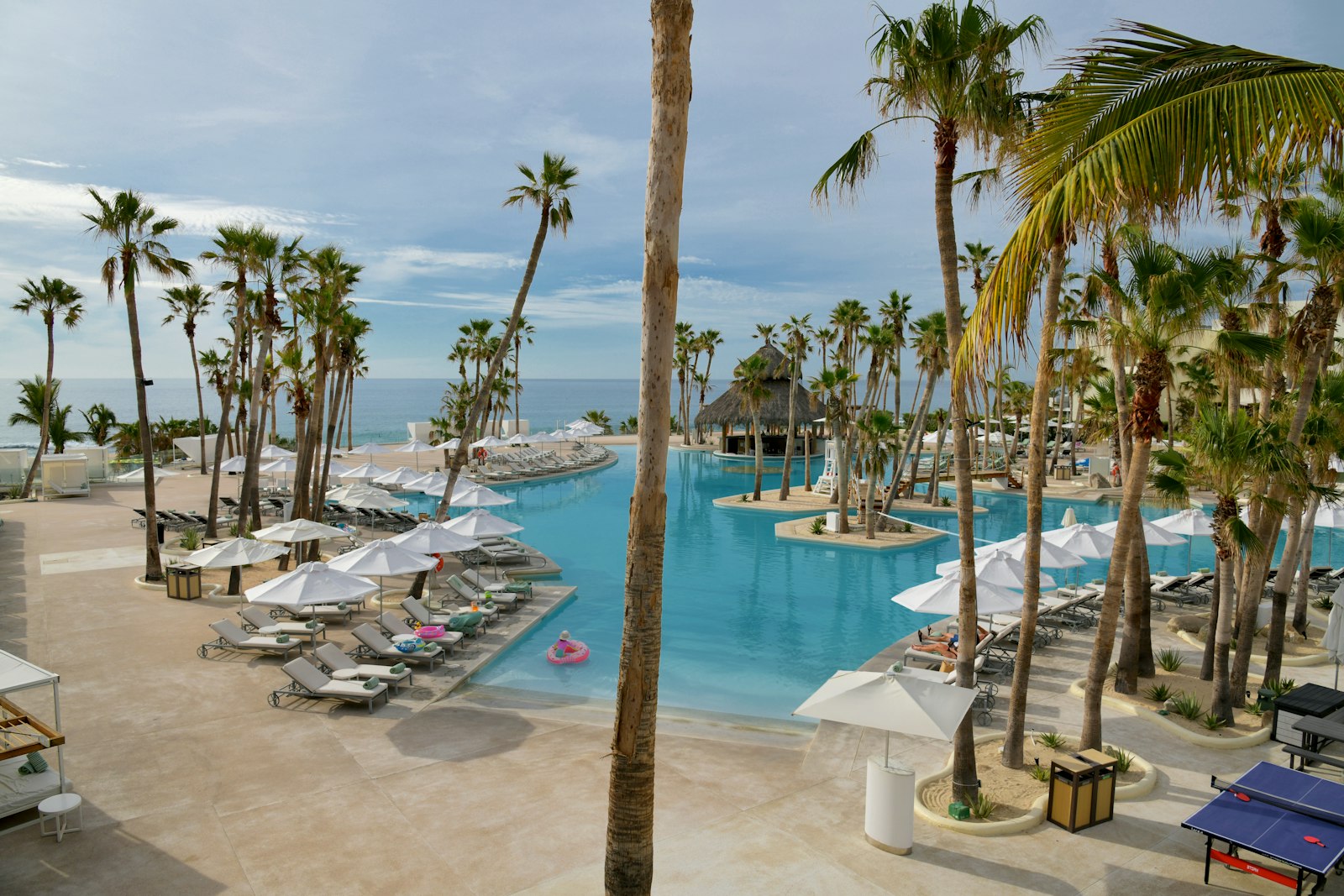
In Cabo, at most hotels, the sea is what you look at. Deep water comes close to shore, the beaches are steep and the waves break hard, so most of the beaches in the hotel photos are flagged against swimming. There are four beaches I'd count on for a swim, which are Chileno, Palmilla, Médano and Santa María, and most hotels aren't on one of them. That includes some of the most expensive hotels in Mexico. I've watched guests at Las Ventanas walk down the sand to swim in front of the Hilton. I've ranked the beaches that do work in the best swimmable beaches in Cabo, and the hotels that sit on them are listed in where to stay in Cabo.
Then there's the temperature. Cabo's ocean is about 71°F from February to April, which is when most people go. You can swim in it. Most people I travel with get in, yelp, and get out. In those same months the Caribbean is seven degrees or more warmer, and that's the difference between a quick dip and staying in for an hour.
The gap closes in summer. By August and September both seas are in the mid 80s, and Cabo's is still around 80°F in November.
And "Caribbean" doesn't automatically mean calm. Cancún's hotel strip has a long east-facing side that gets real surf and rip currents, and it flies warning flags just like Cabo does. The calm water is on the short north-facing side of the strip and on Isla Mujeres. So check which way your beach faces on either coast.
Bottom line: if the ocean in front of your room is the vacation, book the Caribbean side. In Cabo you can have it at a short list of addresses, in warm water from about July to early December.
Seaweed
This one goes to Cabo, completely. Cabo doesn't get sargassum. It's on the Pacific and the Sea of Cortez, and sargassum is an Atlantic and Caribbean thing, so it isn't a matter of a good year or a bad year.
The Caribbean coast gets it every year. It's a floating brown seaweed that washes ashore and rots, and the season runs roughly from spring through fall, with recent years on the heavy side. Winter is the low-risk time. The hotels work hard at it, with floating barriers offshore and crews raking the sand from before dawn, and on a bad week it still wins.
It's also very local. Some stretches get hit hard, and Playa del Carmen and Tulum have tended to be among them. The islands and the north-facing beaches near Cancún get much less. Two hotels on the same coast can have completely different weeks.
If you're booking a summer trip over there, look at a sargassum monitoring map before you pay. There's a local monitoring network that posts a color-coded map of the beaches, and recent dated photos from the hotel you're looking at are even better. Pick the beach first and the hotel second.
It's a little funny when you line the two coasts up. In Cabo the pool ends up being the vacation because of the surf. In a heavy seaweed month on the Caribbean it's the pool for a different reason.
Weather and Humidity
Cabo is a desert, and if you hate sticky heat, that decides it.
It rains on about 14 days a year in Cabo, and most of that falls in August and September. The air is dry for most of the year and only turns humid from July to early October. The Caribbean side is the tropics. It rains on about a hundred days a year there, mostly as showers and thunderstorms, and it's humid in every month.
Daytime temperatures are closer than you'd think, in the low to mid 80s in winter and the mid 90s in late summer on both coasts. The evenings are where they split. Winter nights in Cabo drop to the high 50s and low 60s, and I pack a sweatshirt for dinner on every winter trip. Over there the evenings stay warm.
So it's a draw on the thermometer, and which one feels better is up to you. If warm evenings in a sundress matter to you, that's a point for the Caribbean. If you want to walk around a town at noon without melting, that's a point for Cabo outside of summer. Month by month, the Cabo side of this is in the best time to visit Cabo.
Getting There
Look at your home airport before you look at anything else, because this decides more trips than the beaches do.
From Los Angeles, Cabo is about two and a half hours, and Cancún is more like four and a half to five and a half. From New York it flips. Cancún is around four hours, and Cabo is five to six on one of a small number of nonstops, or a connection. Chicago is about four hours to Cabo, and the Midwest generally has far more flights to Cancún. Texas is a short flight to both.
Cancún is also the much bigger airport, with flights from pretty much every large city in the US and Canada and direct ones from Europe. Cabo's flights lean heavily toward California, Texas and the Mountain West. The Caribbean side has a second, smaller airport at Tulum, and there's a newer train line along that coast too, but most visitors still fly into Cancún and go by road.
The time zones follow the flights. Cabo runs on Denver's winter clock and Cancún on New York's, so the shorter flight is also the one with less jet lag.
On a week, a longer flight is annoying and that's about it. On a long weekend, flying across the continent eats most of a day each way, and I'd just book the closer one.
Once you land in Cabo, it's 45 minutes to an hour to Cabo San Lucas, and a private car runs about US$90 to $110. The arrival, door by door, is in my Cabo airport guide.
What It Costs
The Caribbean side is cheaper, but "Cancún is half the price" gets repeated a LOT and it isn't quite right.
It's cheaper mainly because it has cheap options and Cabo mostly doesn't. That coast has several times as many hotels, including thousands of real budget rooms, plus cheap public buses up and down it. Most of Cabo's rooms are at the upscale end, and getting around costs real money. So the price floor over there is much lower.
Book the same thing in both places, though, and the gap shrinks. When I've lined up the same big mass-market all-inclusive brands on the two coasts, the rates came out about level. Where Cabo does cost more is at the luxury end, where the same kind of hotel starts noticeably higher.
For Cabo itself, I'd plan on roughly US$500 to $800 a day for two on a comfortable trip, before flights, with the room, tax, food, rides and a couple of boat trips in it. You can do it for about half that if you eat where the locals eat and ride the bus. Tax adds about a fifth to any Cabo room rate, and at the luxury hotels it's closer to a third once the service charge is on. There's also a state visitor fee of about US$25 a person that you pay online. The Caribbean side has its own version of that fee. The full budget is in how much Cabo costs.
Bottom line: if you're on a tight budget, the Caribbean side gives you far more to choose from. If you were going to book a mid-priced all-inclusive either way, don't let price pick the coast.
All-Inclusives
If the wristband is what you want, the Caribbean side is the better place to buy it.
All-inclusive is the default over there. There's much more choice at every price, from real budget places to big family resorts to adults-only luxury, and you can usually swim at the beach out front.
In Cabo it's the minority choice, and it mostly sells you a pool. Most of the all-inclusives sit on beaches you can't swim at, the best restaurants are out in the two towns, and from most resorts a dinner out starts with a paid ride. It can still be the right call at a hotel that's hard to leave. I do that math in whether a Cabo all-inclusive is worth it.
One thing that's the same on both coasts is the sales desk. A lot of the big chains are vacation clubs too, and the "welcome breakfast" invitation at check-in works the same way wherever you are. Say no thanks to the gift and you've said no to the presentation.
What There Is to Do
The Caribbean side has more to do, and Cabo has a few things you can't do over there at all.
What you get on that coast is range. There are Mayan ruins, including Chichén Itzá, which is a long day from the beach, and Tulum, which is right on the coast. Then you have the cenotes, the freshwater swimming holes in the limestone. And there are islands you reach by ferry, the big eco-parks, and whale sharks in summer, from about mid-May to mid-September. You could fill two weeks there without doing the same kind of day twice.
Cabo's list is shorter and more specific. From mid-December to mid-April there are humpbacks, and there's nothing like that on the Caribbean. A small-boat trip in February is the best thing I do there all year, and I compare the boats in whale watching in Cabo. Fishing is the other big one. It's one of the few places where a first-timer can hook a marlin within sight of land, and something is biting in every month, which I cover in sport fishing in Cabo. Golfers get ocean holes and dry winter weather. And the scenery is desert, granite and cactus running down to the water, which looks nothing like the flat green Caribbean coast.
Snorkelers should go to the Caribbean. The reef there is bigger and the water is warmer, and I'd say so even on a Cabo site. Around the Cabo resorts it's fish over rock, and it's cold or cloudy for a good part of the year. The exception is Cabo Pulmo, a real recovered reef a couple of hours' drive away. I wouldn't call either coast untouched. My take on the Cabo side is in snorkeling in Cabo.
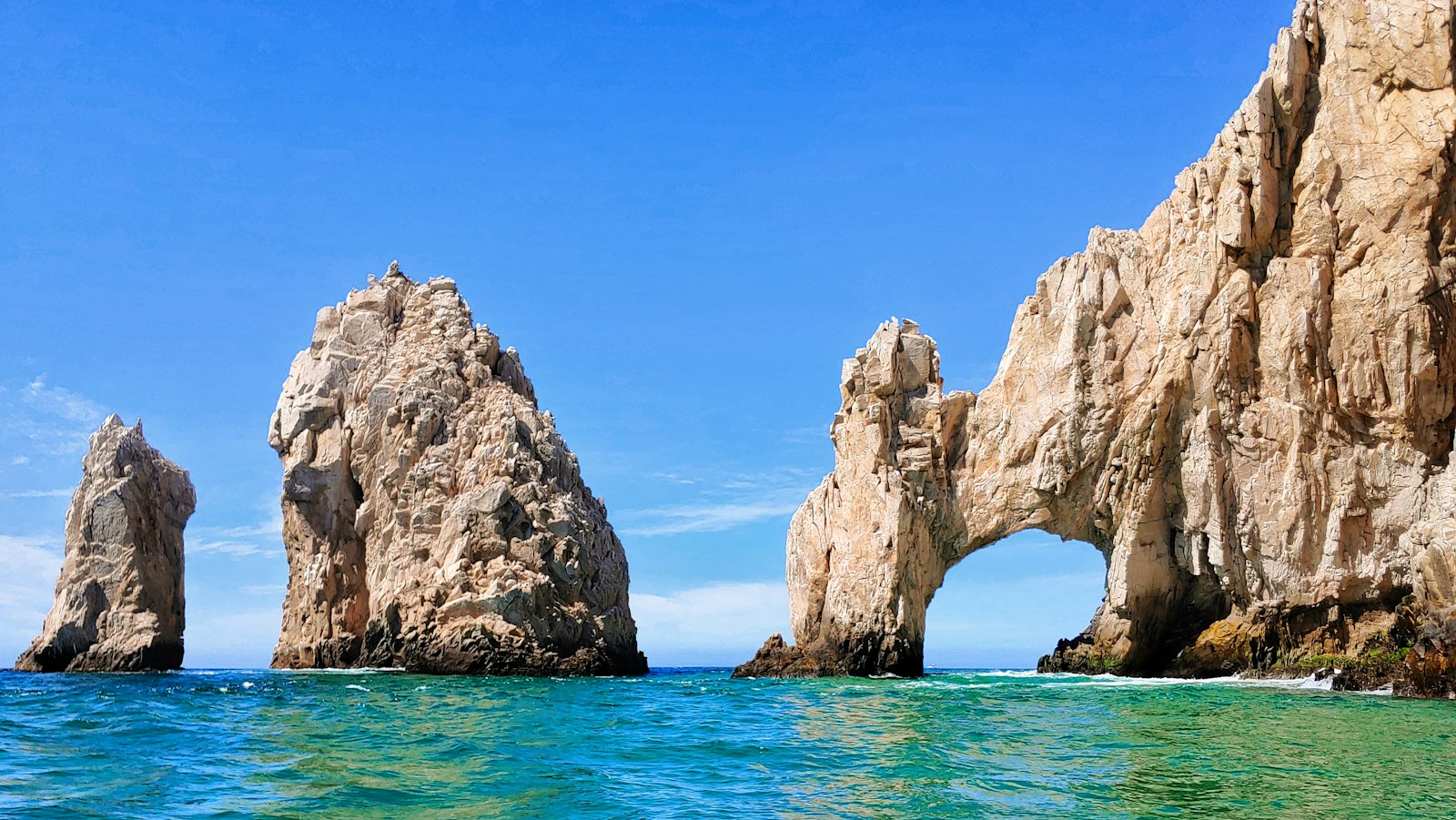
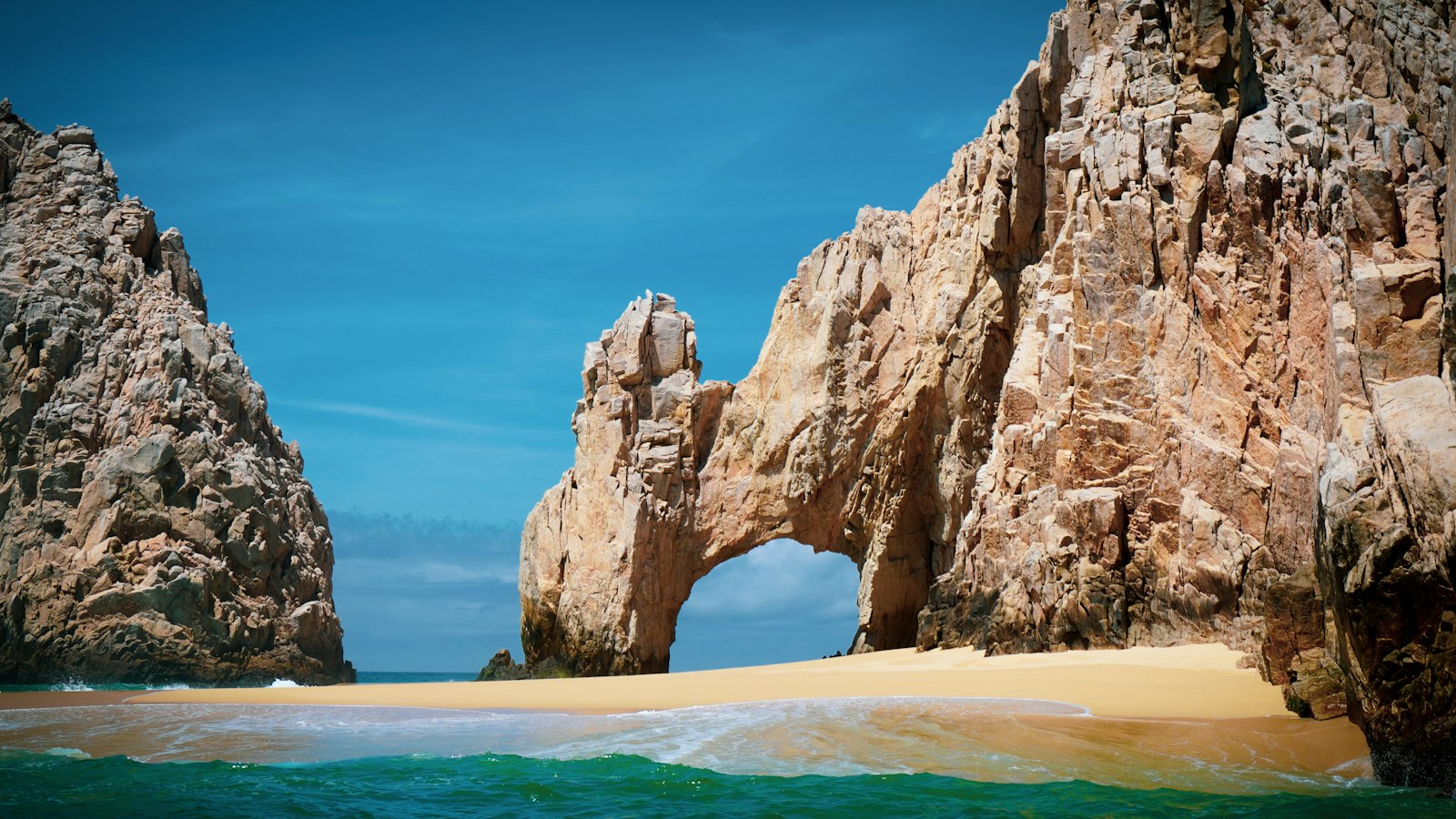
What I like about Cabo's list is that the best of it is close, short and cheap. The Arch is a US$20 water taxi. The good coves are free. What I'd do and what I'd skip is in things to do in Cabo.
The Feel and the Crowds
These two places are very different sizes. The Caribbean side is about six times bigger than Los Cabos, give or take, whether you count visitors or hotel rooms. Cancún is a city of over a million people with a strip of high-rise hotels, and south of it the coast is a long run of resort enclaves, a couple of beach towns and the islands. Its visitors come from all over the US, Canada, Europe and Latin America.
Cabo is two small towns and about twenty miles of resorts between them. The buildings are low, the crowd is mostly from California, Texas and the Mountain West, and the prices are in dollars. It feels like a US resort town that happens to be in Mexico, and I say that as someone who loves it. If you pick Cabo, the next decision is which town, and that's Cabo San Lucas vs San José del Cabo.
What Cabo does better at this size is dinner. Its best food is at independent restaurants in the two towns and at the farms outside San José, and if you stay in the right spot you can walk to it. I'm not going to rank the food on the other coast, because I don't know it well enough. What I can tell you is that eating in town is the thing I'd miss most about Cabo, and my picks are in the best restaurants in Cabo.
Both get spring break. In Cabo it runs for about five weeks from early March and stays on Médano Beach and the bar strip in Cabo San Lucas. Cabo's nightlife is a few blocks and one end of one beach. Cancún's clubs are bigger.
Neither one is where I'd send you for a quiet week in a small Mexican town. They're both resort destinations... the difference is how much of one you want around you.
The Top-End Hotels
Both coasts have serious luxury hotels, and several of the same brands are on both. Cabo's tend to cost more. Entry-level rooms there run roughly US$800 to $1,300 a night in the low season and US$1,500 to $3,000 in winter, and with tax, service and food, two people should plan on US$2,000 to $3,500 a night at the top ones.
What you get for it is the setting and the service: cliffs, plunge pools, whales from the terrace in winter, and dry air. What you mostly don't get is the swim. Only a few of Cabo's top hotels sit on water I'd count on, with Chileno Bay, Montage and One&Only Palmilla being the three near town. I ranked them that way in the best luxury resorts in Cabo.
If you want to swim from your room, check the beach before the brand, on either coast.
Storm Season
Both coasts have a hurricane season and both have been hit, so I wouldn't pick one over the other as the safe choice.
The Caribbean side is on the Atlantic season, which runs from June through November. The risky stretch there is roughly July to early November, with September and October the peak. Cabo is on the eastern Pacific season, which officially runs from mid-May to the end of November. In practice the storms that reach Cabo come between the last days of August and the third week of October, and September is far ahead of every other month.
What a storm usually costs you is a little different. In Cabo the common version is a storm far out at sea that closes the port and puts black flags on the beaches for days. I've lost boat days to storms I never saw a cloud from. On the Caribbean side it's more often days of rain and canceled flights.
September is the cheapest month on both coasts, and that's why. If you book either one for September or early October, buy travel insurance the day you book, because no new policy covers a storm once it has a name, and book a rate you can change.
Safety
The two are closer than the headlines make them sound.
As I write this, the US advisory keeps both states in the same "exercise increased caution" tier. Some governments add a specific caution about being out after dark in parts of the Cancún-side towns, and they don't add one like it for Los Cabos. That's a real difference, but a small-print one, and they're still the same category of place.
Advisories change without notice, so read your own government's page for the state you're going to, the week you book and again the week you fly.
In Cabo, the thing I'd take most seriously is the ocean, followed by the sun, the drinks and the bill. I go through all of it, in the order it's likely to affect you, in is Cabo safe.
The Verdict
These are two different vacations that happen to share a country. One is a warm tropical coast where you get in the sea. The other is a desert cape where you look at it, and do a lot of other good things. If your other option is on the same coast as Cabo, I do the same comparison in Cabo vs Puerto Vallarta.
I'm not going to name one winner, because I'd be wrong for half of you. For a first big beach vacation with small kids, in winter, from the East or the Midwest, I'd send you to the Caribbean side and not feel one bit disloyal. For a couple who likes a long dinner, anyone flying from the West, anyone coming for whales, fishing or golf, and anyone who has had a beach week ruined by seaweed or humidity, I'd send you to Cabo. And my favorite Cabo weeks, the two before Thanksgiving, are the ones where it gets closest to having both: the ocean is around 80°F and the storms are done.
| Pick Cancún or the Riviera Maya if | Pick Cabo if |
|---|---|
| Swimming in the sea in front of your hotel is the point | A pool and a view will do, or you'll book one of the few swimmable beaches |
| You're going between December and April and want warm water | You're going in winter for whales, sunshine and golf |
| You have kids under about eight | You're a couple, or your kids are happy in a pool |
| You want an all-inclusive at almost any budget | You'd rather go out for dinner |
| You want ruins, cenotes, islands and a better reef | You want whales, fishing, golf and desert scenery |
| You're flying from the East Coast or the Midwest | You're flying from the West Coast or the Mountain West |
| You're on a tight budget | You're fine with US resort-town prices |
| You don't mind humidity and a shower most afternoons in summer | You want dry air and almost no rain |
| You'll check the seaweed map before a summer trip | You never want to think about seaweed |
If Cabo wins, start with the Cabo first-timer mistakes I'd avoid, the best all-inclusive resorts in Cabo and the Cabo resorts with swimmable beaches.
If you want to float in warm water outside your room, go to the Caribbean side, in winter, and check which way the beach faces. If you want dry sunshine, whales and good dinners and you're okay with the pool, come to Cabo. From the West Coast, Cabo. From the East Coast, Cancún. Skip September on both unless you've got insurance.
Quick Answers
Is Cabo or Cancún better? Cancún and the Riviera Maya are better for swimming, all-inclusives, families with small kids, ruins and cenotes, and anyone flying from the East or Midwest. Cabo is better for dry weather, scenery, whales, fishing, golf, eating out and a short flight from the West.
Which is cheaper, Cabo or Cancún? The Caribbean side, mostly because it has far more hotels and a much lower price floor. At the same mass-market all-inclusive brands the two come out about level, and Cabo costs more at the luxury end.
Can you swim in the ocean in Cabo like you can in Cancún? No. Cabo has four beaches I'd count on for a swim, and most hotels aren't on one of them. On the Caribbean side most resort beaches are swimmable most days, though the east-facing side of Cancún's hotel strip gets surf and rip currents.
Which has warmer water? The Caribbean in winter and spring, when it's in the high 70s and Cabo is about 71°F. By August and September both are in the mid 80s.
Does Cabo get sargassum? Does Cancún? Cabo never does, because it's on the Pacific and the Sea of Cortez. The Caribbean coast gets it every year, roughly spring through fall, and how bad it is depends a lot on which beach you're on.