Is All-Inclusive Worth It in Cabo? Count Your Dinners First
By Cabo Wander
Is a Cabo all-inclusive worth it? Most people are expecting a yes, because their last beach trip was to Cancún, where it's pretty much the default.
In Cabo, all-inclusive is worth it at a hotel you can't easily leave, on a trip where you plan to eat nearly every meal there. Anywhere you can walk to dinner, I'd pay as I go.
The thing that flips it is how many dinners you'll eat off the property, so count them honestly before you book. If it's zero or one in a week, the plan wins almost anywhere outside the two towns. If it's three or more, paying as you go wins almost everywhere. A lot of people think it comes down to how much they drink. Drinks only settle the close calls.
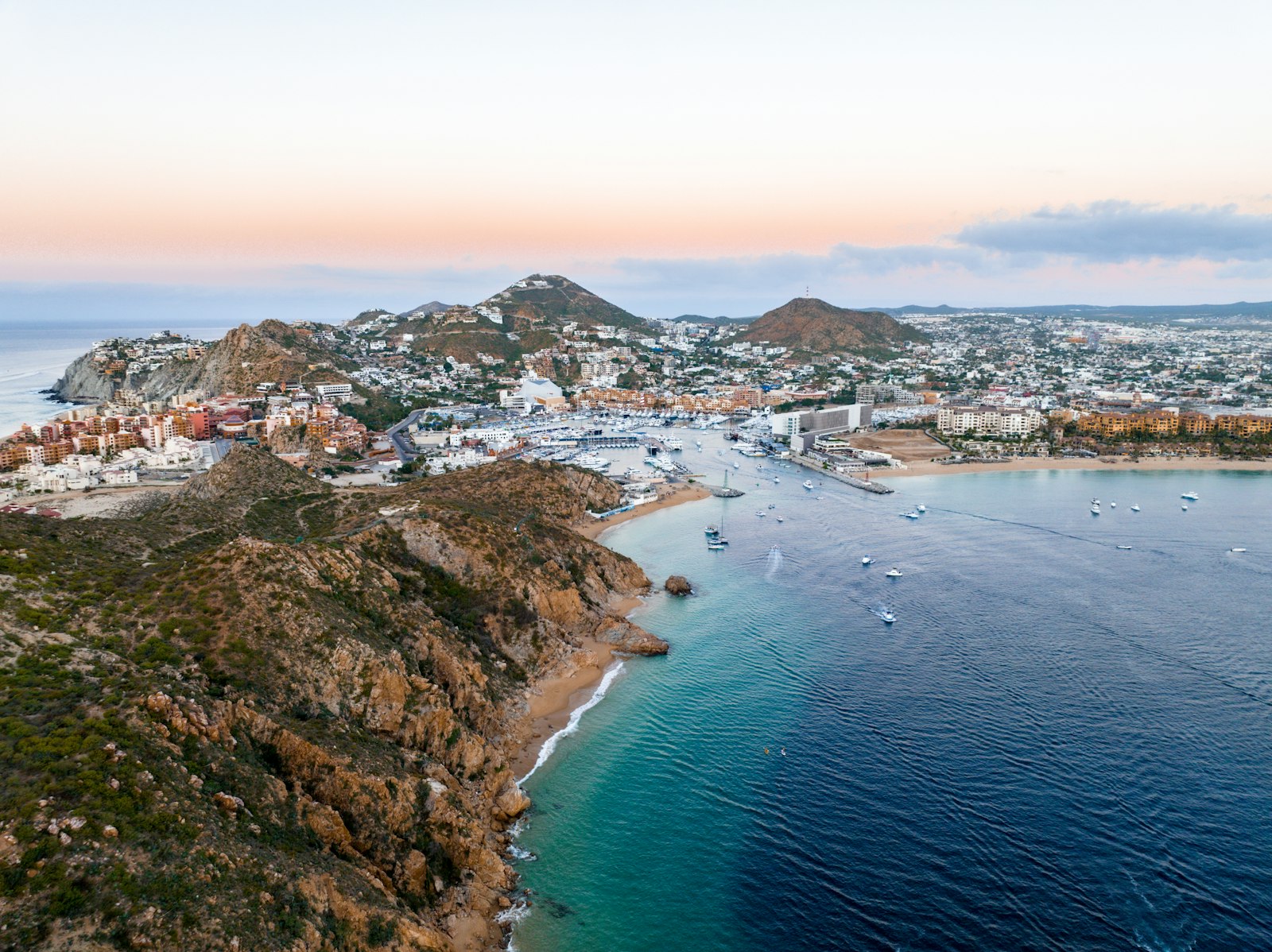
Cabo works differently from Cancún in three ways, and all three push against the wristband. Most of the all-inclusives here sit on beaches you can't swim at. The best restaurants are out in the two towns. And from most resorts, getting to one of them is a paid ride each way. I go through the bigger picture in Cabo vs Cancún.
This decision comes second. Pick your area first, which is what where to stay in Cabo is for, and the meal plan mostly chooses itself after that.
The Quick Version
Go all-inclusive if you're staying in the middle of the Corridor, on the Pacific side or out at Puerto Los Cabos, you'll eat dinner at the hotel six nights out of seven, and a pool is all the water you need.
Pay as you go if you're on Médano Beach, near the marina or in San José's historic center, or if you came for the restaurants, or if you've got three boat mornings and a day trip planned.
The number to remember: every dinner you eat in town on an all-inclusive plan throws away something like US$100 to $140 that you already paid.
Can You Leave the Hotel?
This is the question that decides it for me, ahead of the food and ahead of the price.
There are only three places in Los Cabos where dinner is a walk from your room: Médano Beach, the marina and downtown in Cabo San Lucas, and the historic center of San José. In all three, good food that costs less than the resort's is right outside. I wouldn't buy a meal plan in any of them.
Everywhere else, leaving costs money, and that changes the math in the plan's favor. From the middle of the Corridor a taxi is about US$25 to $50 each way to either town. Uber is roughly half, and at a lot of hotels the car meets you at the security gate, which can be a real walk from the lobby. On the Pacific side, Uber can drop you at your door but it isn't allowed in to pick you up, so a night out means a taxi both ways. I'd budget US$20 to $35 each way for that and ask at check-in, because I've never gotten a number there I fully trust. Out at Puerto Los Cabos, the big resorts are 10 to 15 minutes from San José's plaza by car and you can't walk to anything. All of the options are compared in getting around Cabo.
Stay room-only at one of those hotels and breakfast is a US$40 buffet. A bottle of water at dinner is US$8. There's no store you can get to without a car. At that point the plan is just a fixed price on the vacation I was going to have anyway.
The exception is San José's hotel zone, and the big roundups get this one wrong. Those hotels get described as isolated. They're about US$5 by Uber from the plaza, or a half-hour walk if it isn't hot, which makes them the easiest all-inclusives in Los Cabos to walk away from. The rates there are the lowest of any all-inclusives here, so it can still add up. But if you book one, please take that five-dollar ride at least a couple of evenings. Some of the best dinners in Los Cabos are at the other end of it, and I've laid them out in my San José del Cabo guide.
The two ends of the Corridor are a closer call too, because a great dinner is ten minutes away at either one. The whole highway, kilometer by kilometer, is in my Tourist Corridor guide.
The more it costs you to get out the gate, the more sense the plan makes.
The Food
The best food in Los Cabos is outside the gates.
My favorite meals here are a wood-fire dinner on a patio at Metate, a farm table at Acre, Don Sanchez in San José's old town, the short ribs at Carbón Cabrón and a loud US$30 seafood lunch at Las Tres Islas. None of them is inside an all-inclusive. What to order at each is in the best restaurants in Cabo, and if a farm dinner is on your list, I compare the three in Flora Farms vs Acre vs Los Tamarindos.
There's one real exception, and it's a good one. Cocina de Autor, the tasting-menu restaurant with the only Michelin star in the state, is inside Grand Velas, and it's included in the rate for guests.
How good the all-inclusive food is depends a lot on the level.
At the top it's good. At Grand Velas, Le Blanc and Marquis I ate well all week, and at the first two I'd say the food is a reason to book.
In the middle it's uneven. I've had a dinner I really liked and a long, slow wait for an ordinary one at the same hotel in the same week.
At the big mass-market all-inclusives on Médano and in the San José hotel zone, the food is the weak point. The buffet comes back around by day three, and that's usually the morning I start pricing a taxi into town. The sit-down restaurants are where it gets frustrating, and it goes one of two ways. Some hotels take reservations, and then you find out on your first day that you're capped at a few for the stay, or that two of the restaurants are already full for the week. Others take no reservations at all, and then there's a line. I've waited 30 to 45 minutes for a table. At a reservations hotel, book your whole week at check-in, before you've even seen the room. At a no-reservations hotel, be at the door the minute it opens.
The drinks follow the same pattern. Cocktails at the cheaper places are weak, and the included wine is a short house list by the glass.
Bottom line: outside of two hotels, I wouldn't choose all-inclusive in Cabo for the cooking. I'd choose it because of where the hotel is, and I'd happily take it at a place where the alternative is that US$40 breakfast.
The Math
These are my own rough numbers for two adults, rounded on purpose, because what resorts charge for this moves a lot from year to year. The conclusion holds up better than any single price in it.
What the Plan Costs
Cabo has two different things that both get called all-inclusive, and they're priced very differently.
The first is a hotel that only sells all-inclusive, where the food and drink is baked into the room rate. The fairest way to price that is to compare it with a similar room-only hotel nearby. When I've done that, the gap has often been somewhere around US$100 to $250 a night for two. That's a rough comparison between different hotels, so treat it as a ballpark.
The second is a resort that sells you a room and then offers the meal plan on top. These are mostly the big suite resorts that are also vacation clubs. That add-on runs somewhere around US$140 to $185 a person a day, so US$280 to $370 a day for two. It's cheapest when you buy it ahead from home and most expensive when you buy it at the front desk. I've seen the same plan cost about half again as much at the desk as it did prepaid. If you want it, buy it before you fly.
What Paying as You Go Costs
At a mid-priced resort, here's about what a day of eating on property runs for two:
- Breakfast: about US$40
- Lunch by the pool: about US$45
- Dinner, two mains with a starter and a dessert to share: about US$95
- Water, coffee and sodas: about US$15
- Tips or service: about US$30
- The day, before alcohol: about US$225
- Each cocktail, with tip: about US$16
At an upper-level Corridor hotel the same day is closer to US$340 before a single drink, because breakfast alone is around US$40 a head and dinner mains run US$50 to $70, with a 20% service charge on all of it.
Now put the same couple somewhere walkable, eating every meal in town. Breakfast at a cafe is about US$35 for two. A taco or seafood lunch is about US$50. A good independent dinner with two drinks each is about US$140. That's roughly US$225 a day, on foot, at better restaurants. If lunch is carts and stands it's less, and my picks for that are in the best tacos in Cabo.
Where You Break Even
On the add-on plans, you need three resort meals each plus a few drinks each, EVERY day, to come out ahead. At a typical price that's three meals and about two drinks apiece. At the front desk price it's three meals and four or five drinks apiece. At a good prepaid price it's three meals and your first drink.
At a hotel that's all-inclusive only, it's much easier. One hotel dinner for two covers the gap, or the breakfast buffet plus four cocktails. If you were going to eat on property anyway, you've usually cleared it by lunchtime.
What One Dinner in Town Does to It
If you eat dinner out, the resort's share of your day shrinks to breakfast, lunch and water, which is worth about US$115 for two. So each dinner in town throws away something like US$100 to $140 of what you prepaid. Then you pay for the dinner you actually ate, which is US$100 to $180 for two at a good restaurant, plus the ride if there is one.
Do that three times in a week and the plan has lost. Do it once and it hasn't.
A light day does the same damage. If you're a coffee-and-pastry, shared-lunch, one-dinner kind of couple with a couple of drinks each, you'd spend about US$160 to $190 paying as you go, and no add-on plan gets close to that.
At the Luxury Level
This is the one tier where all-inclusive isn't the expensive choice. A room-only luxury hotel quoted at US$1,200 a night is really about US$1,600 once tax and service are on it, and past US$2,000 once two people have eaten for a day. Grand Velas for the same night comes out about level with that or a little under, with everything already inside. It pays off if you'd otherwise be eating a hotel dinner every night, which at that level you would be. What you give up is a beach you can swim at. I do the full version of that math in the best luxury resorts in Cabo, and the rest of the trip budget is in how much Cabo costs.
Bottom line: the plan is priced for people who eat three meals a day inside the gate. If that's you, it's fair. If it's you minus the dinners, you're paying twice.
What "All-Inclusive" Leaves Out
All-inclusive here means most things, and I think it's worth knowing which things before you check in. None of this is going to wreck a budget. It's just annoying when you thought you were done paying.
Here's what has landed on my bill, or what I've been asked to pay for, on a plan:
- The best restaurant or two. A surcharge of roughly US$20 to $50 a head at the steakhouse or the tasting menu is common.
- The asterisk items. Lobster, the premium cuts and holiday dinners.
- Wine by the bottle. Included wine is a short list by the glass, and the real list has prices on it.
- Better liquor. At a lot of hotels the good brands sit in a higher tier. I've had to ask a bartender what my plan covered more than once, and at one resort that calls itself all-inclusive I was charged for a Coke Zero.
- Room service. Free at some hotels, a delivery fee of a few dollars at others, and breakfast only at a few.
- Spa, cabanas and daybeds. Always extra. A reserved daybed runs US$50 to $150 and up.
- Tours from the hotel desk. I was quoted "$90 plus" for the boat to the Arch, kindly discounted to $70. The water taxi from the marina is about US$20.
- Resort credit. It usually comes with a service fee of 15% to 35% that you pay yourself, often with a cap on how much can go to the spa.
- Kids. They're charged less than adults on the add-on plans, but it's still a real daily number. "Kids stay free" is a promotion with dates attached, so read them.
- Your arrival and departure days. Some plans run noon to noon. If your flight home is in the evening, ask what's covered after checkout.
- The small fees. A few dollars a night per room for the environmental fee, and about US$25 a person for the state visitor fee, which you pay online.
On an add-on plan at one resort, I was surprised to find I still signed a slip for every single thing I ordered, water included. Nothing was charged. It just didn't feel like the carefree week on the brochure.
As for tipping, some resorts say tips are included, and the staff still get tipped in practice. I bring about US$150 to $200 in small bills for a week and tip for good service: a couple of dollars a round at the bar, and something each day for housekeeping. The service was noticeably better for it, and these are people working very hard for it.
Can You Swim There?
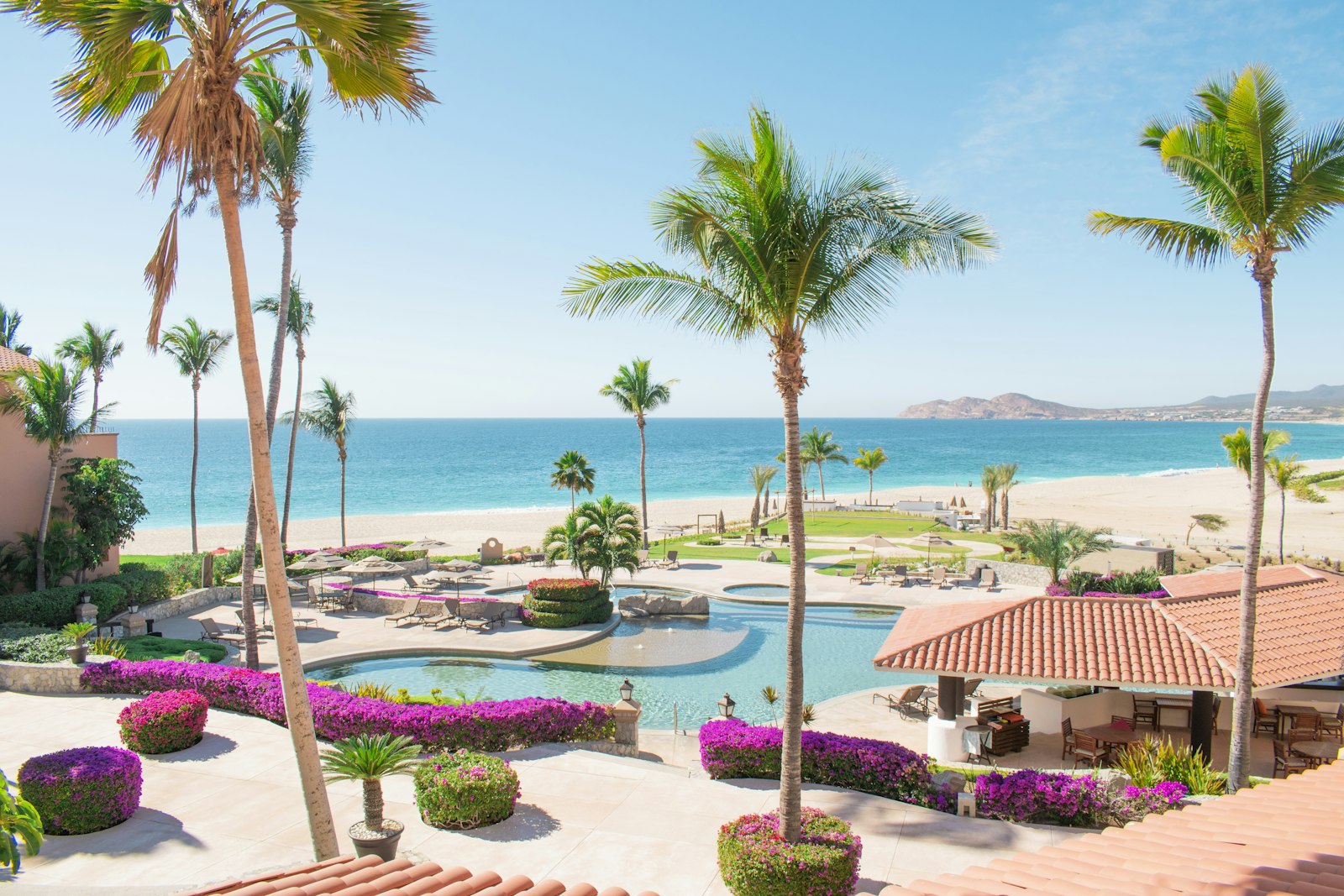
Mostly, no, and this is the one that catches people who are picturing the Caribbean. In Cancún the all-inclusive comes with a beach you swim at. In Cabo it mostly comes with a pool and a view of water you're not allowed into.
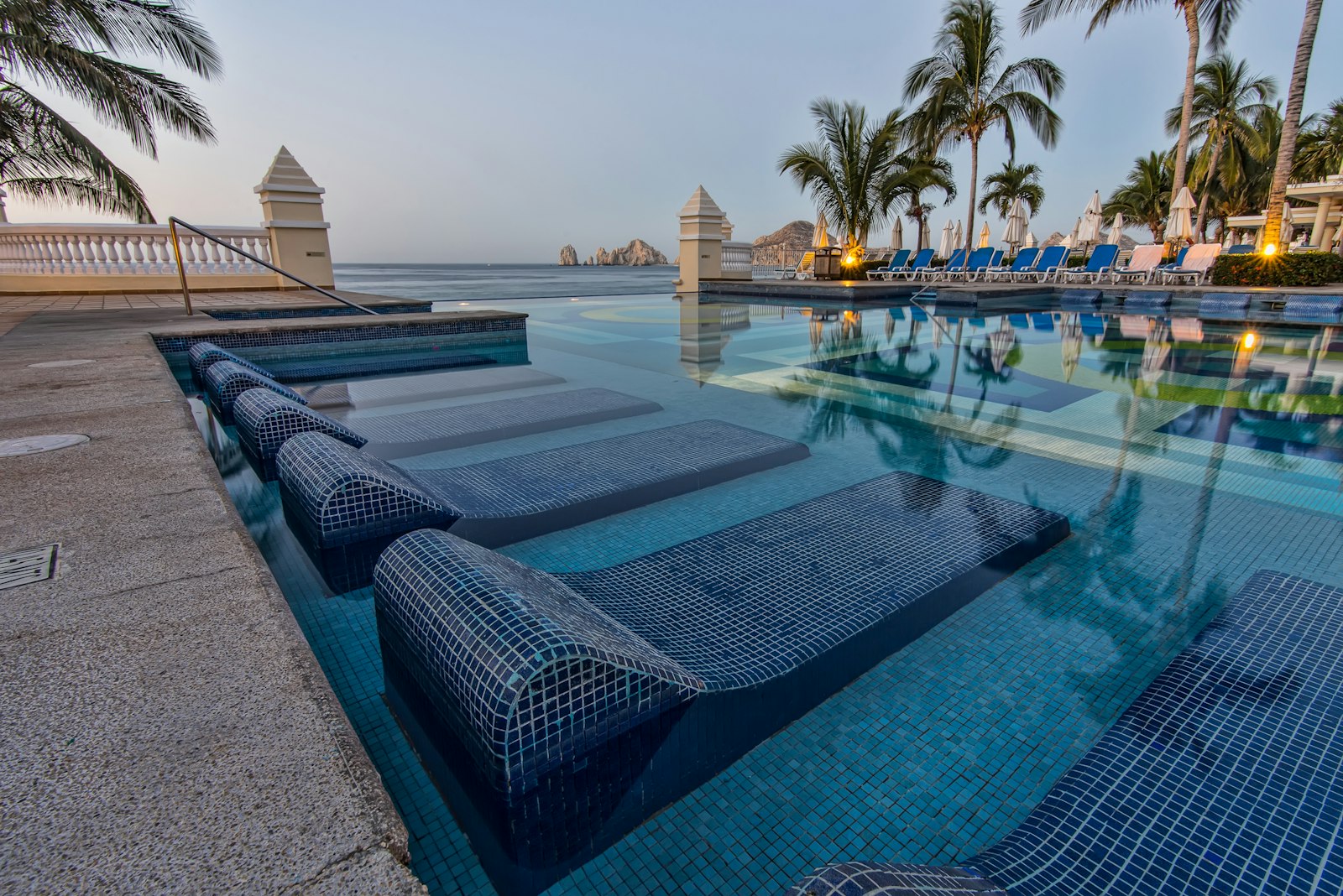
The Pacific side, San José's hotel zone, Puerto Los Cabos and nearly all of the Corridor have beaches that are flagged against swimming most of the time. That includes the two best all-inclusives on this coast. You'll get loungers on the sand, a flag on a pole, and a lifeguard whose main job is waving people back from the edge.
There are two exceptions. The first is Paradisus, in the middle of the Corridor, which shares a calm patch of water behind a man-made breakwater with the Hilton next door. It's the only Corridor all-inclusive where the ocean is part of the deal. The second is Médano Beach in Cabo San Lucas, which is the swimmable beach in town and has several all-inclusives along it. Even there, ask the hotel about its own stretch of sand and look at the flag each morning, because summer and early fall swells can close parts of it. Which end of that beach is which is in my Médano Beach guide.
Notice the catch in that, though. Médano is the place with a swim, and Médano is also the place where dinner is a walk away and I wouldn't buy the plan. So the hotels where all-inclusive makes the most sense are mostly the ones where you can't get in the ocean. If a real swim matters to you, you'll be taking a ride to one of the public coves, which I've ranked in the best swimmable beaches in Cabo.
My advice is the same for every hotel here. Before you book, ask what color the flag is on most days. "Beachfront" doesn't answer that.
The Sales Desk
A lot of Cabo's all-inclusives are vacation clubs as well as hotels, and that comes with a sales layer I'd want you to see coming. It works the same way pretty much everywhere.
You check in at the real front desk. Then you're pointed to a second desk, staffed by a "concierge" or a "welcome host", to pick up your welcome packet. That person's job is to book you into a presentation. The offer is a special breakfast, a discount on a sunset cruise, a resort credit or a massage. The price is a "90-minute" tour the next morning, and the 90 minutes runs three or four hours. Accepting the gift is agreeing to the tour, so the easy way out is to turn down the gift. You'll probably have to say no thanks more than once.
It shows up in two other ways. There are tiers, and you can see them. Members and upgraded guests get their own lounge, their own pool area, sometimes their own restaurant and a different breakfast, and you'll be offered the upgrade at check-in. And at some resorts the very cheapest advertised rate comes with a presentation attached, plus a list of who qualifies for it. Read the conditions on any rate that looks too good.
To be fair, it isn't everywhere. I've had stays where nobody tried to sell me anything, and one of the hotels in my picks below puts "no timeshare" right in its marketing. And if you're curious about going on purpose for the freebies, I cover what that morning is like in the Cabo timeshare presentation.
Who It's Right For, and Who Should Skip It
I'd go all-inclusive without a second thought in a few situations.
Families with teenagers are the clearest one. Teenagers eat four times a day and drink sodas in between, and a fixed price takes the tension out of every trip to the snack bar. Pick the hotel for its pool, since the ocean is usually out.
Groups who like to drink through the afternoon come out ahead too. Six cocktails by the pool at US$16 to $25 each plus service is US$100 to $170 a person, and that's before anybody has eaten.
It also suits anyone who honestly won't leave the resort, anyone who wants to know the total before they fly (just add the tip money), and anyone staying where leaving is expensive. And at the luxury end, if you don't need to swim in the sea, it's the simpler bill for about the same money.
Summer tips things toward the plan as well. From July to September the rooms are at their cheapest and the heat keeps you at the pool. Some of the independent restaurants cut their hours or close for a stretch around September, and San José's gallery night is off. Staying in costs you the least then. From November to April it's the other way around, because the restaurants and the farms are at their best and whale boats are taking your mornings.
Skip it if you came to eat in San José, at the farms or at Metate, because every dinner out is prepaid food you didn't eat plus a ride. Light eaters and light drinkers won't get near the break-even. Wine drinkers will be buying bottles on top anyway. Anyone planning three boat mornings and a day trip is off the property from 7am until mid-afternoon, eating lunch wherever they are. And if being sold to really bothers you, either avoid the vacation-club resorts or go in ready to say no at that second desk.
If You Go All-Inclusive, the Ones I'd Book
These are the ones where I think the plan is good value for what you get, in rough order of how good they are.
Grand Velas. It's the only all-inclusive in Cabo I'd pick for the food, with a Michelin-starred dinner inside the rate and enormous suites. It's also the most expensive by a distance, the poolside menu was bland, and the hotel itself will tell you the beach isn't for swimming.
Le Blanc. Adults only, with butlers who are good at their jobs and food well above the all-inclusive norm, for about two-thirds of what Grand Velas costs. I think it's the best value at the top end. You can't swim at the beach at all, and the spa is priced like it's a separate vacation. If you're choosing between these two, I go point by point in Grand Velas vs Le Blanc.
Marquis. Adults only, every room faces the ocean, and I ate well at every restaurant I tried. It sells itself as having no timeshare, so it's the one where you're least likely to get a sales pitch. The beach is too rough to swim at, and the French tasting menu and the better wine cost extra.
Paradisus. Adults only, and it's on that calm cove behind the breakwater, which makes it my pick if you want all-inclusive AND an ocean swim. The food is better than average without being the reason to come, and the best drinks are in the lounge that belongs to the upgraded rooms.
Secrets Puerto Los Cabos. Adults only, with a lot of space, not many people, and some really good dinners. It's also only 10 to 15 minutes from San José's plaza, so one evening in town is easy. The beach is for looking at, and the extras are priced high.
Hyatt Ziva. This is my family pick, for the kids' setup and a buffet with real variety. The beach in front isn't swimmable, the main pool has an MC on a microphone for hours, and the good chairs go early. Its best feature is being that five-dollar ride from San José's restaurants.
As for the big mass-market all-inclusives on Médano and in the San José hotel zone, they're the cheapest way to drink by a pool in Los Cabos, and I mean that kindly. Book one for the price and the pool, with the buffet and the lines I described above in mind. The ones near the marina sit a short walk from better, cheaper food, so I'd only take one of those if the rate comes in under a room-only hotel plus your meals.
The Middle Paths
You don't have to pick one extreme. A few in-between versions work well here, and one popular one mostly doesn't.
The one that doesn't is "book room-only and add all-inclusive for a day or two to try it". The add-on plans usually have to be bought for several nights in a row, and everyone in the room has to be on it for the same nights. What you can sometimes do, on a longer stay at a resort that sells it that way, is take the plan for one block of three or four nights and eat in town the rest. Ask before you count on it.
Here's what I'd do instead.
Buy a day pass at somebody else's resort. Several Corridor resorts sell them, roughly US$135 to $200, and some of those are all-inclusive for the day. You get the pool, the buffet and the open bar for one day, and you keep all your dinners in town. A pass doesn't make a beach swimmable, though. The cheaper passes on the sand in town are in the best beach clubs in Cabo.
Book a rate with breakfast included. Breakfast is the meal with the worst markup at a resort, so getting it into the room rate takes out most of the sting. The Hilton doesn't sell an all-inclusive plan at all, but it does sell a package with breakfast and a stocked minibar, and I thought that one was worth it.
Get a suite with a kitchen. A lot of the vacation-club resorts are suite hotels with kitchens, including the ones on Médano. Ask your airport driver to stop at a supermarket on the way in, have breakfast and pool drinks out of your own fridge, and go out for dinner. At those hotels I'd take the room and the kitchen and skip the plan.
Split the trip. This is what I'd do with a week if I wanted both. Three or four nights at an all-inclusive that's hard to leave, where the plan earns its keep, and then two or three nights in San José's center or on Médano to eat. You pay for each half only once.
The Verdict
In Cabo you're choosing between paying for food you won't eat and paying resort prices for food you will. The only way around both is to stay where dinner is a walk. So pick the area first, count the dinners you'll really eat out, and let that pick the plan.
Would I go all-inclusive here again? Yes, in the middle of the Corridor or out on the Pacific side, on a week when I've already decided I'm not going anywhere. On Médano or in San José... no. I'd rather have the tacos.
| Pick all-inclusive if | Pick pay as you go if |
|---|---|
| Your hotel is mid-Corridor, on the Pacific side or at Puerto Los Cabos | Your hotel is on Médano, by the marina or in San José's center |
| You'll eat dinner out once in the week, or not at all | You'll eat dinner out three times or more |
| You have teenagers, or a group that drinks all afternoon | You're light eaters, light drinkers or wine drinkers |
| A pool is enough | You want to swim in the ocean from your hotel |
| You want to know the total before you fly | You came for San José, the farms or Metate |
| You're staying put | You have boat mornings and a day trip planned |
| It's July to September | It's November to April and the restaurants are in full swing |
| You're at the luxury level and would eat at the hotel every night anyway | You'd pick your luxury hotel for its cove |
If your answer is yes, the next step is picking one, and I've ranked them in the best all-inclusive resorts in Cabo, the best adults-only resorts in Cabo and the best family resorts in Cabo.
Before you book anything, count your dinners out. Zero or one, go all-inclusive, and pick a hotel that's hard to leave. Three or more, stay where you can walk to dinner and skip it. If you buy an add-on plan, buy it before you fly, never at the desk. Ask about the flag. Say no to the welcome breakfast. Bring small bills.
Quick Answers
Is all-inclusive worth it in Cabo? Only if you'll eat nearly every meal at the resort, and mostly at hotels that are hard to leave, like the ones in the middle of the Corridor or on the Pacific side. If you can walk to dinner, pay as you go.
How much more is all-inclusive than room-only? At resorts that sell it as an add-on, roughly US$120 to $185 a person a day, and less if you prepay than if you buy it at the desk. At hotels that are all-inclusive only, the gap over a similar room-only hotel is often around US$100 to $250 a night for two.
What isn't included? Usually the best restaurant or two, lobster and premium cuts, wine by the bottle, the better liquor at some hotels, the spa, daybeds and tours. Resort credit often carries a service fee you pay yourself.
Do I still tip at an all-inclusive? Yes, modestly. Even where tips are said to be included, staff are tipped in practice, so bring US$150 to $200 in small bills for a week and tip for good service.
Can I book room-only and add all-inclusive for a day or two? Mostly no. The add-on plans usually need several nights in a row and everyone in the room. A day pass at another resort, roughly US$135 to $200, is the way to get one all-inclusive day.