Cabo Timeshare Presentation: Why I Skip the Free Breakfast
By Cabo Wander
Every trip, before I've even found my driver, somebody offers me a free ride, a free breakfast or a free boat trip. And every trip a friend texts to ask if they should just take it. My answer is no. The "90-minute" presentation takes three to four hours out of the best part of a day, and the gift you get for it is worth less than that half day cost you to be in Cabo.
If you're here because you already signed something, skip down to If You Signed right now. Mexican rules give you a short window to cancel in writing, it's counted in business days, and the day to use it is today.
The people at those desks are doing a job, and most of them are perfectly pleasant. Plenty of people own a week here, love it and come back every year. The presentation is legal and regulated. It's also a long, hard sell aimed at people who came for a boat ride, and I'd rather you spent that morning in the water.
It starts in the rooms after customs, which I walk you through door by door in my Cabo airport guide. This post is the rest of it: where you'll be asked, what the gift is really worth, how to say no, and what to do if you said yes.
Where You'll Be Approached
You'll be asked in four places, and I've put them in the order you'll meet them.
The airport. After customs you cross a couple of rooms lined with sales desks before you get outside. The offer is a free or cheap ride to your hotel, or a discounted tour, in exchange for a presentation the next morning. Nobody in those rooms is your driver, so the right amount of time to spend there is none.
Your hotel. A lot of Cabo resorts are vacation clubs as well as hotels. After the real front desk you get pointed to a second one, called concierge or guest services or a welcome host, to pick up a welcome package. That desk books presentations. It may be called a welcome breakfast or an orientation, and it's the sales presentation. You do NOT have to go. If you take the envelope or agree to a breakfast time, you've said yes, so the easy moment to decline is before anything is in your hand. I go through how those resorts work in whether a Cabo all-inclusive is worth it.
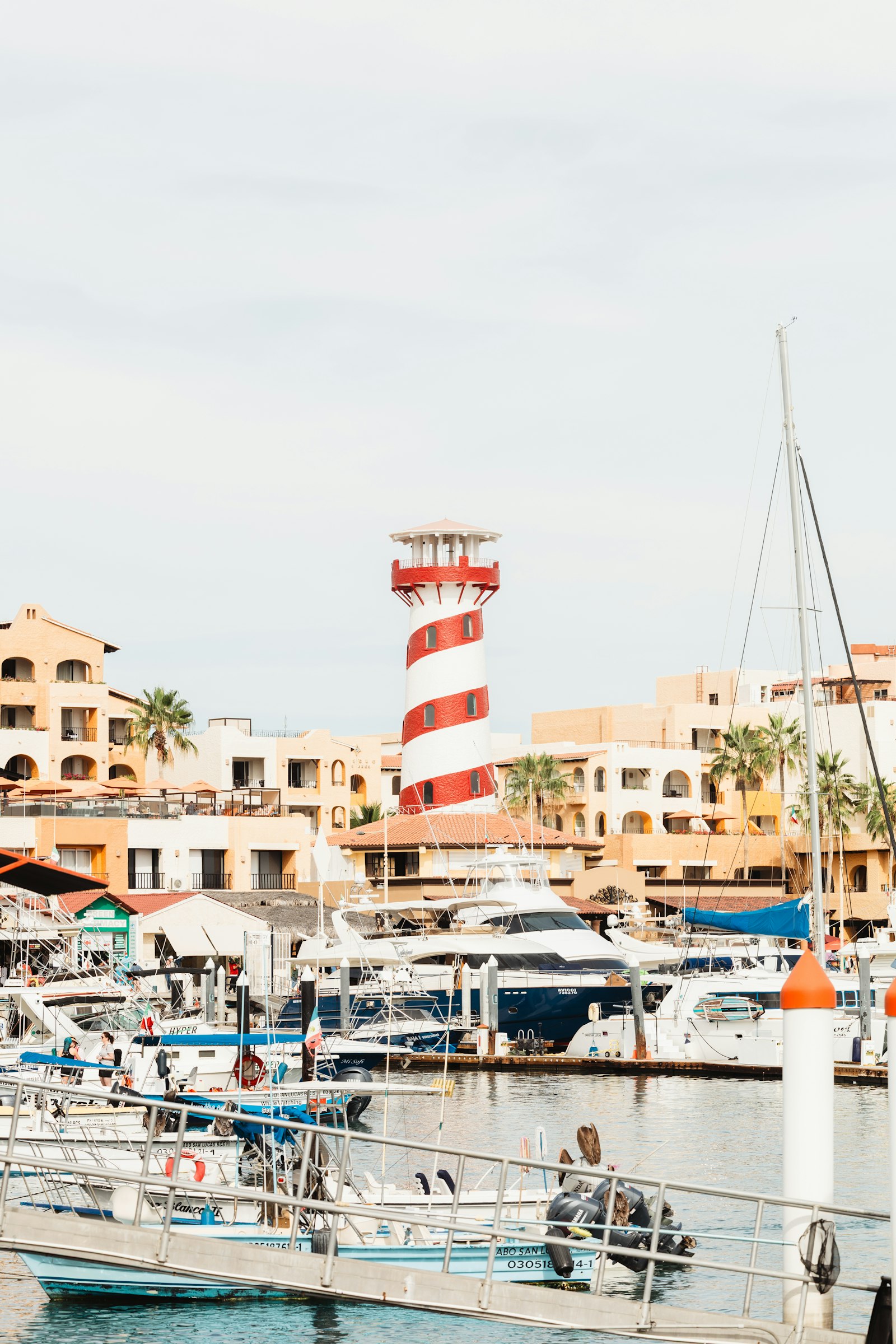
The marina and downtown. The "Tourist Information" booths and the friendly people with lanyards along the boardwalk are selling the same thing. The free or half-price boat they offer is a voucher you pick up at a resort after the presentation. Who else is working that boardwalk, and how I walk it, is in my Cabo San Lucas guide.
The big stores. You'll sometimes find a stand at or near the entrance of a supermarket too, with the same offer.
Wherever it happens, the small talk is doing a job. Where are you staying, how long are you here, are you two married, do you own a timeshare? Those questions are checking whether you qualify, because the gift is only for people who could buy. That usually means a couple attending together, inside an age band, with a major credit card and a minimum household income, who don't already own at that resort.
What They Offer, and What It's Really Worth
A typical gift is worth about US$100 to $250 for two at the prices you'd actually pay. It'll be described to you as worth two or three times that, because it's valued at hotel desk prices. Here's how the usual ones shake out, by my own rough numbers.
- A ride from the airport. This one is real, and it's the gift with the fewest strings. A private car you book yourself is about US$90 to $110 to Cabo San Lucas, and every other way to do it is in getting around Cabo.
- Breakfast for two. About US$40 to $80 at resort prices. It's also the first hour of the pitch.
- A sunset cruise. The voucher is for the big dinner boat, the kind that carries a couple hundred people, at about US$100 a head. The small sailboat I'd send you on is a different evening, and I compare them in my Cabo sunset cruise post. The dock fee and tip are still yours.
- A whale trip. Same idea. It's a seat on a large catamaran, and it only means anything from mid-December to mid-April. The small boats I'd pick are in whale watching in Cabo.
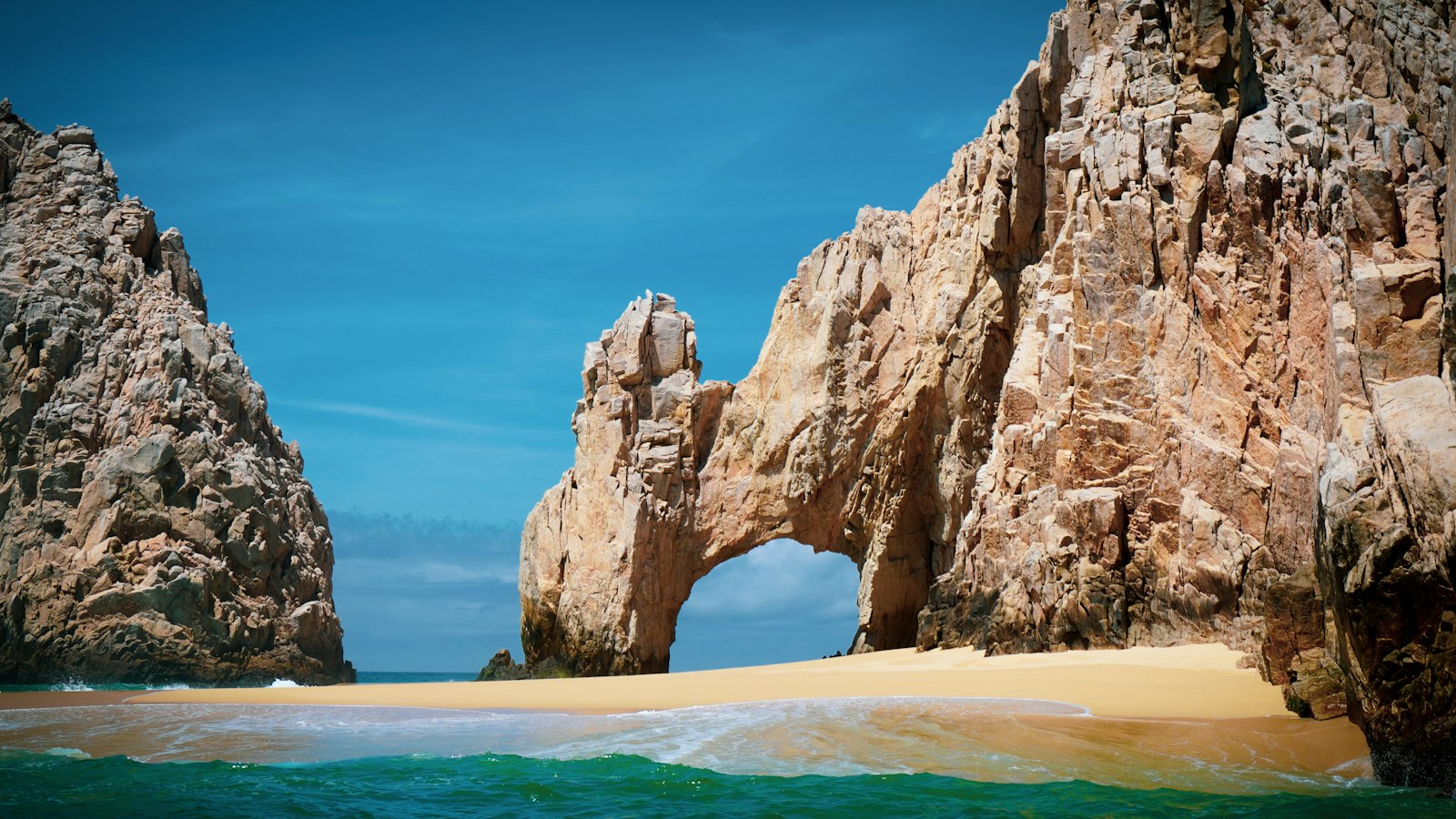
- The boat to the Arch. It gets valued at US$70 to $90. On the dock it's about US$20 a head, so the gift is worth US$40 for two. How to buy that ride yourself is in my guide to El Arco and Lover's Beach.
- An ATV tour. The entrance fee and the damage waiver are still collected at the park, so the free tour costs two people around US$75 or more at the check-in desk. I explain those fees in Cabo ATV and camel tours.
- Resort credit. It spends at resort prices, it often comes with a service fee you pay yourself, and it doesn't carry over. I'd count it at a little over half its face value.
- Cash. The big cash numbers you'll see quoted online are old, and I wouldn't count on cash at all. If it's offered, get the amount written on your invitation in US dollars.
Some sellers also take a refundable deposit to hold your spot. I've seen it put at anywhere from US$20 to about US$100, and it comes back at the gift desk at the end. If you pay one, put it on a card if they'll let you.
The gift is handed over last, after your final no, so read your invitation slip before you leave the booth and check the voucher against it at the gift desk. They don't always match. And a boat voucher is only worth something if you can use it before you fly. In September the port can close for days at a time.
How Long It Really Takes
Plan on three to four hours, door to door. Sometimes it's much longer. Now and then, if you're firm and lucky, it's under two.
The 90 minutes never holds because the clock the sales team has in mind starts when the pitch starts. It doesn't count the van picking you up, the check-in, the breakfast, the walk around the property, the waits between salespeople, the line at the gift desk or the ride back. Those are all your morning.
And mornings are the good part of a Cabo day. The water is flat, the beaches are quiet and the boats go out. A comfortable trip here runs a couple somewhere around US$500 to $800 a day, which I break down in how much Cabo costs. So the half day you're handing over is worth roughly US$200 to $400 of vacation you've already paid for, traded for a gift worth US$100 to $250.
Bottom line: on paper it's about even at best, and the paper doesn't include how you'll feel at 1pm.
What Happens in the Room
I should say that I'm the person who says no at the desk, so I don't have a diary of a morning in there to share. What I can give you is the running order, because it's very consistent.
It opens with breakfast, with a friendly first salesperson asking how you usually vacation and what this trip cost. Then comes a tour of the best units and the pools. Then you sit down at a table and hear the first price. When you say no, the price drops. A manager or a closer comes over with a lower number still, and that one is good today only. On your way out there's one last desk with a cheaper trial package for a few thousand dollars, pitched as a way to avoid leaving empty-handed. The gift desk comes after all of that.
The waiting is part of how it works. By the time the third person sits down, you're tired and it's lunchtime, and a few thousand dollars starts to sound small next to the first number.
The one thing I'd hold onto in that chair is that nothing sold in that room is really today-only. Mexican rules keep the contract cancellable for at least five business days after you sign, so the deal can't be as urgent as it's made to sound.
How hard the sell gets depends on the room and the day. Some are low-key and done in not much over an hour. Others turn to guilt, or get short with you when you stand up to leave. You don't get to pick which one you walk into, and that's a big part of why I don't walk in.
What's Actually Being Sold
It's usually a right to use. You're buying points, or a number of weeks, at a resort or a group of resorts for a set term of years. You aren't buying property in Mexico. The developer still owns the building.
Nobody publishes a price list, so I can only give you round bands. Accounts I've read put the first quote somewhere around US$30,000 to $80,000, signed deals more often at US$8,000 to $25,000, and the trial package at the door at a few thousand. On top of that come annual maintenance fees, and they go up over time. Before anyone signs anything, I'd want to see in the contract what the fee is now and how it's allowed to change.
Then there's getting out. Memberships show up for resale at a fraction of what was paid for them, and a lot of them don't sell at all. So please don't think of this as something you can sell later if it doesn't work out.
On the other side, many owners are happy. They use what they bought every year, some of them have been coming back for decades, and the suites are good ones, with kitchens and space, some of them on a beach you can swim at. If owning one appeals to you, I just think the sales room is the most expensive place to do it. Look up what the same memberships are listed for secondhand before you sit down at anyone's table.
Is It Ever Worth Going?
For most people, no. On a five-night trip, one morning is a tenth of your vacation. If you have small kids with you, or you hate confrontation, or you'd be going after a drink, I'd skip it without a second thought. Those are the mornings when a yes slips out.
There are two exceptions I can see.
The first is a budget traveler on a long stay, ten days or more, who is practiced at saying no and wants the airport ride. If that's you, go once. Get the offer in writing before you agree. Leave your cards in the room safe except the one they ask to see. Skip any drink that's offered, and don't plan anything for that afternoon.
The second is anyone who booked a discounted rate or package that was sold on the condition of attending. You agreed to it, and skipping can cost you the discount, so read your booking terms. Go, be polite, buy nothing and sign nothing.
For what it's worth, none of this is dangerous. It's a sales pitch, and it belongs with the other ways of being overcharged that I cover in is Cabo safe. The risk is your morning if you say no, and a very large check if you say yes.
How to Say No
Short, repeated, and with no reason attached. A reason is something for a salesperson to solve, so "we can't afford it" brings out a payment plan and "we need to think about it" brings out the today-only price.
Here are the words I'd use, stage by stage.
- At the airport: nothing at all, or "no, gracias" without slowing down. Don't answer who your ride is with, and don't show anyone your voucher.
- On the marina: "no, gracias", once, and keep walking. Don't take the map, and don't say where you're staying.
- At the hotel's welcome desk: "Thank you, we're not interested in any presentations." Then, "Is there anything I need from this desk for my room?"
- If you went, at the start: "We have to leave at 10:30, and we won't be buying today." Set an alarm on your phone.
- At the table: "No, thank you." Then say it again. Don't ask questions, don't give a budget, and don't name a price that would work for you.
- At the 90-minute mark: stand up. "It's been 90 minutes. We'd like our gifts now, please." Don't sit back down for the manager.
- At the last desk by the door: "No, thank you." The small package is still a contract.
You don't need a story about being broke, and you don't need to be rude. These are people at work. A smile and the same two words do it.
And if you'd rather not be asked at your hotel at all, pick a hotel that's only a hotel. A resort where every room is a suite with a kitchen is probably a vacation club first. I go area by area in where to stay in Cabo.
Everything on the gift list can be bought without the pitch, and a morning is enough time for the best of it. My ranking is in things to do in Cabo.
If You Signed
This is general information from Mexico's published timeshare rules and from the leaflets its consumer agency, PROFECO, writes for buyers. I'm not a lawyer and this is not legal advice. The terms and dates in your own contract matter, so read it tonight and act on day one, not day five.
The rules say this:
- You have at least five business days to cancel, counted from the business day after you signed. Business days are Monday to Friday, and official holidays don't count.
- You cancel in writing.
- The seller must refund what you paid within fifteen business days of your notice.
- Anything you were given as a gift stays yours.
- A clause or a form that waives your right to cancel is not valid.
And here is what I would do, in this order.
- Find the cancellation clause in your contract and count the days. If you signed on a Tuesday, the count starts Wednesday and, with no holidays in between, ends the following Tuesday. Your contract may give you more time than the minimum. It can't give you less. Treat the first day as your deadline, and don't spend the days negotiating.
- Write a short cancellation letter. Put in both buyers' names, the contract number and the date you signed. Say that you cancel the contract, and ask for a full refund of the amount you paid, to the card you paid with. Date it, and have both buyers sign.
- Send it every way you can, the same day. Email it to the address in the contract from your own account, with the signed letter attached. If you're still in Cabo, also hand a copy in at the office where you signed, ask for a stamp or a signature with the date on your copy, and take a photo of it. Then send it by courier or registered mail to the postal address in the contract and keep the receipt. The date you send it is the date that counts.
- Ask for the full amount back, and keep proof. I can't tell you whether a seller may hold back an administration or closing fee, because I haven't been able to confirm it either way. So ask in writing for every dollar, and keep proof that each copy was delivered.
- Call your card issuer the same day. Tell them you cancelled the purchase within the legal period and are expecting a refund, and ask what their deadline is for a dispute. Card issuers have their own time limits. Send them the contract, your letter and your proof of delivery.
- Don't sign anything else. That includes a cancellation form with a fee on it, and a swap to a cheaper package.
- Keep the gifts. You don't owe them back.
- If the refund doesn't arrive, write to PROFECO. Fifteen business days is about three weeks. PROFECO has an email address for foreign consumers, extranjeros@profeco.gob.mx. Send proof of the purchase, a copy of your passport, your contact details, the seller's name and address as they appear on your paperwork, and a short account with the dates, the price and the amount you're claiming. You cancel with the seller. PROFECO is where you go if the seller won't honor it.
If the five business days have already passed, I can't tell you where you stand, and I won't guess. Your contract, your card issuer, PROFECO and a Mexican lawyer are the ones to ask.
Either way, promises that weren't written into the contract are hard to enforce. If a salesperson told you the resort would rent out your weeks or buy back an old timeshare, and it isn't in the contract, don't count on it. PROFECO's own advice is to get every promise in writing before you sign.
The Calls About Selling Your Timeshare
This warning is for owners, and it can come months or years after the trip.
The US Treasury and the FBI have warned repeatedly about calls and emails to people who own timeshares in Mexico. The caller says they're a broker, a lawyer or a title company with a buyer or a renter ready to go. Before the sale can close, you're asked to pay fees or taxes up front. There is no buyer. Reported losses run to hundreds of millions of dollars.
Never pay a fee to someone who contacted you about selling, renting or getting out of your timeshare.
That includes the second call. People who have already lost money are contacted again by someone posing as a law firm or a government agency, offering to recover it for another fee. Anyone who offers to get you out of a contract and wants money first belongs in the same group.
If you've been called, you can report it to the FBI's Internet Crime Complaint Center at ic3.gov.
These warnings concern criminal callers. Nothing in them that I've read points at any Los Cabos resort.
The Verdict
Skip it. The gift is real, and it's smaller than it sounds. The 90 minutes is three to four hours. And the morning you'd give up is the best part of the day here.
I might go once, on a two-week budget trip, for the airport ride, with the offer in writing. On a normal week I wouldn't. It's a free breakfast... that costs you a morning in Cabo.
I'd say the same thing a little differently to anyone who's curious about owning. It's a real product and a lot of people love theirs. Just do your homework at home, where nobody is waiting on your answer.
So when that friend texts from the airport, this is what I send back. Don't do the timeshare thing. It's 3 to 4 hours, the gift is worth maybe US$100 to $250 for two, and the free boat is the big crowded one. Airport: don't stop, "no, gracias". Hotel: say no at the welcome desk before you take the envelope. If you go anyway, "no, thank you" on repeat and stand up at 90 minutes. If you sign, you have at least five business days to cancel in writing. Email the letter that same day and call your card company. And if anyone ever calls offering to sell it for you, hang up.
Quick Answers
How long does a Cabo timeshare presentation really take? Plan on three to four hours door to door. It can run much longer, and now and then it's under two if you're firm and lucky.
Is it worth going for the free stuff? For most people, no. The gift is worth about US$100 to $250 for two at real prices, and the half day it costs you is worth more than that. A budget traveler on a long stay who's good at saying no is the one exception I'd make.
Do I have to go to my resort's welcome breakfast or orientation? No. It's the sales presentation. The exception is a discounted rate that was sold on condition of attending, so read your booking terms.
Can I cancel a timeshare I bought in Mexico? Yes, inside a short window. The rules give you at least five business days, counted from the business day after you signed, to cancel in writing, and the refund is due within fifteen business days. That's general information and not legal advice, so check your own contract and act on the first day.
Someone called to say they have a buyer for my timeshare. Is it real? Treat it as fraud. US Treasury and the FBI have warned about exactly this call, and no real sale needs your money first.